










Not IndiGo’s Monopoly — It’s India’s Brutal Economics of Flying That Keep Killing Airlines

- India’s recurring airline failures stem not from IndiGo’s dominance but from a structurally hostile aviation ecosystem that makes sustained profitability nearly impossible. IndiGo’s scale reflects survival in this system, not monopolistic intent.
- Policy distortions — royalty pass-throughs at PPP airports, fragmented schemes, opaque charges, slow clearances, and one-size-fits-all compliance — create an uneven playing field that disproportionately punishes startups and regional operators.
- True airline competition will emerge only when India reforms the underlying economics. Until then, any airline that survives long enough will appear “monopolistic,” not because it engineered dominance, but because the system eliminates everyone else.
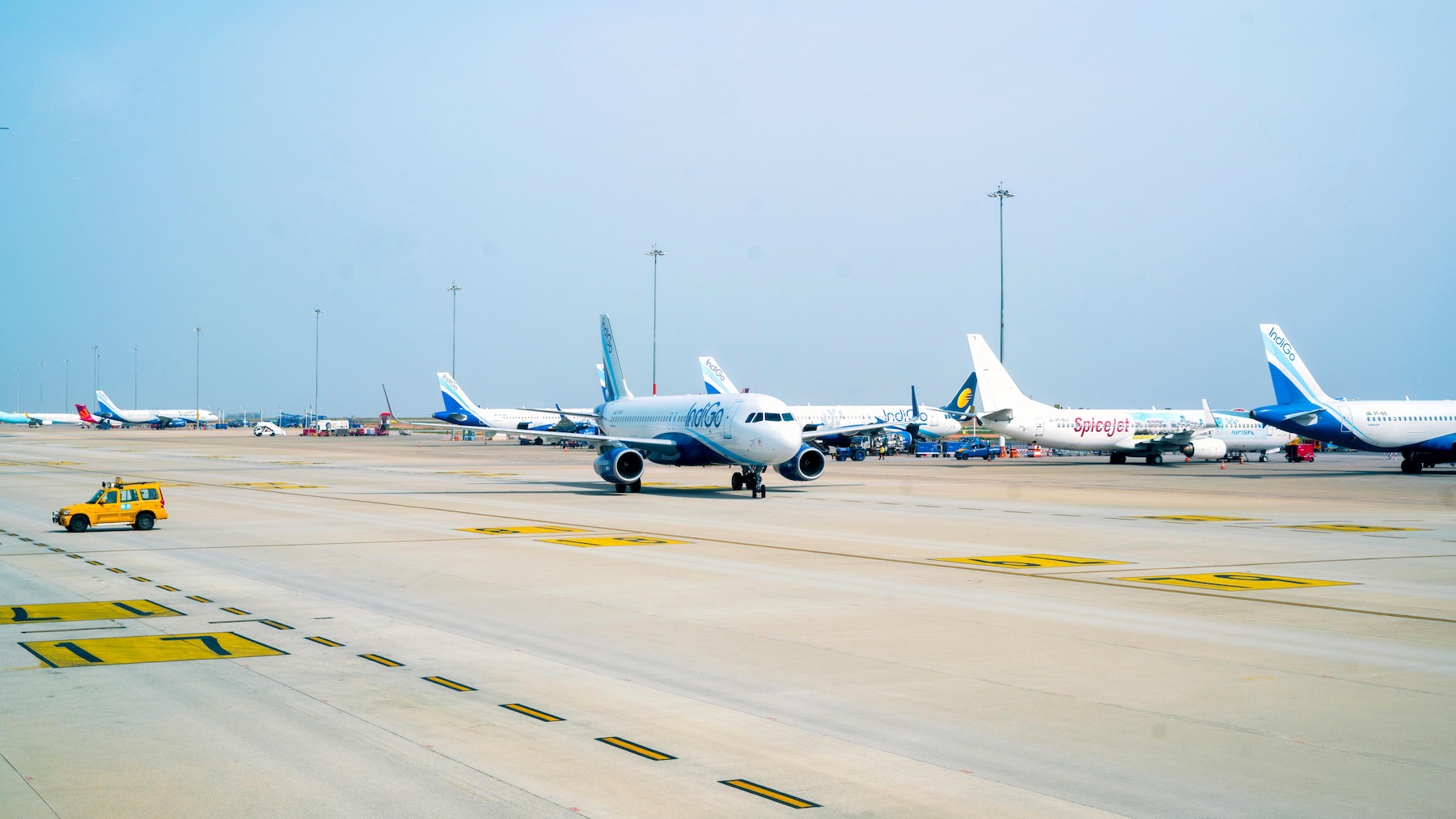
“IndiGo’s monopoly” is the reflexive accusation that resurfaces every time India’s largest airline hits turbulence. It is a neat narrative for television panels and political grandstanding: one oversized airline, therefore one villain.
But the truth is more complex and far more uncomfortable. IndiGo did not create India’s cemetery of defunct airlines. It merely survived it.
India’s aviation market repeatedly produces casualties not because a single airline is too dominant, but because the country’s regulatory and cost architecture makes sustained profitability for airlines nearly impossible.
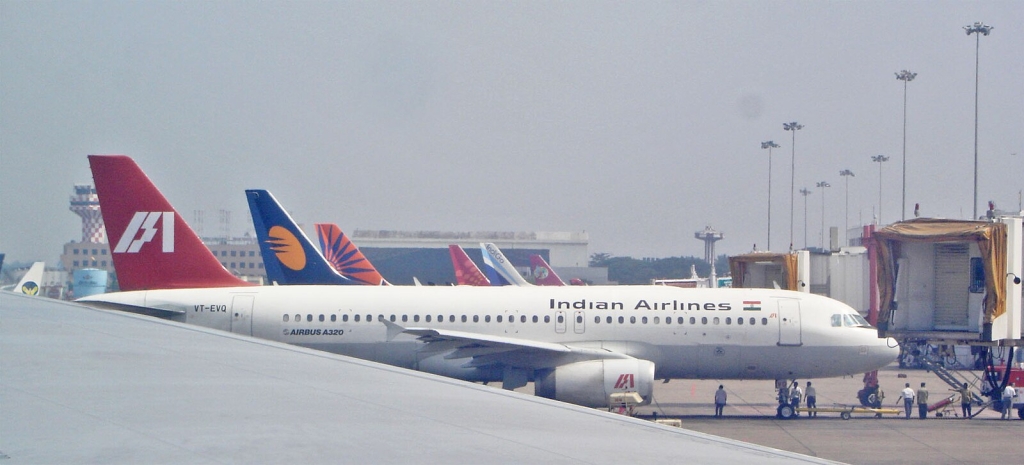
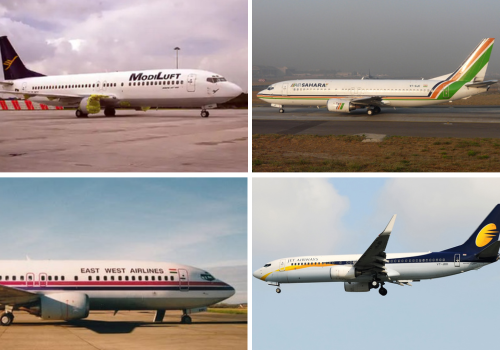
Over the last 30 years, India has watched a parade of entrepreneurial visions — East West, Damania, Modiluft, NEPC, Air Deccan, Kingfisher, Jet Airways, Air Costa, Go First — launch with fanfare and fold with debt, all victims of the same structural constraints. IndiGo’s rise is inseparable from this graveyard; it is a story of discipline, deep pockets, and timing in a system where most others never stood a chance.
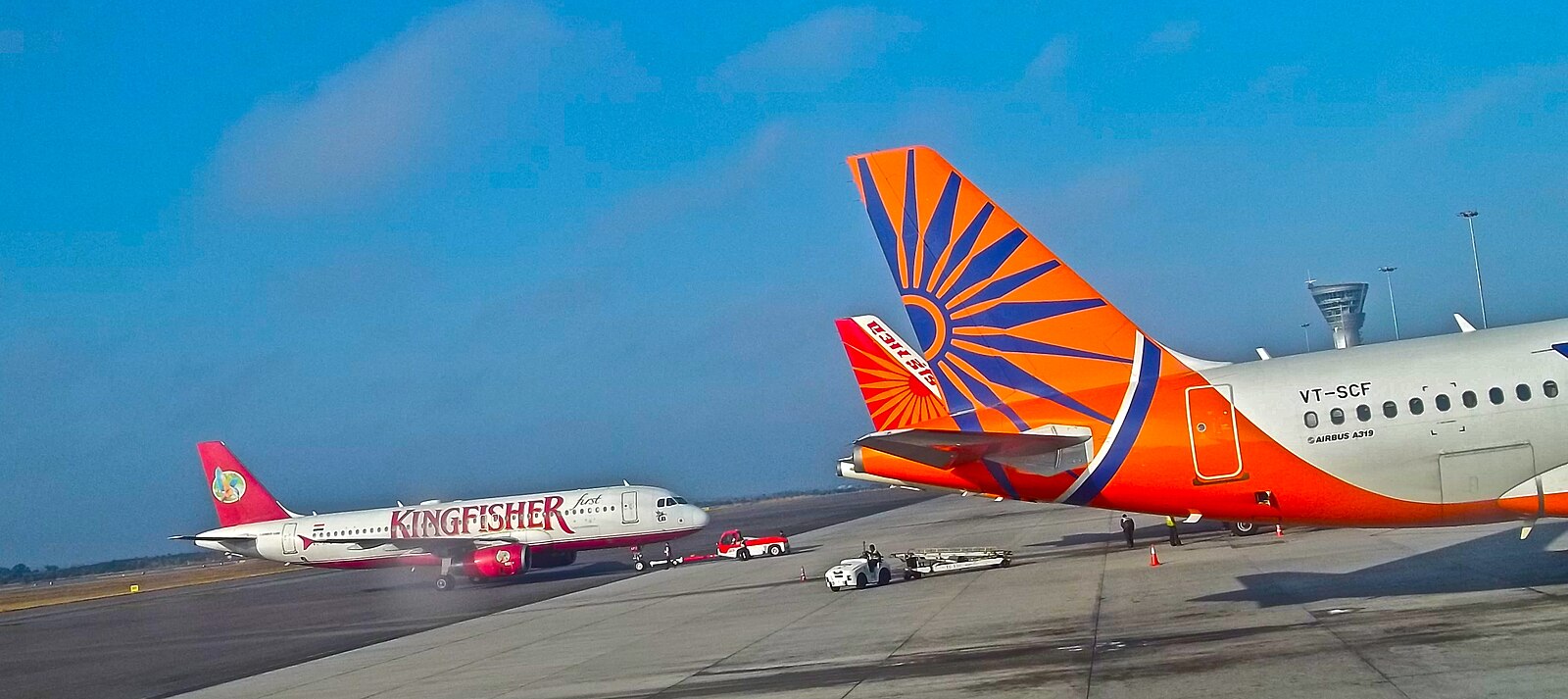
IndiGo’s 19-year dominance did not emerge from predatory behaviour as much as from a brutally Darwinian marketplace. It built a consistent network, a dependable culture, and the financial muscle to withstand shocks. When rivals collapsed — Kingfisher through debt-fuelled excess, Jet Airways through financial erosion and weak governance, and Go First through fleet and capital constraints — IndiGo’s market share expanded by default, not by design.
The fall of these airlines was rooted not in IndiGo’s strategy but in India’s uniquely hostile aviation economics. Regulatory inconsistency, expensive fuel, high airport charges, talent shortages, and a lack of war-chest capital repeatedly pushed carriers to the edge. IndiGo’s strength merely mirrors the system’s weakness.
If policymakers want more competition, they must stop treating market dominance as the disease and recognise it as a symptom.
Capt. Preetham Philip, CEO of Quikjet (a scheduled cargo carrier), makes this point with clinical clarity in his White Paper for the DGCA.
Although focused on air cargo, the analysis applies directly to passenger aviation: India’s policy choices have created a cost base so distorted that only players with vast liquidity, global credibility, and obsessive operational discipline can survive.
Consider his findings:
- Royalty pass-throughs at PPP airports, allow private operators to bid aggressively because all costs are dumped onto airlines and shippers.
- Fragmented schemes like Krishi Udan, lacking sustained funding and strategic vision, add administrative burden without improving economics.
- Uneven charges between airports, opaque fee structures, and unpredictable policies create a volatile operating environment.
These distortions bleed directly into passenger aviation, where structural costs are even higher and margins even thinner.
The sky-high costs every start-up airline faces are the first nail in its coffin. Running an airline in India is exorbitantly expensive even before a single passenger boards.
ATF taxation: India has some of the highest state-level taxes on aviation turbine fuel anywhere in the world, which already accounts for 35–45% of an airline’s cost base.
Capital intensity: Airlines see steep upfront investments in pilots, engineering talent, spare parts, and maintenance infrastructure — well before the first rupee of revenue is earned.
Lessors are more wary: Burned by repeated airline failures and delayed repossessions, aircraft lessors now insist on hefty security deposits — often equivalent to a year’s lease — effectively shutting out startups that lack deep liquidity.
This is why three much-publicised startup airlines — Air Kerala, Al Hind Air, and Shankh Air — received initial Ministry of Civil Aviation (MoCA) approval in 2024 but have yet to induct a single aircraft or secure an AOC. No aircraft, no creditworthiness, no launch. As executives and advisors repeatedly note, financing is the ultimate deal-breaker.
India’s regulatory structure reinforces this inequality. It is a maze that only the big can navigate. Here are a few of the challenges:
- Director security clearances. When someone becomes a director of an airline (or wants to start one), the Ministry of Home Affairs (MHA) must issue a security clearance for that director. This is a mandatory step before an airline can receive or renew its Air Operator Certificate (AOC) — the licence that allows it to legally fly aircraft for commercial operations. In theory, this clearance should be quick. In practice, it often takes between 3 months and, in some cases, up to 12 months.
- Import NOCs for aircraft take months, and even small aircraft under 20 seats require cumbersome parking permissions.
- Foreign pilot (FATA) approvals can take weeks or months, even when operators introduce new types urgently.
- Mandatory YA permissions for NSOP/GA flights abroad exist despite real-time oversight by FIRs and AFC units.
- YA permissions are an additional, India-specific bureaucratic requirement imposed on NSOP/GA (Non-Scheduled Operators / General Aviation) operators before operating an international flight (YA is a unique clearance number issued by the DGCA or the relevant authority. An NSOP/GA operator cannot take a private or charter aircraft out of India without first obtaining this YA number for each international flight)
- Proportionate regulation is absent: small, mid-sized, and large operators face the same compliance burden regardless of aircraft size or risk profile.
This maze disproportionately hurts new entrants and regional carriers — exactly the players needed for market diversity.
To top it all, there is the question of talent. Indian airlines spend heavily to train pilots, engineers, and technicians — only to watch them leave for better-paying foreign carriers. The talent pipeline is chronically thin, and rostering rules tightened for safety (such as revised flight duty time limitations) now require even more pilots per aircraft. That raises fixed costs for every carrier and widens the gap between financially strong and financially fragile players.
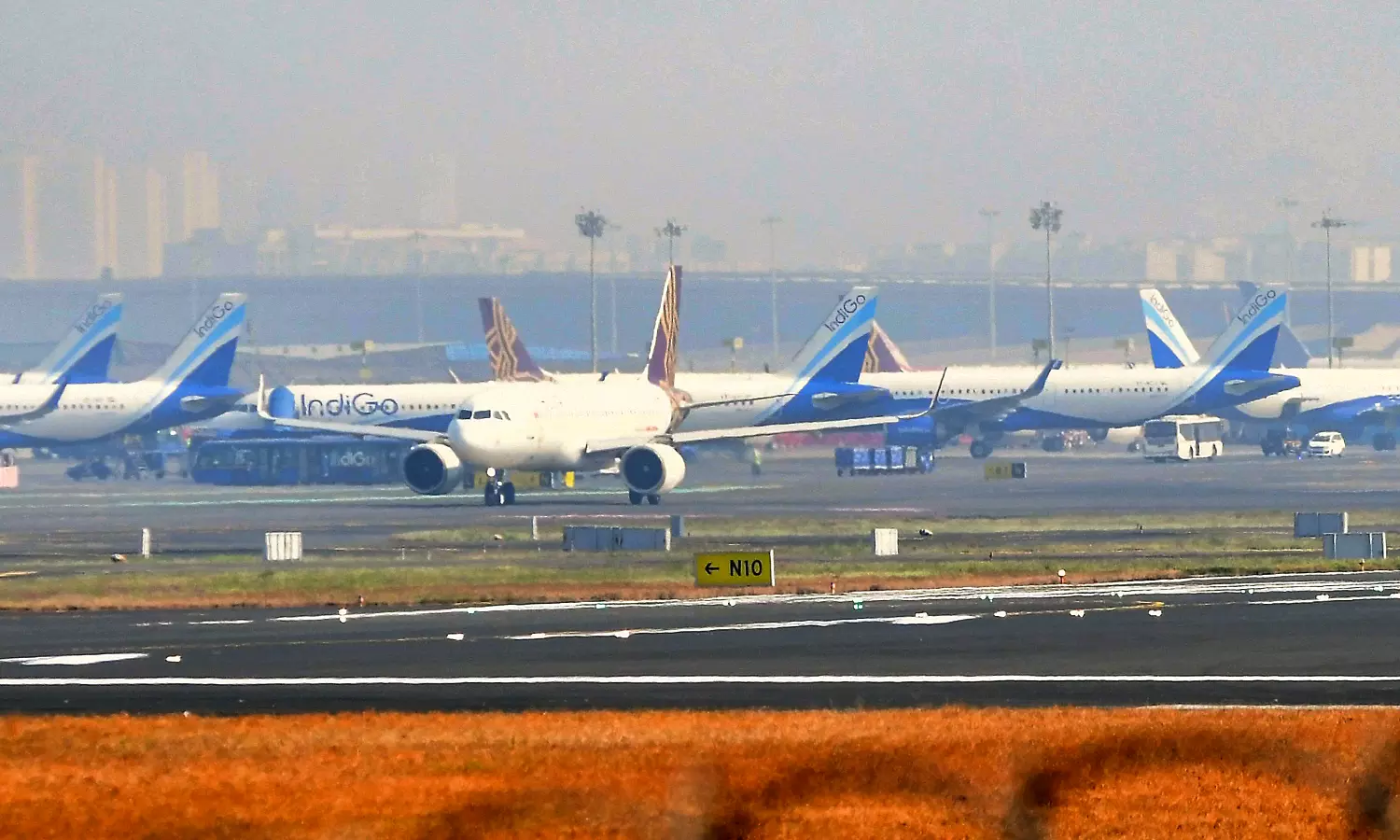
To begin with, the airport charges are designed to extract, not enable. Another structural distortion is the airport concession model. Airport operators, especially PPP airports, bid aggressively for concessions because they can pass the cost straight to airlines in the form of high user development fees, landing charges, and royalties. Airports profit; airlines bleed. This is not market economics. It is policy-engineered cost inflation.
Added to that is the consumer paradox. Fliers are price-sensitive and also service-demanding. Indian travellers expect low fares — anchored by years of ultra-low-cost competition — but also expect reliability, free seats, free baggage, seamless on-time performance and high service levels. In a market where a ₹300 fare difference alters buying decisions, airlines cannot raise fares sufficiently to offset their cost base without losing demand. Losses become structural, not seasonal.
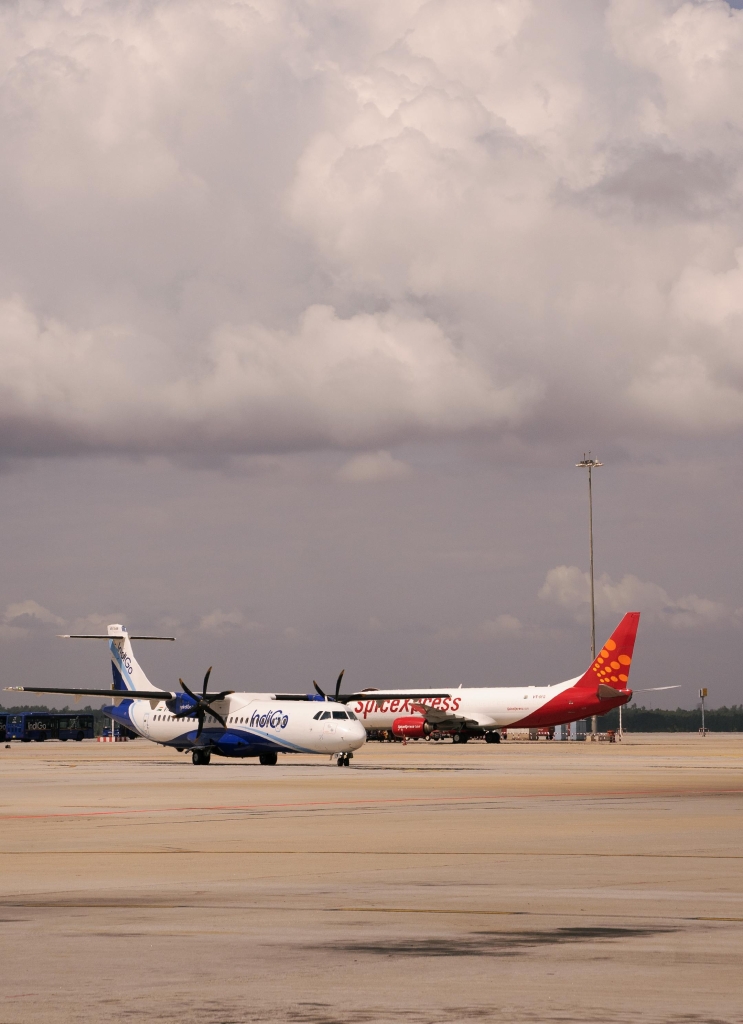
Setting up an airline today is almost impossible without a billion-dollar cushion. Industry veterans summarise it bluntly: launching an airline in India requires dedication, discipline, vision — and deep pockets that can burn cash nonstop for at least five years.
A ₹50-crore investment can evaporate in three months. Lessors require guarantees. Banks offer little appetite. Regulators impose time-consuming processes. Talent is scarce. Slots are dominated by incumbents. And the business model — thanks to policy choices — is designed for wafer-thin margins.
In such an environment, IndiGo’s very survival over 19 years is not evidence of monopoly abuse. It is evidence of structural endurance.
If we want competition, we must fix the economics. Creating a resilient, multi-player aviation market requires far more than clipping IndiGo’s wings. It demands structural reform:
- Rationalise ATF taxation and airport charges.
- End royalty pass-throughs and reform PPP concession models.
- Build a predictable, unified national aviation and air-cargo strategy.
- Streamline clearances—director security checks, import NOCs, FATAs, YA permissions, AOR processes.
- Implement true proportionate regulation for NSOP/GA operators.
- Incentivise talent retention and expand training pipelines.
- Expand MRO capability through fast-track approvals and free-trade zones.
With such reforms, more airlines — not fewer — will survive.
IndiGo may be large, and its influence undeniable. But it did not engineer the conditions that keep killing carriers. Those conditions are made in India — through policy, taxation, infrastructure, economics and a regulatory system designed for rent extraction, not sectoral growth.
Fix the backdrop and India will get natural competition. Keep the economics broken, and the next “monopoly” will simply be whoever survives the next policy shock.
Also Read: What Next for IndiGo? The Behemoth Faces a Reckoning — and so Does India’s Aviation Ecosystem