











India moves ahead toward Sustainable Aviation Fuel leadership even through global challenges

- Indian Oil’s Panipat refinery to commence commercial SAF (Sustainable Aviation Fuel) production by December 2025, pioneering use of used cooking oil (UCO).
- Government sets SAF blending targets: 1% by 2027, 2% by 2028, and 5% by 2030 for international flights.
- India’s potential as a global SAF exporter leveraging vast biomass resources highlighted by Civil Aviation Minister.
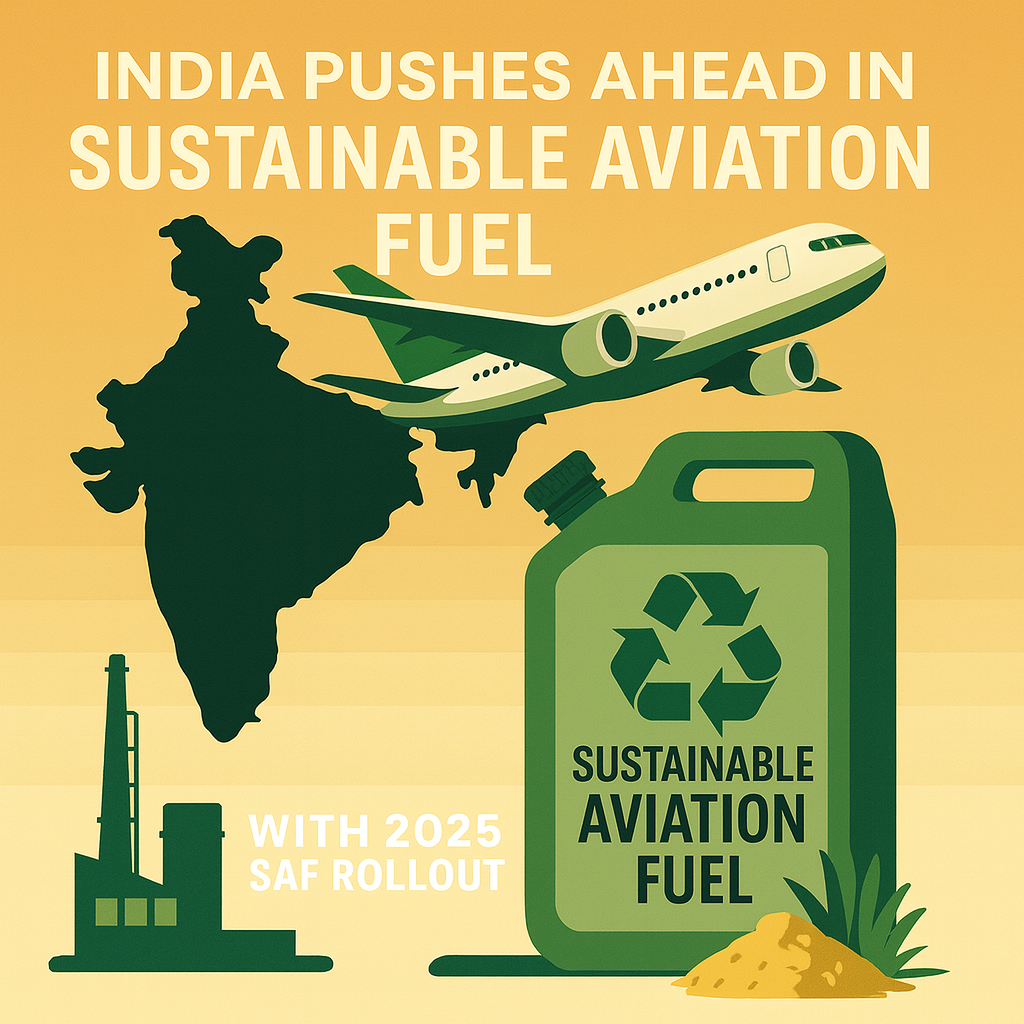
India is rapidly advancing in the race for Sustainable Aviation Fuel (SAF) production, potentially outpacing Western nations.
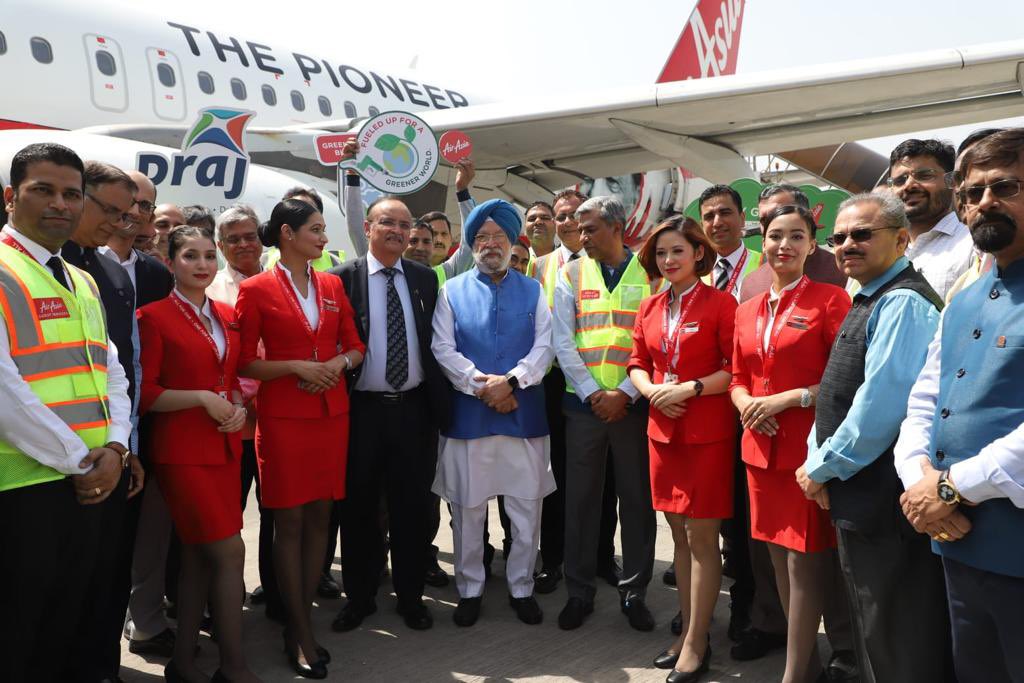
The country aims to commence commercial SAF production at Indian Oil Corporation’s (IOC) Panipat refinery by December 2025, marking a significant milestone as the first facility in India to produce SAF from used cooking oil (UCO).
This strategic move positions India among a select few globally that harness UCO as a feedstock, leveraging its extensive hospitality sector and abundant agricultural waste.
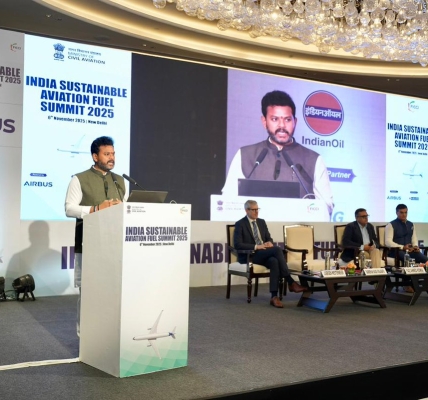
During a recent industry conference, Civil Aviation Minister Kinjarapu Ram Mohan Naidu highlighted India’s strategic direction: “Sustainable Aviation Fuel offers a feasible and immediate option to decarbonize the aviation sector. With over 750 million metric tons of available biomass and nearly 230 million metric tons of surplus agricultural leftovers, India is exceptionally equipped to meet domestic demands while also aspiring to become a global SAF leader and exporter.”
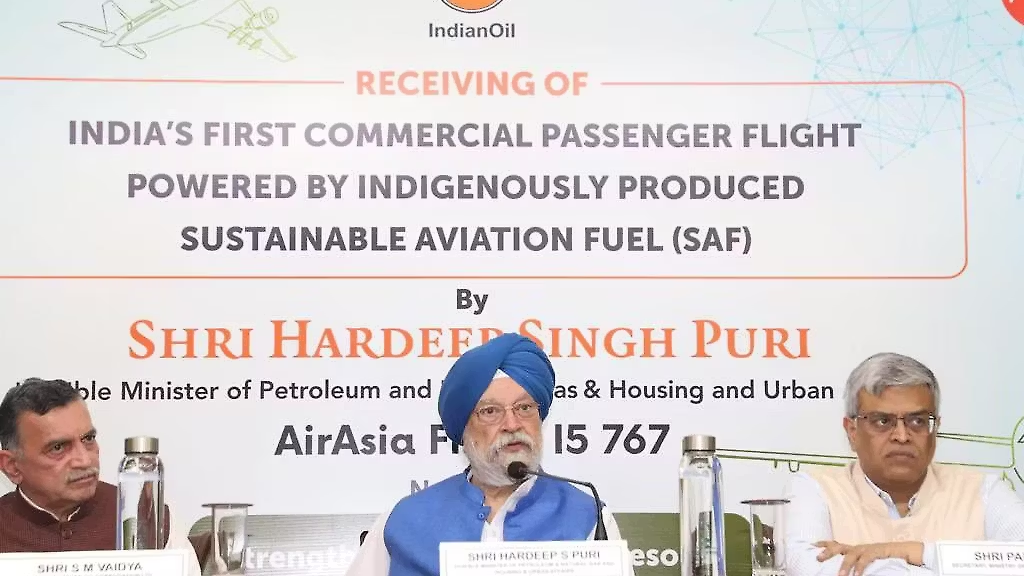
The minister reaffirmed India’s ambitious blending agenda: starting with 1% SAF in international aviation fuel by 2027, increasing to 5% by 2030, in accordance with the global CORSIA mandate (CORSIA, or the Carbon Offsetting and Reduction Scheme for International Aviation, is a global market-based strategy created by the International Civil Aviation Organization to tackle the rise of international aviation emissions and assist the industry in achieving carbon-neutral growth from 2020 onward).
The Panipat refinery’s certification under the ISCC CORSIA framework signifies a crucial step toward sustainable fuel adoption. Arvinder Singh Sahney, IOC Chairman, remarked, “The capacity of 35,000 tons annually will be adequate to fulfill India’s preliminary 1% blending 1 per cent blending target for international flights by 2027. We are partnering with aggregators to gather UCO from leading hotel chains, restaurants, and food processors such as Haldirams. However, the challenge lies in collecting UCO from smaller users and households, necessitating innovative logistical solutions.”
Vikraman Venu, Senior Vice President, SAF and Strategic Partnerships at GPS Renewables, stressed the importance of cooperative strategies to overcome production challenges. “While India has plentiful agricultural waste, the lack of a centralized UCO collection system hampers largescale commercial SAF production. The Food Safety and Standards Authority of India currently prohibits UCO imports, further restricting feedstock availability. Exploring alternative methods like biomass-to-ethanol or methanol-to-SAF remains vital for sustainably boosting production.”
India’s growing aviation industry is expected to double passenger traffic to 500 million by 2030, underscoring the urgency of decarbonising this growth. With fuel use projected to reach 31 million tons by 2040, SAF emerges as a critical solution. Nonetheless, challenges persist. Globally, SAF may cost up to three times more than conventional jet fuel, creating resistance from airlines and market hurdles.
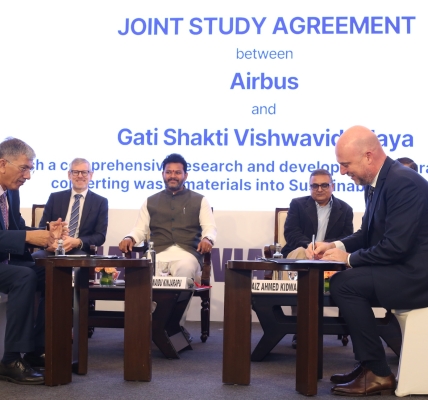
Additionally, UCO prices have surged to $1,085 per metric ton, driven by intense competition from China, Indonesia, and Malaysia, where domestic SAF policies restrict exports. Despite these challenges, India’s policy momentum remains robust. The Ministry of Civil Aviation’s feasibility study, conducted in collaboration with ICAO under the ACT-SAF program, establishes a comprehensive framework for boosting SAF production.
Civil Aviation Secretary Samir Kumar Sinha reinforced the government’s commitment, stating, “The SAF feasibility analysis provides strategic insights for a policy structure that integrates sustainability into aviation development.”
On the global stage, Lufthansa Cargo exemplifies SAF’s economic viability. Bettina Petzold, Head of Corporate Responsibility at Lufthansa Cargo, showcased real-world cost comparisons at the recent ACCF conference. Transporting a mango using SAF incurs merely a 32-cent premium over conventional fuel, whereas the transport cost of a smartphone rises by only €0.17. “These instances demonstrate that SAF is not an economic anomaly but rather an accessible, sustainable choice,” Petzold affirmed. Lufthansa Cargo’s memorandum of understanding with Shein to enhance SAF usage aligns with its goal to reduce CO₂ emissions by 50% by 2030.
India’s SAF strategy is further bolstered by state-level initiatives. Uttar Pradesh is also developing a pioneering SAF policy to attract investment, indicating decentralised support for the sector. “We aim to position Uttar Pradesh as a manufacturing centre for sustainable aviation fuel,” proclaimed Chief Secretary Manoj Kumar Singh.
As the 42nd ICAO Assembly approaches, India’s SAF ambitions are poised for international scrutiny.
The study’s findings, paired with collaboration from both public and private sectors, aim to cultivate a scalable, economically viable, and environmentally sustainable SAF ecosystem.
The crucial question ahead is not merely whether India will meet its 2027 target, but whether it will capitalize on its abundant biomass to revolutionize global SAF supply chains. With sufficient investments, policy backing, and industry cooperation, India is equipped not only to decarbonize its skies but also to supply clean fuel to the world.
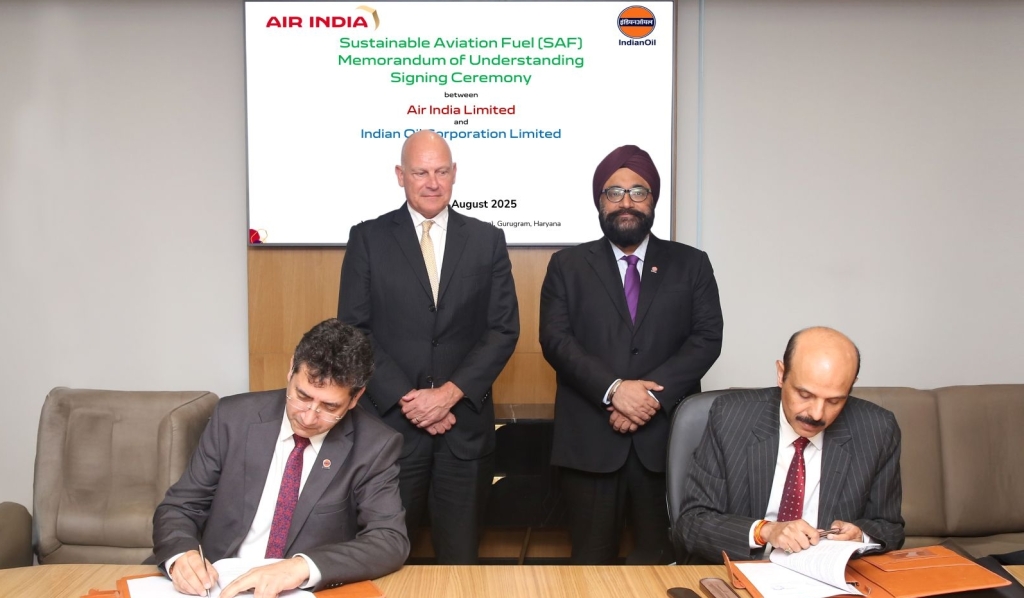
Also Read: Air India And Indianoil Sign MoU For Supply Of Sustainable Aviation Fuel