













India’s Aviation Growth Is Accelerating the Shift to Digital Infrastructure

- India’s aviation boom is forcing a fundamental rethink of infrastructure, with cloud platforms, biometrics and automation emerging as the only viable way to handle surging passenger volumes without proportionate increases in airport capacity or staffing.
- Passenger behaviour is now the strongest driver of technology investment, as demand for faster processing, end-to-end baggage visibility, digital identity and sustainability reshapes how airports and airlines prioritise spending and system design.
- Through initiatives like DigiYatra and large scale deployment of SITA’s cloud, biometric and baggage solutions, India is not just modernising its aviation ecosystem but positioning itself as a global reference point for digital-led airport operations in high-growth markets.

India’s aviation sector stands at a critical juncture. With 411 million air travellers and 174 million origin-destination passengers annually, the country has become the world’s third-largest domestic aviation market. Yet this explosive growth presents an infrastructure paradox: passenger volumes are surging while airport capacity and staffing have not kept pace. This mismatch — and the strategic response unfolding across the industry — is fundamentally reshaping how India’s airports, airlines, and governments approach technology investment.
The scale of this transformation is evident in investment commitments. According to SITA’s 2025 research, airports globally are investing $8.9 billion in digital infrastructure for 2024, while airlines are committing $37 billion.
These figures represent not incremental improvements but a decisive strategic shift toward automation, biometrics, cloud systems, and real-time operations. India is both the proving ground and primary beneficiary of this shift, with passenger expectations driving adoption faster than anywhere else in the developing world.
The Passenger Imperative: Why Digital Travel Matters
Today’s travellers are fundamentally different from previous generations. They live digital-first lives and increasingly expect their travel experience to match. According to SITA’s 2025 Passenger IT Insights Report, a striking alignment exists between what passengers demand and what technology can deliver:
What passengers want (and what they’ll pay for):
- 66% would pay for faster airport processing.
- 78% would pay for end-to-end baggage tracking.
- 79% are ready to adopt digital identities on their phones (up from 75% in 2024).
- 42% want one integrated ticket across air, rail, and road.
- 9 in 10 passengers willing to pay more or change behaviour to reduce emissions.
- Passengers prepared to pay 11.3% extra on ticket price for sustainability (2025).
This passenger-driven demand has catalysed unprecedented industry investment. According to SITA’s 2025 research, airports are increasing IT spending by 74-79% between 2023 and 2025, while airlines are ramping up by 72-87%. The message is unambiguous: technology is no longer aspirational — it is integral to competitive advantage and passenger satisfaction.
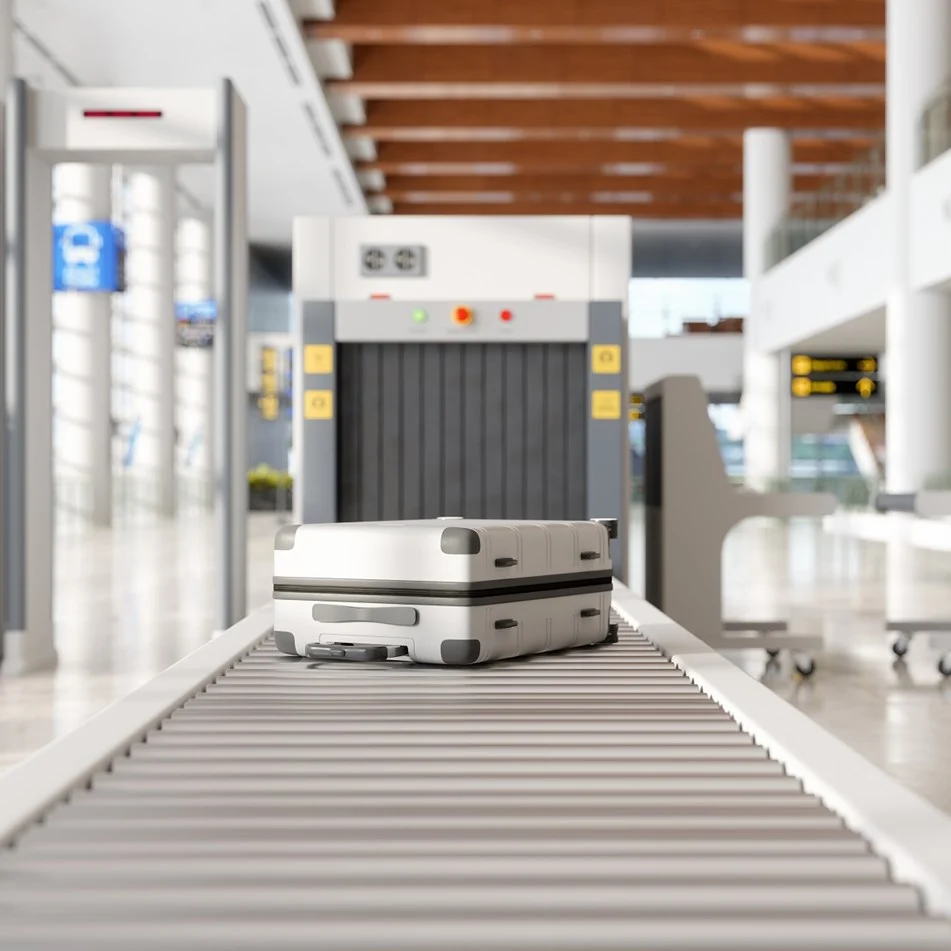
The baggage handling sector exemplifies what targeted technology investment achieves at scale.
According to SITA’s 2025 Baggage IT Insights Report, despite handling a record 5.3 billion passengers in 2024, global aviation reduced baggage mishandling to just 6.3 bags per 1,000 passengers—an 8.7% year-over-year improvement and part of a 67% improvement trend since 2007.
Critically, 66% of mishandled bags are now resolved within 48 hours via SITA’s WorldTracer system, with resolution systems increasingly automated.
Yet mishandling continues to cost airlines $5 billion annually, creating a compelling business case for continued technology investment. Real-time baggage tracking adoption is expected to reach 82% by 2027 (up from 42% today), while emerging standards like Modern Baggage Messaging are projected to reduce mishandling by a further 5%. This trajectory demonstrates that technology improvements compound — each innovation creates the foundation for the next.
India’s Digital Aviation Scale-Up: From Vision to Execution
India’s response to surging passenger demand reflects strategic ambition unmatched in the developing world. Since 1952, when Air India became the first customer of what is now SITA, India has leveraged advanced technology partnerships to manage growth.

Today, India is executing one of the world’s most ambitious digital transformation initiatives in aviation.
According to SITA’s partnership with the Airports Authority of India (AAI), cloud-based passenger and baggage solutions are being implemented across up to 50 AAI airports, expected to scale to more than 3,500 biometric touchpoints.
This represents not an incremental upgrade of existing systems but a comprehensive digital redesign of how India’s 133 airports will process passengers, manage baggage, and verify identities.
The infrastructure foundation being deployed across India includes:
- 27 VHF ground stations across the country, with 28 additional stations planned.
- E-Gate biometric boarding technology deployed at major airports since the early 2000s.
- Advanced Baggage Reconciliation Systems (BRS) ensuring accountability and real-time visibility.
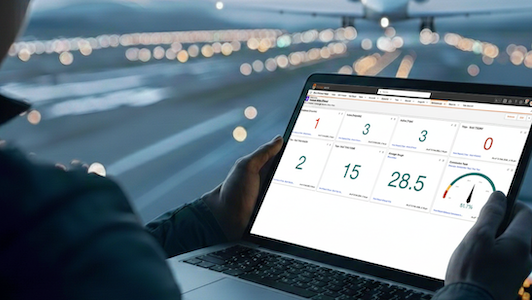
- Cloud-based operational dashboards replacing monthly reporting with real-time visibility across all airports simultaneously.
- 1,135 SITA technology professionals stationed nationwide providing 24/7 technical support.
- Global Command Centre in Delhi monitoring system performance and coordinating across all airports.
The deployment commenced in May 2022 without disrupting live airport operations — a technical achievement that demonstrated readiness for what would become India’s defining aviation technology initiative: DigiYatra.
DigiYatra and India’s Biometric Shift
India’s biometric travel program, developed in partnership with SITA, represents one of the world’s most ambitious national-scale implementations. Launched in December 2022 at three airports (Delhi, Bangalore, Varanasi), DigiYatra attracted over 20 million passengers by 2023.
The mechanism is straightforward: passengers pre-enrol using Aadhaar credentials, upload a selfie, and link their boarding pass to create a biometric credential. This single token enables passage through terminal entry, pre-security, and boarding checkpoints without physical documents.
Current deployment and expansion trajectory:
- 17 airports currently DigiYatra-enabled (12 AAI, 4 NEC-AAI, 1 BIAL).
- 10 additional airports in pipeline.
- Target coverage: ~90% of India’s domestic flying population when expanded to 28 airports.
- Alignment with IATA One ID initiative for global interoperability.

The adoption trajectory across India reflects broader global trends toward biometric technology. According to SITA’s 2025 research, 24% of aviation stakeholders globally have implemented touchless biometric technology, 32% have deployed biometric-enabled solutions, and 41% have adopted single-token systems.
In India specifically, by 2027, 75% of stakeholders plan to adopt biometric-enabled technologies. This figure reflects the rapid pace of transformation in the Indian market, where stakeholders with no plans to adopt have dropped from 30% to 25% in just one year.
The operational impact is quantifiable: according to SITA data, biometric-enabled systems reduce boarding times by 30% and traveller wait times by up to 60% — transformations that directly improve passenger satisfaction while addressing the airport staffing challenge that has constrained India’s growth.
Passenger Processing and Digital Identity: SITA’s Technology Evolution
SITA’s approach to passenger processing is increasingly focused on integrated digital platforms rather than point solutions. This strategic shift is directly relevant to India’s aviation development because solutions being refined for mature markets today are becoming available for deployment in India.

According to SITA’s 2025 technology roadmap and research, SITA’s integrated solutions include:
SITA Smart Path and Digital Travel Ecosystem: Comprehensive solutions managing the entire passenger journey from booking through baggage delivery. SITA’s vision integrates identity verification, real-time baggage tracking, and seamless onward connectivity, enabling passengers to experience travel as continuous rather than fragmented transactions.
SITA’s Passenger Processing Platforms: SITA supports India’s aviation sector with core platforms including CUPPS (Common Use Passenger Processing System), CUSS (Common Use Self-Service), and BRS (Baggage Reconciliation System) deployed across 61+ Indian airports. These systems enable 65+ Indian airlines to comply with the Government of India API (Advanced Passenger Information) requirements.
SITA’s Biometric Solutions: SITA ABC Kiosks and automated biometric gates are being deployed at Indian airports for border control, with digital identity technology helping cut boarding times by 30% and traveller wait times by up to 60%.
According to SITA’s announcements, strategic partnerships and acquisitions in 2024-2025 are expanding these capabilities:
- Materna IPS Acquisition: SITA now positions itself as leader in integrated passenger processing, combining self-service check-in, baggage drop, and biometric enrolment in unified platforms.
- NEC Partnership: Collaborating to drive global adoption of digital identities in travel, with implications for interoperable identity systems applicable to India.
- IDEMIA Partnership: Advancing biometric and digital identity solutions for interoperability across borders.
- CCM Acquisition (2025): Integrating airport design expertise with technology to improve passenger experience.
- Palo Alto Networks Partnership: Delivering industry-leading cybersecurity solutions for aviation systems.
As these capabilities mature and scale, they become increasingly available for Indian airport operators and airlines seeking to support the country’s transition to higher passenger volumes.

India’s Digital Leadership Opportunity
India’s aviation sector currently supports 7.7 million jobs and contributes $53 billion to the national GDP. With 133 airports managed by the Airports Authority of India and 1,100 aircraft expected to be operational by 2027, the country’s aviation infrastructure is expanding at an unprecedented pace.
India faces a genuine infrastructure challenge: passenger growth that outpaces airport capacity and staffing expansion. Yet this challenge is being addressed through strategic technology deployment—particularly SITA’s cloud-based systems and DigiYatra biometric initiative — that positions India to establish new standards for how developing nations can leapfrog legacy infrastructure constraints.

The technology foundation being deployed today — cloud-based baggage tracking, biometric boarding systems, real-time operational dashboards, integrated passenger processing — is not merely responsive to current demand.
It is designed to scale to 400+ million passengers by 2030, enabling India to become the world’s second-largest aviation market while maintaining security, efficiency, and sustainability standards that the industry increasingly demands.
With 17 DigiYatra-enabled airports operational and 10 additional airports in the pipeline, India is advancing toward a fully biometric-led travel environment. According to SITA’s research, this positions India not as a follower in aviation technology but as a developer and validator of solutions that other developing nations will increasingly adopt as they face similar growth pressures.
For India’s aviation sector, the strategic investments in digital infrastructure underway today, across Airports Authority of India, participating airlines, and SITA, represent the foundation for the next decade of growth.
The transformation is well underway, and the results are increasingly visible in operational metrics: airports managing record passenger volumes, mishandling rates declining despite higher throughput, biometric adoption accelerating, and passengers experiencing faster, more transparent, more sustainable travel experiences.
As India’s aviation sector continues its trajectory toward becoming the world’s third-largest aviation market by 2030, the digital infrastructure and SITA technology being deployed today will be formative for the country’s competitive position in global aviation and a model for how technology-led transformation can enable developing nations to build world-class aviation ecosystems.
Also Read: Air India Group Deploys SITA OptiFlight® and eWAS to Drive Flight Efficiency and Emissions Cuts