















India’s Aviation Reset: The Case for an Autonomous CAA

- India’s aviation sector has reached a critical juncture where rapid growth, rising complexity, and recent operational disruptions are exposing the limits of the existing regulatory structure.
- Transitioning the DGCA into a statutory, autonomous Civil Aviation Authority would provide the independence, funding stability, technical staffing, and crisis-ready leadership needed to oversee a fast-expanding and evolving aviation ecosystem.
- Clear and enforceable passenger rights, an independent aviation ombudsman, predictive data-driven oversight, and dedicated regulatory capability for emerging areas such as Advanced Air Mobility are central to building a future-ready aviation framework through a phased transition.
In over thirty years of working within the aviation ecosystem — across airline operations, safety oversight, regulatory interfaces, and airport coordination — I have seen one constant truth: aviation systems rarely fail suddenly.
They strain gradually, until a stress event exposes the limits of existing structures.
In 2017, European aviation faced such a moment when Ryanair cancelled thousands of flights due to pilot rostering failures. While disruptive, that episode became a catalyst for systemic strengthening. Regulators and airlines reassessed crew planning norms, compliance oversight, and passenger protection frameworks. Turbulence, when met with resolve, became a pathway to safer and more resilient skies.
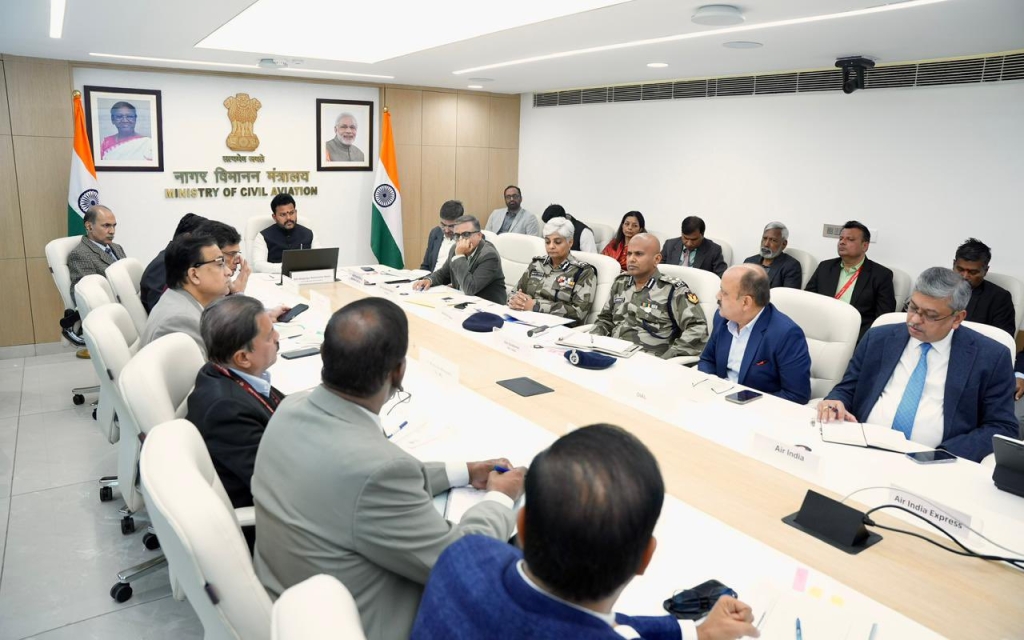
Cut to today. India finds itself at a similar inflexion point. Recent operational disruptions have highlighted pressure points in a sector that has grown at unprecedented speed. Encouragingly, this introspection is now matched by action. In November 2025, the Directorate General of Civil Aviation (DGCA) formally submitted a proposal to the Government of India to restructure itself into an autonomous Civil Aviation Authority (CAA).
This is not a moment for blame. It is an opportunity to design a regulatory framework that is ambitious, technically strong, and future-ready.
Growth Has Outpaced Governance
India is on track to become the world’s third-largest aviation market. Airlines have over 1,300 aircraft on order, airports are expanding rapidly, and passenger volumes continue to rise. Over the next decade, the sector will require tens of thousands of additional pilots, cabin crew, engineers, air traffic controllers, safety inspectors, and regulatory specialists.
Simultaneously, aviation is entering a new era. Advanced Air Mobility (AAM) — including eVTOL air taxis, hybrid-electric aircraft, and short take-off and landing (STOL) platforms — will place entirely new demands on certification, airspace integration, and safety oversight. These developments require a regulator that is not only reactive but anticipatory.
Pillar I: Unambiguous Autonomy Backed by Expertise
The effectiveness of any aviation regulator rests on independence, clarity of mandate, and technical depth.
An autonomous Civil Aviation Authority must be established through statute, insulated from short-term commercial and bureaucratic pressures, and led by professionals with deep aviation experience. India already has successful domestic precedents in regulators such as SEBI and TRAI, while internationally, the FAA (United States) and EASA (European Union) demonstrate how autonomy enables science-based, decisive regulation.
A Balanced, Sector-Funded Financial Model
True autonomy requires predictable and diversified funding. International practice shows that the cost of safety oversight should be shared across the aviation ecosystem rather than placed solely on passengers. A future Indian CAA could be funded through:
- Contributions from airport operators (aeronautical and non-aeronautical revenues)
- Navigation-related charges routed via AAI
- Modest levies from fuel suppliers, MROs, and ground handling agencies
- Registration, licensing, and certification fees
- Contributions from general and business aviation
These revenues should flow into a ring-fenced Civil Aviation Safety Fund, used exclusively for regulatory functions such as audits, training, surveillance, and digital systems.
Building and Retaining Technical Talent
The authority must have the freedom to recruit laterally from airlines, MROs, defence aviation, academia, and global markets. Competitive, market-linked remuneration is essential to address chronic staffing shortages and reduce reliance on deputation-based manpower.
Leadership Prepared for Crisis: Training Beyond Regulation
An often-overlooked aspect of regulatory effectiveness is leadership preparedness during disruption. Senior officials of the new CAA must undergo specialised training in crisis management and crisis communication, an area where global regulators invest heavily.
Leading authorities such as the FAA, EASA, and CAAS (Singapore) regularly train their senior leadership in:
- Crisis decision-making under operational stress
- Media and public communication during large-scale disruptions
- Stakeholder coordination across airlines, airports, ATC, and emergency agencies
- Post-incident review and systemic learning
Institutionalising such training ensures that during disruptions, communication is calm, factual, and confidence-building. Equally important, structured platforms should be created for CAA leadership to regularly exchange best practices with other global CAAs, ensuring continuous learning and alignment with evolving international standards.
Pillar II: Passenger Rights That Are Clear and Enforceable
Passenger confidence is central to aviation sustainability. Mature aviation systems treat passenger rights as statutory obligations.
Global Benchmarks:
- European Union (EC 261): Clear obligations for care, communication, and compensation during delays and cancellations.
- United States (DOT): Mandatory refunds for significant disruptions and strict enforcement against unfair practices.
- Montreal Convention: Global standard for airline liability for lost, delayed, or damaged baggage, with compensation capped in Special Drawing Rights (SDRs) — a neutral, internationally recognised measure whose value adjusts over time.
Countries such as Canada, Japan, and Singapore complement these frameworks with technology-driven baggage tracking, defined timelines for claims, and automatic refunds of baggage fees when service standards are breached.
A Statutory Aviation Ombudsman
To give real effect to passenger rights, India should establish an independent Aviation Ombudsman with quasi-judicial authority. Modelled on systems in Australia and parts of Europe, this body would provide swift, binding resolutions and enhance public trust in the regulatory system.

Photo: MoCA
Pillar III: A Regulator with Foresight and Authority
Modern aviation oversight must be predictive rather than reactive.
- Data-driven surveillance using airline-submitted operational data
- Risk-based audits focused on fatigue, maintenance trends, and capacity stress
- Clear separation between policy (Ministry), regulation (CAA), and service provision, as seen in the UK, Australia, and Canada
- Dedicated capability for Advanced Air Mobility, covering certification, airspace integration, and infrastructure oversight
This approach ensures safety oversight remains technically driven and insulated from competing interests.
A Streamlined Flight Path to Autonomy
Phase 1 (0–12 Months): Foundation
- Enact the Civil Aviation Authority Act
- Constitute a transition board
- Finalise funding mechanisms
- Establish the passenger ombudsman framework
Phase 2 (12–30 Months): Operational Maturity
- Appoint leadership and technical specialists
- Launch a dedicated aviation regulatory training academy
- Transfer oversight functions progressively
- Deploy digital safety surveillance systems
- Publish transparent safety and consumer performance metrics
Designing the Future, Not Reacting to It
An autonomous Civil Aviation Authority is not a criticism of the past — it is a strategic investment in India’s aviation future. With the DGCA’s proposal now submitted, India has a rare opportunity to align its regulatory framework with global best practices while preparing for next-generation aviation.
After three decades in the sector, one conclusion is clear: strong aviation systems are built through foresight, not crisis response. The time to build that strength is now.
About the Author: Pervaiz Alamgir Khan is an aviation professional with over 30 years of experience across international airline operations, regulatory coordination, safety oversight, aviation security, and airport operations. He advises on aviation policy, operational resilience, and next-generation mobility frameworks.
Also Read: Not IndiGo’s Monopoly — It’s India’s Brutal Economics of Flying That Keep Killing Airlines