













- Business aviation in India is gaining strategic relevance for industry, connectivity and mobility, but growth is constrained by fragmented infrastructure, regulatory friction and limited FBO capability.
- Parking scarcity, regional airport gaps, airline-style rules for business jets and helicopters, and high taxation continue to block investment, modern ownership models and fleet expansion.
- Sustainable growth demands dedicated GA airports, unified FBO ecosystems, GA-specific regulations, rational tax structures and stronger workforce development to unlock business aviation as a national productivity driver.

Business aviation in India is standing at a critical inflexion point. Long perceived as an exclusive domain of the wealthy, private aircraft are increasingly being recognised as strategic tools that enable productivity, rapid accessibility and industrial mobility, especially in regions underserved by commercial airlines.
Demand is expanding, airport networks are growing, and investment sentiment is positive. Yet the sector continues to be constrained by structural challenges — infrastructure gaps, fragmented regulation, taxation complexity and a widening shortage of skilled people. Unless these fundamentals evolve together, India risks missing a rare window of opportunity to transform business aviation into a national economic asset instead of a niche luxury segment.
Why Business Aviation Still Struggles
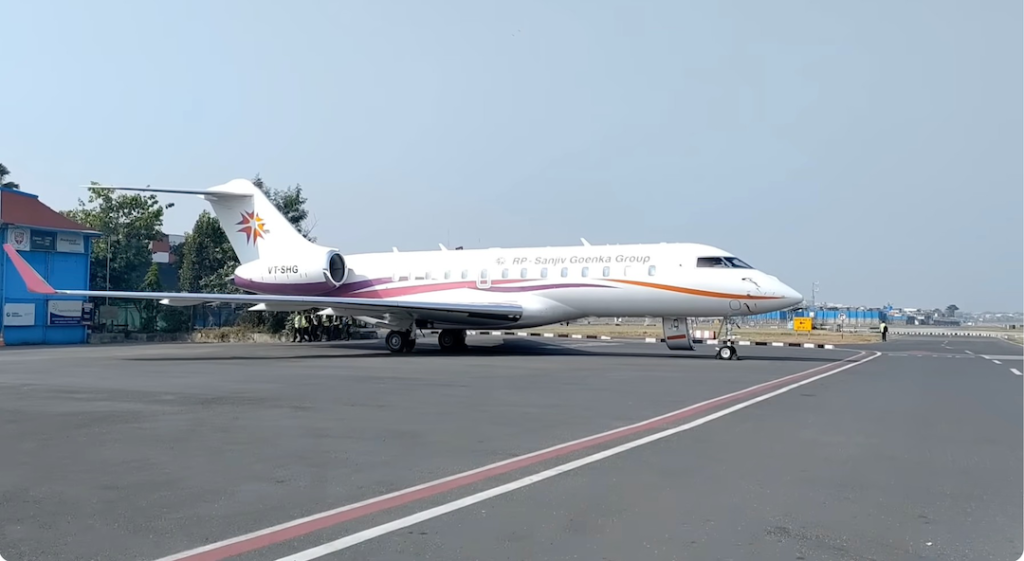
Despite rising interest and utilisation, the reality on the ground remains restrictive. Infrastructure improvements in major metros — such as the introduction of private aviation terminals, including Terminal 4 in Delhi and dedicated corporate-jet facilities in Mumbai — have created momentum. However, India still lacks true Fixed-Base Operator (FBO) capability.
A genuine FBO is a single-window ecosystem that manages parking, fuelling, ground handling, clearances, and passenger services seamlessly under one coordinated operation. Today, India functions through dispersed responsibilities across multiple agencies, which increases both complexity and turnaround time.
These limitations become more pronounced beyond major hubs.
Smaller cities and regional airports frequently lack hangars, maintenance support, helicopter-ready facilities or reliable parking options.
Even operators willing to add aircraft struggle to secure infrastructure to support them.
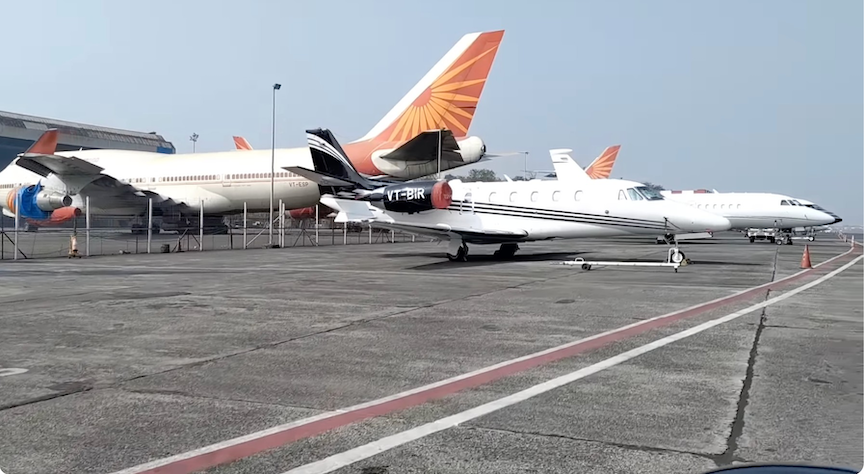
Parking scarcity remains one of the tightest bottlenecks: numerous buyers are ready to acquire jets but must postpone purchases because long-term parking slots cannot be guaranteed in cities such as Delhi or Mumbai. Slot constraints and operational penalties worsen the situation. Delays of only a few minutes can lead to multi-day grounding, creating unpredictability that discourages investment and operational planning.
Regulatory friction forms another major barrier. India continues to apply the same aviation framework used for scheduled airlines to business jets and helicopters, despite significant differences in utilisation and mission profiles, such as charter flights, ad hoc industrial access, medical evacuation, or remote-region connectivity.

Requirements such as a minimum 300 hours of cockpit time for Indian pilots and 500 hours during the monsoon season compel operators to rely on expatriate pilots far longer than necessary, slowing the growth of domestic pilot capability and adding considerable cost. Helicopter missions often require multiple layers of approval, making time-critical emergency or rescue missions extremely difficult to execute.
Globally recognised safety and compliance systems such as the International Standard for Business Aircraft Operations (IS-BAO) support structured oversight and auditing, but without formal regulatory acceptance in India, their usefulness is limited. Meanwhile, economic barriers such as import duties and high Goods and Services Tax (GST) continue to restrict fleet expansion.
Since the 2008 rewrite of tax structures, aircraft acquisition and operation costs have risen significantly. Political optics around luxury have prevented rationalisation — even when aircraft are being used for industrial logistics or remote access rather than executive comfort.
Fractional ownership — a globally established model that allows multiple users to share aircraft ownership and cost — remains stuck without regulatory approval despite extensive discussions across ministries. Without modern ownership frameworks or professional aircraft-management support, participation remains limited, and the industry is unable to scale toward mainstream usage.
What Must Change to Enable Sustainable Growth
Unlocking the true potential of India’s business aviation market requires an integrated, long-term approach rather than incremental fixes.
India needs dedicated general-aviation airports embedded within a cohesive national strategy. These airports must offer parking hangars, MRO facilities, helipads, ground handling, fuel and ATC support designed specifically for business-aviation requirements. Building true FBO ecosystems — with unified, single-window control — will reduce operational unpredictability and create reliable pathways for aircraft acquisition, fleet utilisation and customer confidence. This must form part of a long-term vision, such as a 2047 infrastructure roadmap.

Regulatory reform is equally essential. Business aviation needs a dedicated General Aviation Civil Aviation Requirement (CAR) rather than being governed by airline-oriented rules. Pilot-licensing structures, duty-time limits and helicopter-operation approvals must reflect operational realities rather than rigid airline metrics. Recognition of IS-BAO as a compliance benchmark would create trust and accountability without unnecessary procedural friction.
Taxation must differentiate between usage types. Business aviation supporting industrial projects, medical transfers, emergency logistics or connectivity to remote manufacturing regions should not face the same financial burden as discretionary luxury travel. Rational GST treatment and selective duty support would enable more balanced access and encourage market expansion beyond the Mumbai-Delhi movement.

Ownership and operational efficiency also require reform. Professional aircraft-management structures and fractional-ownership models can broaden participation and optimise utilisation. A more consolidated and structured approach among Non-Scheduled Operator Permit (NSOP) holders would improve safety standards and ease regulatory supervision.
Investment in workforce development is critical. Rapid fleet expansion must be matched with pilot training, engineering capability, recurrent training culture and a transparent, learning-based safety mindset rather than punitive oversight. Strengthening Flight Data Monitoring (FDM), enabling open reporting and reducing operational fear are central to sustained aviation safety leadership.
From Exclusive to Essential

India has the market appetite, capital availability and growth momentum to build one of the world’s most dynamic business-aviation ecosystems.
However, without coordinated action across infrastructure, regulation, taxation, ownership structure, skills development and safety culture, progress will remain constrained by systemic limitations.
If policymakers, regulators and industry stakeholders collaborate to modernise the operating environment, business aviation can evolve from a premium service for a few to a national productivity engine — powering industrial growth, emergency response, regional connectivity and economic competitiveness.
The foundation exists. The momentum is real. But the next five years will determine whether business aviation becomes a backbone of India’s mobility future — or remains a parallel world operating outside the mainstream of national development.