
















- Delhi Airport has become the first in India to achieve net zero carbon emissions, setting a significant milestone in sustainable aviation.
- Through innovative strategies and green initiatives, the airport has demonstrated its commitment to reducing its environmental impact and leading the way in carbon neutrality.

The environmental impact of aviation is undeniable. From waste reduction to energy efficiency, the world’s busiest airports are pioneering innovative sustainability strategies in the race to net zero. The aviation industry, responsible for around three per cent of global carbon emissions, has committed to achieving carbon neutrality by 2050, but significant challenges remain.
Amid the complex task of reducing emissions in flight, many airports worldwide have emerged as leaders in sustainability. Despite their energy-intensive operations, many airports have made strides in recent years to shrink their carbon footprint, conserve energy, and support their communities. Indian airports also hold a prominent place in the league. By adopting energy-efficient technologies, launching waste-reduction initiatives, electrifying ground fleets, and engaging with local communities, some of the largest and busiest airports are implementing bold and creative strategies to become global leaders in green aviation by positioning themselves among the world’s greenest.
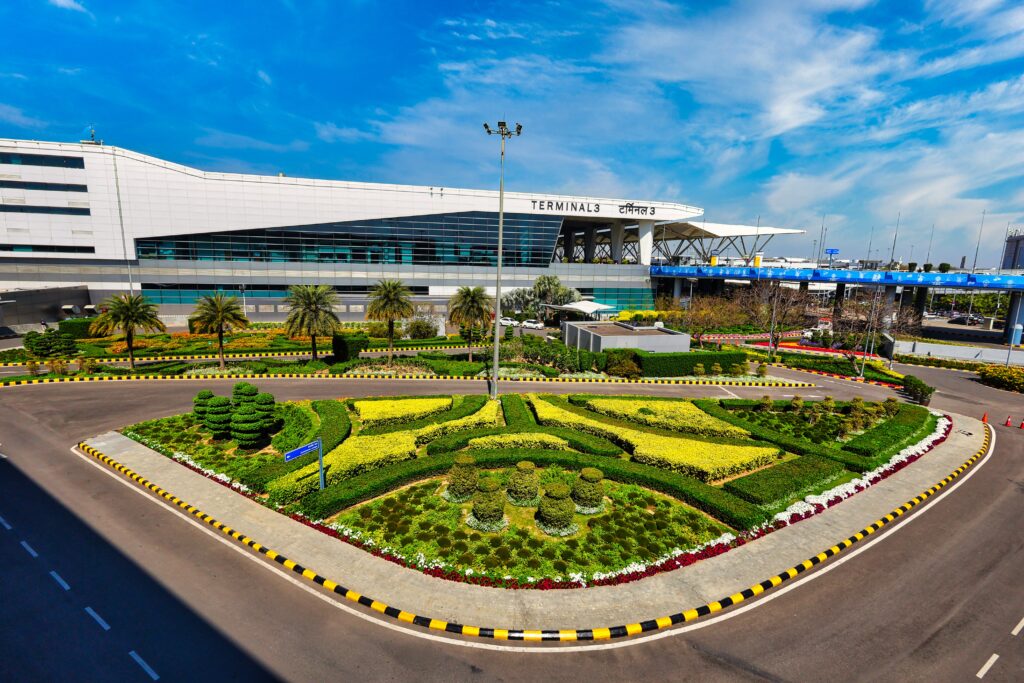
Delhi Airport recently became the first airport in India to achieve net zero carbon emissions, a milestone recognised under the Airport Council International’s (ACI) Airport Carbon Accreditation (ACA) programme. The airport has been awarded the prestigious Level 5 certification, marking a significant achievement in its sustainability journey.
Initially aiming to reach net zero carbon emissions by 2030, Delhi Airport has surpassed this target ahead of schedule through innovative strategies and proactive measures. These efforts include adopting renewable energy, developing green airport infrastructure, promoting electric vehicles, and implementing zero-waste-to-landfill programmes.
The airport achieved Level 5 certification by reducing Scope 1 and 2 CO2 emissions by 90 per cent, with the remaining emissions offset through approved removal strategies in accordance with ACA’s stringent requirements.
Looking forward, Delhi Airport is committed to achieving net zero emissions in Scope 3 by 2050, aligning with ACI’s frameworks and global sustainability goals. This follows the airport’s achievement of carbon-neutral status in 2016 and Level 4+ transition accreditation in 2020. As part of its ongoing commitment to sustainability, Delhi Airport is exploring adopting sustainable aviation fuel options to address Scope 3 emissions.
Commenting on the development, Videh Kumar Jaipuriar, CEO of Delhi International Airport Limited, said: “Reducing carbon emissions from airport operations has been a key focus for us at IGIA. Achieving carbon-neutral status in 2016 and Level 4+ transition accreditation in 2020 was just the beginning. Now, with the attainment of Level 5 net zero emission accreditation in 2024, we have once again demonstrated our commitment to continual improvement and sustainability. As we face the challenges of climate change, we are committed to further reducing our carbon footprint and exploring sustainable aviation fuel options to address Scope 3 emissions. Achieving ACI’s Level 5 certification well before our target date is a testament to our dedication to sustainability and innovation.”
Initiatives and Highlights:
Renewable Energy: Delhi Airport has installed a 7.84 MW solar power plant within the airport’s airside area and sources additional renewable-based electricity through open access. The airport currently operates entirely on renewable energy, eliminating approximately 200,000 tonnes of CO2 annually.
Green Building Certification: Delhi Airport’s Terminal 3 has received LEED Gold and IGBC Platinum certifications. Terminal 1, currently under development, has also received LEED Platinum Pre-certification, contributing to a total of 7.64 lakh m² of certified green building area by the end of 2023.
Water Management: With over 350 rainwater harvesting systems and a zero liquid discharge sewage treatment plant, Delhi Airport is on track to achieve water-positive status.
Operational Efficiency: The Airport Collaborative Decision Making (A-CDM) system has enhanced air traffic flow and reduced fuel consumption and emissions, contributing to overall operational efficiency.
Electric Vehicles and TaxiBots: Delhi Airport has adopted electric vehicles and TaxiBots, significantly reducing fuel consumption and emissions during aircraft taxiing operations.
Elevated Eastern Cross Taxi Way: The newly operational Eastern Cross Taxi Way has reduced taxiing time, improved efficiency, and cut CO2 emissions by approximately 55,000 tonnes annually.
Energy Management System: Delhi Airport is the first airport globally to adopt and certify an ISO 50001:2018 Energy Management System, leading to reduced fuel and electricity consumption over the years.
The race to net zero is on, and such developments show that, in essence, achieving ‘Net Zero carbon emissions’ by 2050 is a critical goal that our global society must meet to avoid the most severe impacts of climate change. The urgency of this task is underscored by the scientific findings of the Intergovernmental Panel on Climate Change (IPCC), particularly their Special Report on Global Warming of 1.5°C, released in October 2018. This report highlights the pressing need to address our impact on the climate, defining Net Zero as the point at which human-caused CO₂ emissions are balanced by CO₂ removals over a specified period. Put, to achieve Net Zero, we must either eliminate new CO₂ emissions or offset them by removing existing CO₂ from the atmosphere.
While efforts to reduce emissions from aviation are ongoing, the sector’s emissions are still expected to rise under a “business-as-usual” scenario, due to both the lack of clear solutions for decarbonisation and increasing demand. However, the IPCC report emphasises that “urgent and drastic action” is required to limit global warming in line with the Paris Agreement, including “unprecedented and deep emissions reductions in all sectors.” This means global emissions need to drop by 45 per cent by 2030 and reach Net Zero by 2050. The aviation industry must be a key player in this global effort, accelerating its efforts to decarbonise.
Airports are already taking bold steps in this direction, drawing on over a decade of experience in carbon management, even from a time when awareness of the climate crisis was still emerging.
It may be mentioned that India’s Ministry of Civil Aviation (MoCA) has taken initiatives to work towards carbon neutrality and achieving net zero carbon emission at airports in the country by standardising the carbon accounting and reporting framework of Indian airports. For this purpose, airport operators with scheduled operations have been advised to map the carbon emission at their respective airports and to work towards carbon neutrality & net zero emission in a phased manner. MoCA has also advised developers of the upcoming Greenfield Airports and the respective State Governments to work towards achieving Carbon Neutrality & Net Zero, which inter-alia includes the use of green energy.
With the above efforts of the Government of India, Airports like Delhi, Mumbai, Hyderabad, and Bengaluru have achieved Level 4+ and higher ACI Accreditation and have become Carbon neutral. Additionally, 66 Indian Airports are operating on 100 per cent Green Energy.
Accelerating aviation decarbonisation will be one of the most pressing challenges in the coming years, and airports are poised to lead the way in shaping a sustainable future. Airports worldwide, regardless of size or location, have already begun developing decarbonisation roadmaps that outline short, medium, and long-term sustainability goals, aiming for various levels of certification under the ACI Airport Carbon Accreditation (ACA) scheme.
Further, in the short term, airports should assess their current carbon footprint to establish a science-based decarbonisation strategy. This involves identifying immediate actions to reduce emissions within their direct control—Scope 1 and 2 emissions—which currently account for about three per cent of all airport emissions. While Scope 1 includes direct emissions from either owned or operated facilities, including stores, warehouses and distribution centres, plus emissions from company vehicles, Scope 2 emissions include emissions from electricity used in stores, distribution centres and other facilities.
In the long term, the challenge intensifies as airports work to mitigate Scope 3 emissions, which include indirect emissions from upstream and downstream activities, such as those generated by suppliers and passengers. Emerging propulsion technologies like hybrid-electric, electric-powered, and hydrogen-powered flights are expected to contribute significantly to reducing greenhouse gases (potentially up to 15 per cent by 2050), and airports can begin laying the groundwork for these advancements now.