












IndiGo Adds New UK Frequencies, Intensifies Competition on India–UK Corridor

- IndiGo expands its UK footprint with higher frequencies on Mumbai– and Delhi–Manchester routes, while its new daily Mumbai–Heathrow adds further capacity this winter.
- Air India leads the India–UK corridor with 61 weekly flights and 18,066 seats, while British Airways, Virgin Atlantic, and Emirates add competitive strength.
- The expansion highlights IndiGo’s growing long-haul ambitions via Norse Atlantic’s 787-9 fleet and Manchester’s rising role as a second UK hub for Indian travellers.
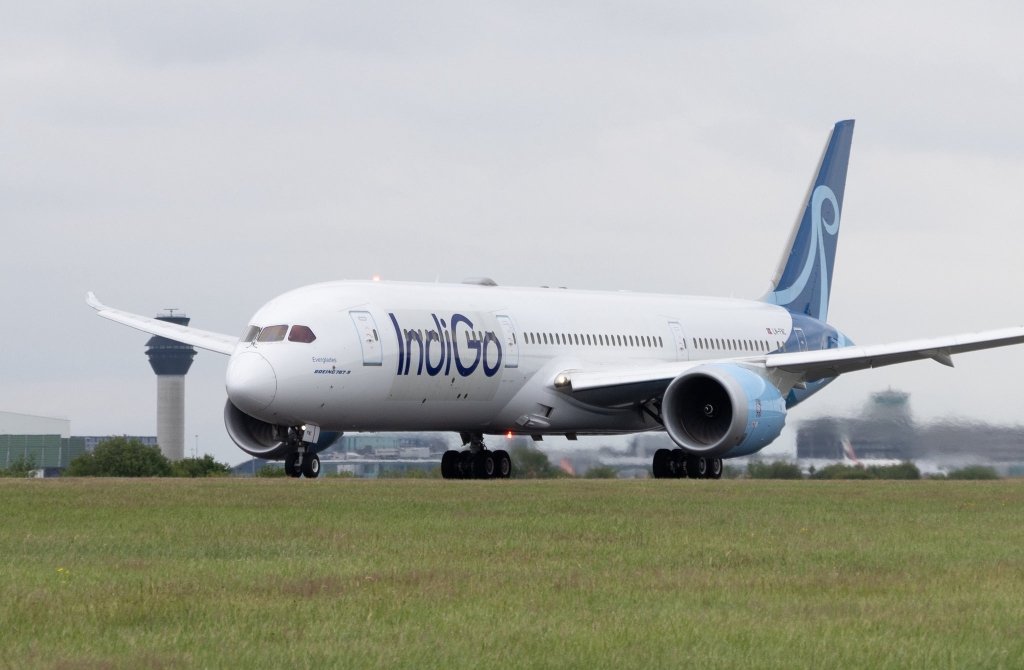
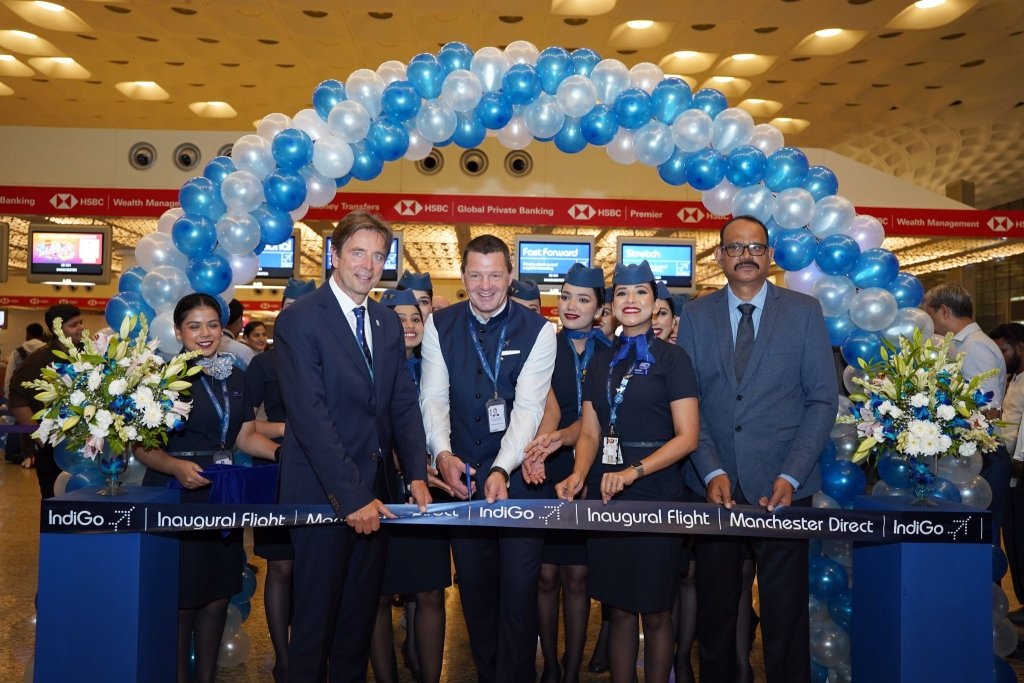
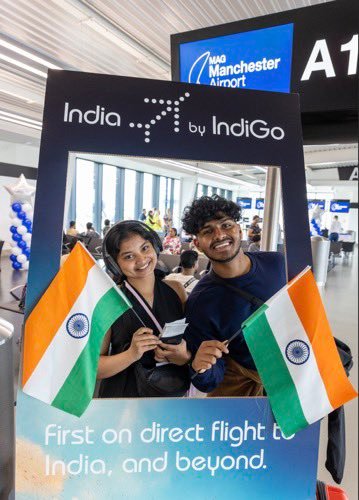
IndiGo is expanding its footprint in the United Kingdom with additional non-stop frequencies from both Delhi and Mumbai to Manchester, signalling a deeper push into the high-yield India–UK travel corridor. The move comes just weeks after the carrier launched its first long-haul operations to Manchester and Amsterdam in July and announced new daily flights to London Heathrow from Mumbai starting October 26.
From mid-November, IndiGo’s Delhi–Manchester service will increase from four to five flights per week. While the Mumbai–Manchester route will increase from three to four weekly flights. Operated with the airline’s Boeing 787-9 Dreamliners leased from Norse Atlantic Airways, the uplift represents an approximate 28% increase in non-stop capacity between India and Manchester. Separately, IndiGo’s daily Mumbai–Heathrow service begins on October 26; IndiGo has published timings and opened sales for the new Heathrow route. A crowded corridor gets busier
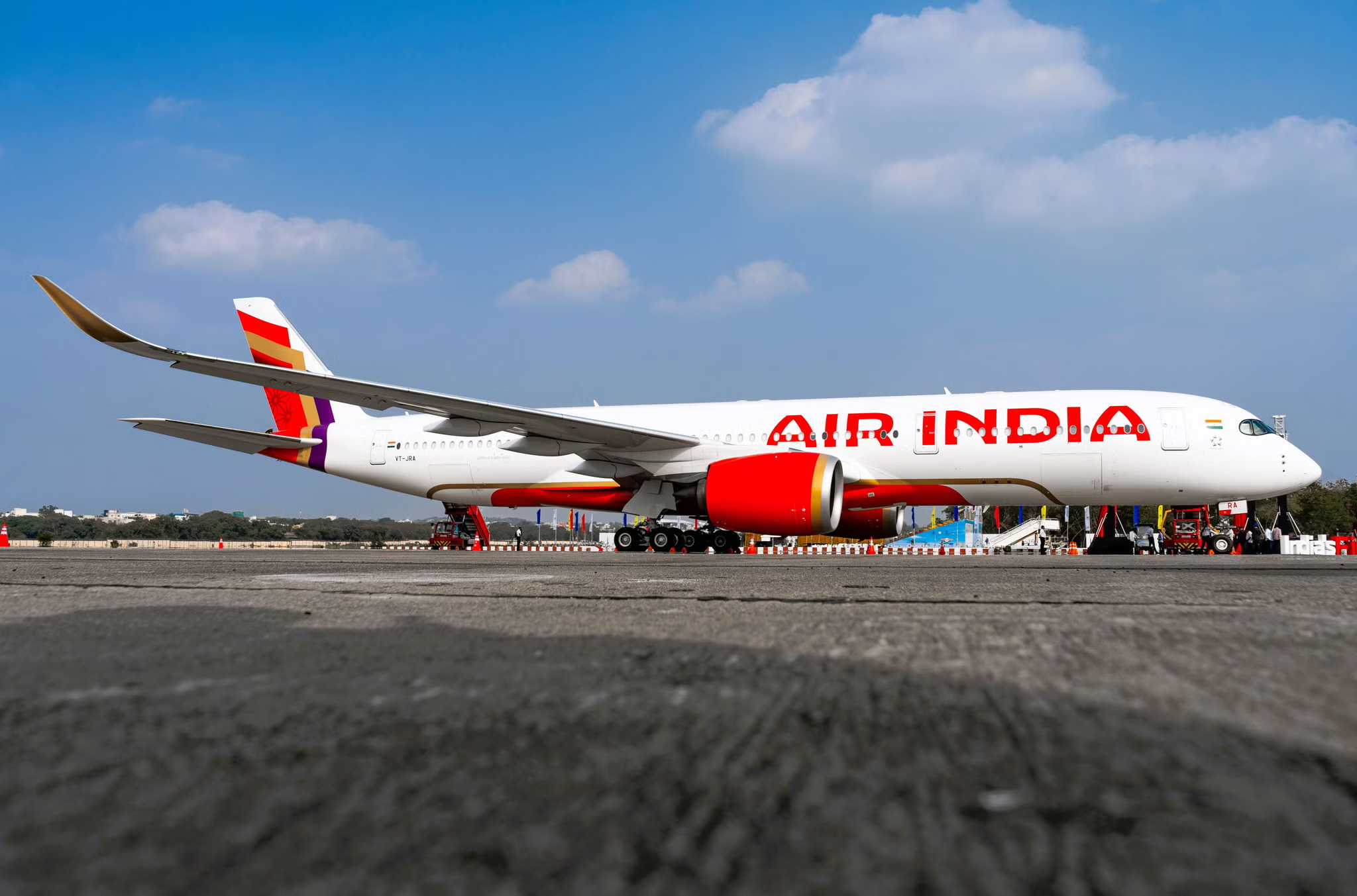
IndiGo’s move drops into an already competitive India–UK market led by Air India, which today announced it will add a fourth daily Delhi–Heathrow from October 26, taking that single city-pair from 24× to 28× weekly and adding 1,196 seats each way per week. In the same release, Air India states it is “the largest carrier between India and the UK, operating 61× weekly and deploying 18,066 seats per week (one-way)”, connecting Delhi, Mumbai, Bengaluru, Ahmedabad and Amritsar with London Heathrow, London Gatwick and Birmingham.
On the UK side, British Airways confirms it “currently operates 56 flights a week from five cities in India” (Mumbai 3-daily, Delhi double-daily; daily from Chennai, Bengaluru and Hyderabad), with plans flagged previously to step up further as capacity becomes available. Virgin Atlantic highlights a schedule in which Mumbai and Delhi operate twice-daily and Bengaluru daily as part of its India push.
One-stop competition remains intense. Emirates has announced it will lift London Heathrow to 48 flights weekly ahead of the winter rush—re-energising India-via-Dubai itineraries into the UK—and Etihad continues to offer strong India–UK connectivity over Abu Dhabi, including to Manchester.
What IndiGo is adding—and how it’s powered
IndiGo’s UK growth is underpinned by its wide-body arrangement with Norse Atlantic. IndiGo first disclosed a damp-lease of a 787-9 in February 2025, with Norse later confirming completion of a six-aircraft wet-lease scope for IndiGo in May 2025—providing the fleet depth to sustain daily Mumbai–Heathrow plus alternating Delhi/Mumbai–Manchester patterns through winter.
While IndiGo hasn’t published per-flight seat counts, Norse’s own corporate filings repeatedly reference a 787-9 configuration of 338 seats used for efficiency planning.
Using that as a clearly labelled estimate, IndiGo’s winter UK schedule would translate to roughly ~2,366 one-way seats per week on Mumbai–Heathrow (7×), plus ~3,042 one-way seats per week across Delhi/Mumbai–Manchester (5× + 4×), for an indicative total ~5,400 one-way seats weekly. (This is an analytical estimate for context; actual seats may vary by aircraft tail and operational day.)
Why Manchester matters: Manchester concentrates significant VFR and student traffic and serves a broad diaspora across northern England and parts of Scotland.
Adding both Delhi and Mumbai lift strengthens non-stop options beyond London and places price-sensitive passengers in a stronger position when London fares spike. With Air India scaling London and BA/VS holding substantial Heathrow portfolios, IndiGo’s Manchester emphasis is the clearest competitive angle this winter.
Why Heathrow still sets the tone: Heathrow remains the demand centre where Air India, BA and Virgin Atlantic already provide deep frequency and premium-cabin breadth. IndiGo’s daily Mumbai–Heathrow from October 26injects a new LCC-style non-stop choice into that mix, and Emirates’ step-up to 48× weekly LHR further expands one-stop availability—typically softening shoulder-season pricing and improving last-seat access.
Strategic importance of Manchester
Manchester has emerged as a critical destination for Indian carriers seeking to diversify beyond London. The city serves as a major base for the Indian diaspora across northern England and Scotland and is a preferred entry point for students and small-business travellers. IndiGo’s decision to increase both Mumbai and Delhi frequencies suggests early load factors have exceeded expectations, particularly among Visiting Friends and Relatives (VFR) segments and group bookings tied to academic intakes.
By adding capacity here, IndiGo directly competes with one-stop offerings from Middle Eastern carriers while offering time savings and predictable fares. The move also bolsters IndiGo’s reputation as a low-cost carrier capable of long-haul reliability, an image it is steadily building through disciplined network expansion and partnership-driven fleet strategy.
A shifting transcontinental balance
The India–UK corridor has grown into one of the busiest long-haul markets globally, driven by a mix of business, tourism, and VFR traffic. According to the UK Civil Aviation Authority, annual two-way passenger volumes with India ranking among the top five global markets for Heathrow by seat capacity. With IndiGo’s entry, competition now spans every service model—from Air India’s full-service A350s to IndiGo’s high-density Dreamliners.
In practical terms, passengers will see more fare diversity and greater flexibility in scheduling. For the market, it marks another sign that India’s private carriers are maturing beyond regional dominance, venturing into intercontinental sectors once reserved for legacy airlines.
Also Read: IndiGo Announces Direct Daily Flights Between Mumbai and Heathrow