













- IndiGo weaponised a nationwide aviation shutdown to force DGCA to dilute pilot fatigue rules, cancelling over 1,000 flights with near-zero notice to generate maximum panic.
- A board packed with India’s most respected governance, legal, military and aviation leaders remained silent, failing to uphold public interest or restrain management excess.
- By demonstrating that it can paralyse airports and pressure regulators without consequence, IndiGo exposed a structural danger: a near-monopoly powerful enough to hold the nation’s aviation system hostage.

IndiGo didn’t merely stumble into a meltdown last week — it engineered a national aviation crisis and used it to batter the government into diluting India’s toughest pilot fatigue rules in years. An airline with over 60% market share weaponised chaos, paralysed airports, and extracted a regulatory rollback with clinical precision.
But the deeper scandal unfolded elsewhere: IndiGo’s Board of Directors — a roster of some of India’s most accomplished administrators, jurists, aviation leaders and corporate governance stalwarts — vanished in the moment the country most needed them.
It was a crisis too perfectly timed to be accidental. The sequence was unmistakable.
IndiGo refused to rework its red-eye-heavy network to comply with the new DGCA FDTL norms.
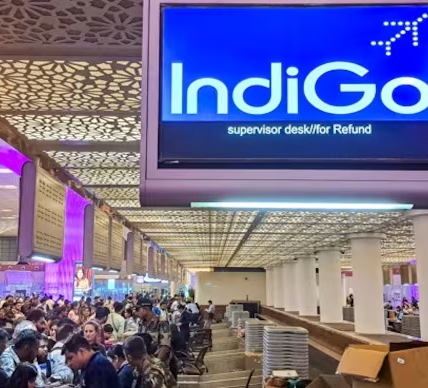
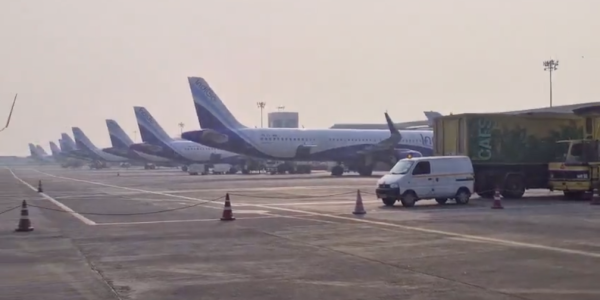
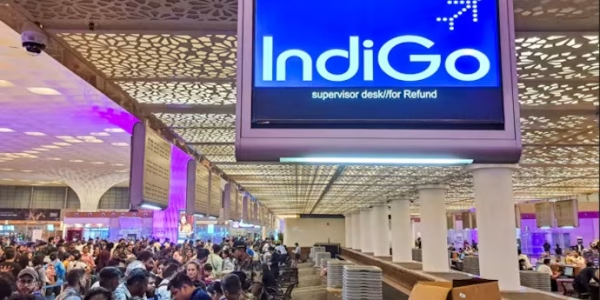
It continued selling tickets for flights it internally knew could not operate. It issued no advisories, no alerts, no warnings. Passengers kept arriving at terminals until over 1,000 flights were cancelled with near-zero notice, triggering maximum panic.
Delayed refunds protected liquidity. Staff at Bengaluru openly told passengers the chaos would last “at least a month” — the exact duration the new rules were to be phased in. Then, the moment DGCA relaxed the norms, the crisis evaporated.
This was not system failure. It was strategic overload designed to bend the regulator. And the Board? Missing. Muted. Meaningless.
This is not a lightweight board. IndiGo’s directors include:
- Vikram Singh Mehta, one of India’s most respected corporate leaders and former head of Shell India.
- Pallavi Shroff, among the country’s foremost legal minds, with deep expertise in regulation and competition law.
- ACM B.S. Dhanoa (Retd.), former Chief of the Indian Air Force, with unmatched aviation, safety and risk-management credentials.
- Michael Whitaker, former Administrator of the U.S. Federal Aviation Administration — a global authority on safety oversight.
- M. Damodaran, former SEBI Chairman and one of India’s most influential voices on corporate governance.
- Amitabh Kant, celebrated governance reformer and G20 Sherpa.
- Gregg Saretsky, former CEO of WestJet with decades of airline leadership.
- Anil Parashar, veteran finance and operations strategist from InterGlobe.
A board like this is not ornamental. It is supposed to foresee systemic risk, discipline management, and prevent precisely the kind of coercive behaviour IndiGo displayed. Yet during the most disruptive aviation shutdown in decades, not one public intervention, not one corrective action, not one enquiry, and not even a post-crisis statement emerged from this board.
There was a governance breach. India’s corporate governance framework mandates Independent Directors to protect public interest and restrain management excess. By that measure, IndiGo’s board failed spectacularly.
They did not act when the airline:
- Misled passengers by selling flights it could not operate
- Triggered national-level disruption
- Manipulated refunds to preserve cash
- Compromised safety by resisting fatigue-mitigating norms
- Strong-armed a regulator into reversing policy
This wasn’t silence. It was abdication. It was a meltdown created to save a business model. IndiGo’s real vulnerability lies in its hyper-efficient red-eye model — overnight operations built on stretched pilot rosters, minimal buffers, and fatigue-prone schedules. The new FDTL norms threatened this engine. Instead of hiring more pilots, adding slack, or restructuring, IndiGo chose confrontation.
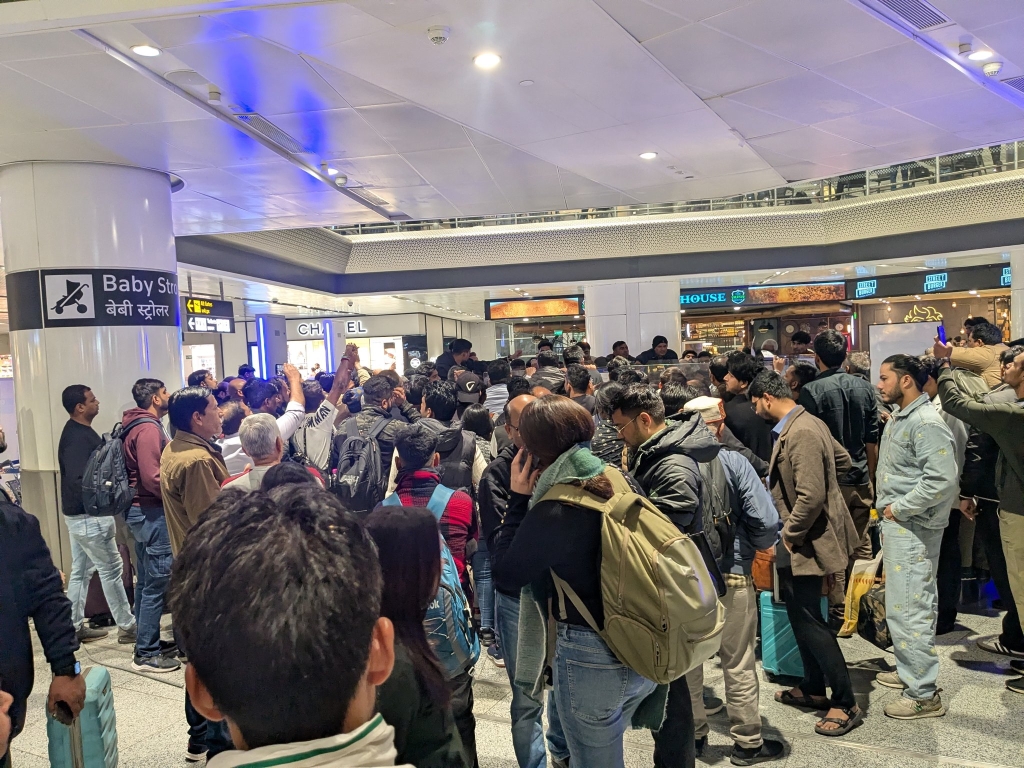
Passengers — the very people funding its dominance — became collateral damage. There were families sleeping on airport floors, Seniors stranded without updates, Terminals overflowing and refunds withheld for days. This wasn’t operational collapse. It was strategic suffering, inflicted to achieve a regulatory outcome.
The market understood — and so did the government. IndiGo’s stock barely dipped 2% before recovering. That wasn’t resilience; it was recognition. Investors understood IndiGo would win the standoff. And it did. DGCA rolled back the toughest fatigue protections Indian pilots were ever set to receive.
A near-monopoly had demonstrated that it could choke the country’s aviation system — and face no meaningful consequence.
The real danger exposed by this episode is structural: IndiGo has become powerful enough to hold a nation hostage. Its Board has become too disengaged, too deferential, or too irrelevant to stop it.
When a board packed with a former FAA chief, a former IAF chief, India’s top corporate governance voice, a globally recognised legal authority, and some of India’s most seasoned administrators cannot — or will not — intervene, the problem is not ignorance. It is systemic failure.
If the government and DGCA do not confront this imbalance now, the next crisis won’t be accidental. It will be a negotiation tactic. Just like this one.
Also Read: IndiGo Flight Cancellations: The Crisis That Exposed India’s Fragile Pilot Ecosystem