





IndiGo Launches Mumbai–Heathrow Flights as Air India Expands UK Network

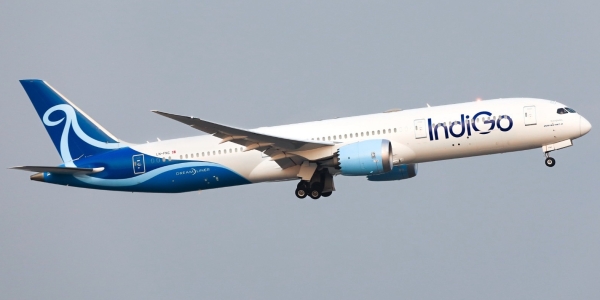
- IndiGo launched its first-ever Mumbai–London Heathrow flight on October 26, operated by a leased Boeing 787-9 Dreamliner. The milestone places IndiGo alongside Air India in expanding India–UK connectivity during the Northern Winter schedule.
- Air India, already the largest India–UK operator, has added a fourth daily Delhi–Heathrow service and reinstated routes from Bengaluru, Ahmedabad, and Amritsar, boosting total India-flagged Heathrow capacity by nearly 6% this season.
- The twin expansions coincide with the expected India–UK Free Trade Agreement, which focuses on mobility and services—sectors that drive travel for business, students, and tourism between both countries.

Boeing 787-9 (LN-FNC). Photo: Adam Kendall/Manchester Airport Aviation
India–UK air connectivity has entered a transformative phase, led by the expansion of Indian carriers, Air India and IndiGo.
The expected announcement of the long-negotiated India-UK Free Trade Agreement (FTA) by Prime Minister Narendra Modi and his British counterpart Keir Starmer was not just about trade — it was also about reviving the skies between the two countries.
For Indian airlines long eyeing more Heathrow slots, the timing could not be better. Officials in both countries have identified mobility and services as key pillars of the FTA negotiations — areas that generally promote business and student travel, which are crucial demand sectors on UK–India routes.
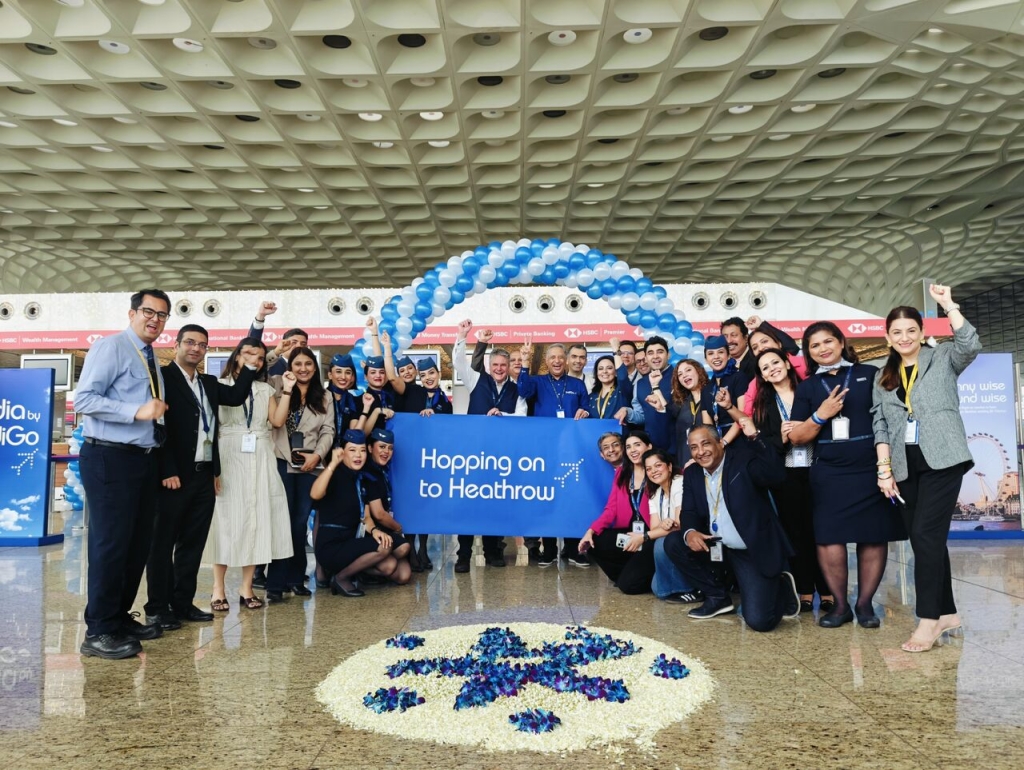
From October 26, 2025, London Heathrow — long considered the “crown jewel” of international gateways — saw two Indian airlines ramp up operations in parallel.
Air India launched its fourth daily Delhi–London Heathrow flight, while IndiGo inaugurated its first-ever Heathrow service from Mumbai, operated by a Boeing 787-9 Dreamliner leased from Norse Atlantic Airways.
The developments mark a significant rebalancing of capacity between the two nations. Data from Cirium shows that British Airways and Virgin Atlantic currently operate 81 weekly flights between London and India, while Air India and IndiGo together run 55 weekly services — a figure that will climb sharply this winter. The new IndiGo service alone adds roughly 2,200 weekly seats each way on the Mumbai–London corridor, boosting India-flagged share of Heathrow capacity by nearly 6%.
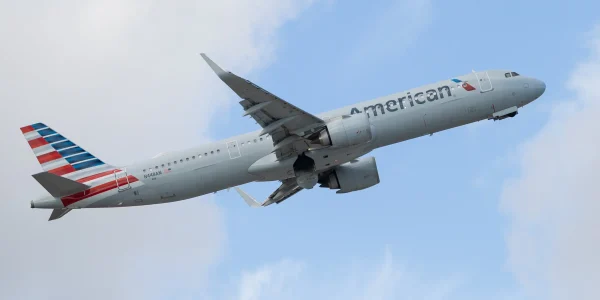
Air India remains the largest carrier between India and the UK, operating 61 weekly services and deploying over 18,000 one-way seats — a total of nearly 1.7 million seats annually.
The flag carrier connects five Indian cities — Delhi, Mumbai, Bengaluru, Ahmedabad, and Amritsar — to three UK points: London Heathrow, London Gatwick, and Birmingham.
In comparison, IndiGo currently offers three points of access to the UK — London Heathrow, London Manchester, and Gatwick (through partners) — marking a swift build-up within just 18 months of its first European launch.
The upcoming fourth daily Delhi–Heathrow flight is central to Air India’s Northern Winter 2025 schedule. The airline will operate two daily flights, each with the Airbus A350-900 and the Boeing 787-9 Dreamliner. On offer: Three-class cabin configuration, Business, Premium Economy, and Economy.
Air India’s strategy also includes reinstating and optimising services across its UK network:
- Mumbai – Heathrow: double daily (14x weekly)
- Bengaluru – Heathrow: returning to daily service
- Ahmedabad and Amritsar – Gatwick: 3x weekly each
- Delhi and Amritsar – Birmingham: 3x weekly each
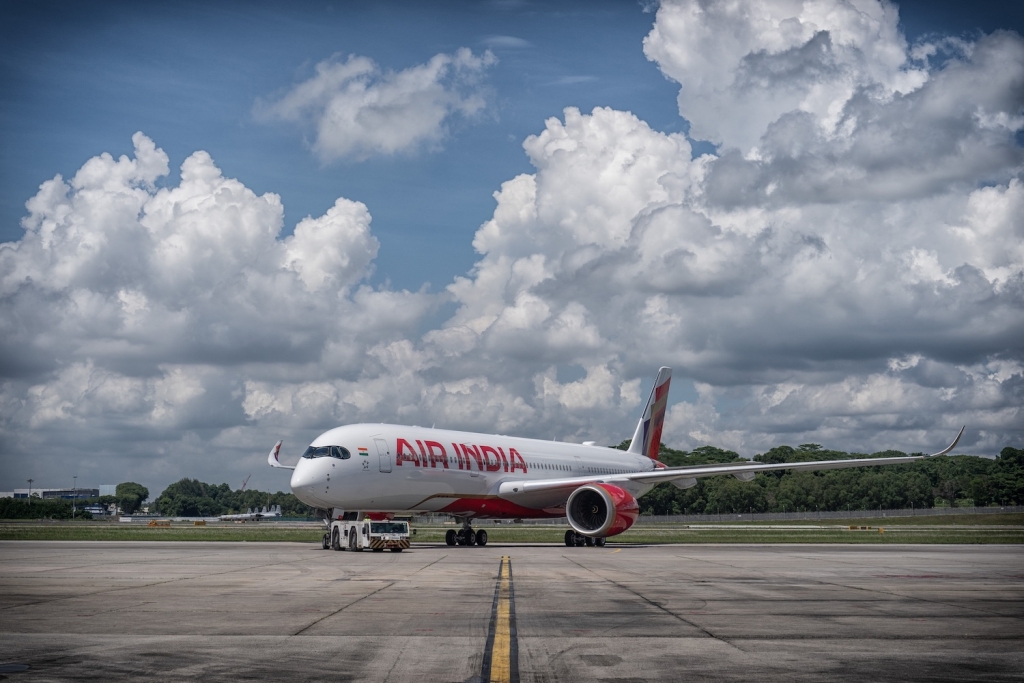
With this network, Air India continues to dominate direct India–UK connectivity, even as competition from British carriers remains strong.
However, Heathrow’s congestion and the fully utilised bilateral quota mean IndiGo’s expansion provides incremental India-flagged capacity that would otherwise have been lost to Gulf or European carriers.
For IndiGo, the launch of daily Mumbai – London Heathrow flights is a defining moment. Known for its lean operations and point-to-point model, IndiGo’s entry into Heathrow—using leased aircraft and slots — signals its readiness to play in the long-haul league. This Heathrow start extends IndiGo’s Europe widebody footprint that began earlier in 2025 with Manchester, Amsterdam, Copenhagen, and it becomes the airline’s longest Europe sector by block time, about an hour longer than those other routes.

The airline’s Boeing 787-9 Dreamliner introduces a new two-class cabin layout: Economy and IndiGoStretch, a bespoke premium product offering more legroom, priority boarding, and enhanced meal service.
The route is a bridge between two of the world’s leading financial capitals, Mumbai and London. The route targets both business and leisure traffic.
IndiGo has also expanded its access to Europe through codeshares — notably with British Airways (UK–India connectivity) and Turkish Airlines (via Istanbul to 30+ destinations) — supporting feed into and beyond Heathrow.
The flight departs Mumbai at 14:45, arriving in London at 19:20, with the return departing at 21:30, landing in Mumbai at 11:45 the following morning. Beyond direct traffic, IndiGo’s growing codeshare partnerships will allow passengers to connect seamlessly across Europe, while inbound travellers can access IndiGo’s 90+ domestic destinations — a critical advantage for regional feed.
IndiGo’s move additionally harmonises with its current UK network via Manchester, where it has regular flights from both Delhi and Mumbai.
Combined, these pathways signal out IndiGo’s grand strategy of becoming a major international player, connecting India to key European hubs. IndiGo has publicly aimed to increase its international share to approximately 40% by FY2030, focusing on strategic long-haul entry points while maintaining its domestic network depth.

On the other hand, the expansion is still limited by the India-UK Bilateral Air Services Agreement, which restricts flights to Heathrow but permits operations to other airports like Gatwick or Stansted.
As one of the most congested airports in the world, Heathrow’s slot is thus a rare commodity that is consequently valued at a high price.
The regulatory caps on the main London–Delhi/Mumbai routes for UK carriers have recently been increased to 70 weekly flights. This allows for more nonstop growth, primarily from the Indian side, depending on slot availability at Heathrow.
There has never been a success of the Indian carriers’ attempts at obtaining extra Heathrow slots as Indian carriers, despite the repeated applications over the years. The shortage of slots has driven Air India to rent slots from Middle Eastern or European airlines and has forced new entrants such as IndiGo to look for creative arrangements.
Heathrow slots have commanded some of the highest prices worldwide, such as Oman Air’s record $75 million purchase of a peak-time slot pair in 2016. This is why lease and swap routes are frequently utilised for establishing new services.
The India-UK market is one of the most trafficked long-haul markets worldwide, serving more than 3 million passengers every year. However, more than half of those passengers still travel indirectly via Gulf hubs such as Dubai, Doha, or Abu Dhabi. For instance, Emirates operates 11 daily flights to three London airports, whereas Qatar Airways flies from Doha to two London airports.
The India-originated direct flights are quite few and far between as compared to the demand, especially for cities other than Delhi and Mumbai. India’s transition into a global economic power and education hub will exponentially increase this demand. Besides that, the new FTA, along with the relaxed visa norms and the rising business exchanges, will definitely trigger the need for more direct connectivity.

Given the persistent slot scarcity at Heathrow, additional India-UK capacity is being channelled to London Gatwick and Birmingham this winter. Air India’s Ahmedabad and Amritsar flights to Gatwick and Delhi, and Amritsar services to Birmingham, cater strongly to VFR demand from Gujarat and Punjab, while Heathrow remains capacity-constrained.
Both Air India’s full-service model, as well as IndiGo’s cost-efficient, dual-class, are good options for capturing various segments of the growing market. Indian carriers are making the move to one of the most prestigious routes in the world, London Heathrow, with their strategic slot access and ongoing fleet expansion. With Air India adding a fourth daily DEL–LHR and IndiGo commencing daily BOM–LHR, India-flagged capacity at Heathrow is set to rise meaningfully in winter 2025.
If the India-UK FTA is as good as it looks, then Heathrow is going to be very crowded in the near future – with Indian flags flying there more often than before.
Also Read: IndiGo doubles A350-900 order to 60 jets; 2027 deliveries to power long-haul push