









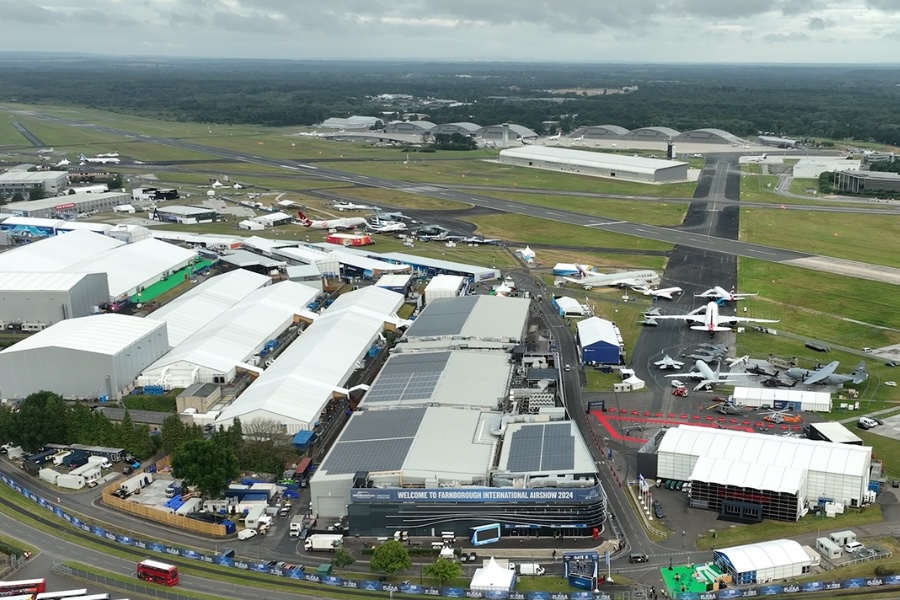
The key themes at the Farnborough International Airshow 2024 revolved around innovation and sustainability. Sizeable aircraft orders, advancements in eVTOL technology, and a strong commitment to environmental goals underscore an industry that is not only rebounding from past challenges but also setting the stage for a more sustainable and technologically advanced future.
The Farnborough International Airshow 2024 (FIA 2024) provided another clear indication that the global commercial aviation industry has recovered to a considerable extent from the travails of the COVID-19 pandemic.
While FIA 2024 couldn’t quite match the record-breaking orders seen at 2023 Paris Airshow, there was still plenty to celebrate for commercial airframers and engine manufacturers. In Paris, last year, Airbus and Boeing announced orders and commitments for 846 and 356 aircraft respectively; while at Farnborough this year, Airbus secured total orders and commitments for 164 aircraft, while Boeing garnered 96 along with options for 22 more. In total, this worked out to orders for a total of 260 commercial jetliners worth £81.5 billion (Rupees 704,700 crore). This also included engine orders worth US$8.23 billion (Rupees 68,885 crore).
There is no doubt however, that the number of aircraft orders would have been higher, as aircraft deliveries have been constrained with the industry OEMs struggling to ramp up their production rates. Of course, the airshow was much more than commercial jetliner orders with a heavy focus on the rapidly evolving electric Vertical Take-Off And Landing (eVTOL) industry and the aviation industry’s strong commitment to sustainability.
Orders Galore
Airbus which is making the best of Boeing’s ongoing travails, bagged several widebody jetliners orders at the show. Japan Airlines ordered additional 20 Airbus A350-900 aircraft, while Virgin Atlantic placed a firm order for seven A330neo aircraft raising its total commitment for the A330neo to 19 aircraft. Abra Group (a majority investor in Brazilian carriers Avianca and Gol) also inked a Memorandum of Understanding (MoU) with Airbus for five A350-900s. Finally, Saudi Arabia’s leading low-cost carrier flynas entered into an MoU with Airbus for 15 A330-900 jetliners.
Boeing however, bagged important widebody jetliner orders and commitments from Korean Air and Qatar Airways. Korean Air announced its intent to purchase up to 50 of Boeing widebody jetliners, including 20 777-9s and 20 787-10s along with options for 10 more of the largest 787 Dreamliner variant. The order when confirmed will make Korean Air the latest customer for the 777-9 which can seat 426 passengers in a two-class configuration with a range of 13,500 km. Qatar Airways expanded its 777X order book to 94 aircraft, with its latest order for 20 777Xs. In addition to the 777X family, Qatar Airways has 12 787s and 25 737 MAX aircraft on order.
Regional transport aircraft leader ATR, also had a busy show with Air Tahiti placing an order for four ATR 72-600 aircraft, in addition to renewing an eight-year Global Maintenance Agreement (GMA). Air Tahiti’s new aircraft are slated for delivery between 2025 and 2028. The aircraft lessor Avation PLC, also placed an order for ATR 72-600 with Japanese startup JCAS Airways, which is set to commence operations in late 2025, using the ATR 72-600 to connect Kansai to Toyama and Yonago. ATR also announced a significant collaboration with Ethiopian MRO, the premier maintenance and training provider of Ethiopian Airlines Group. These orders have resulted in ATR receiving a total of 18 new orders so far this year, including 10 aircraft from Avation PLC and four orders from two undisclosed customers.
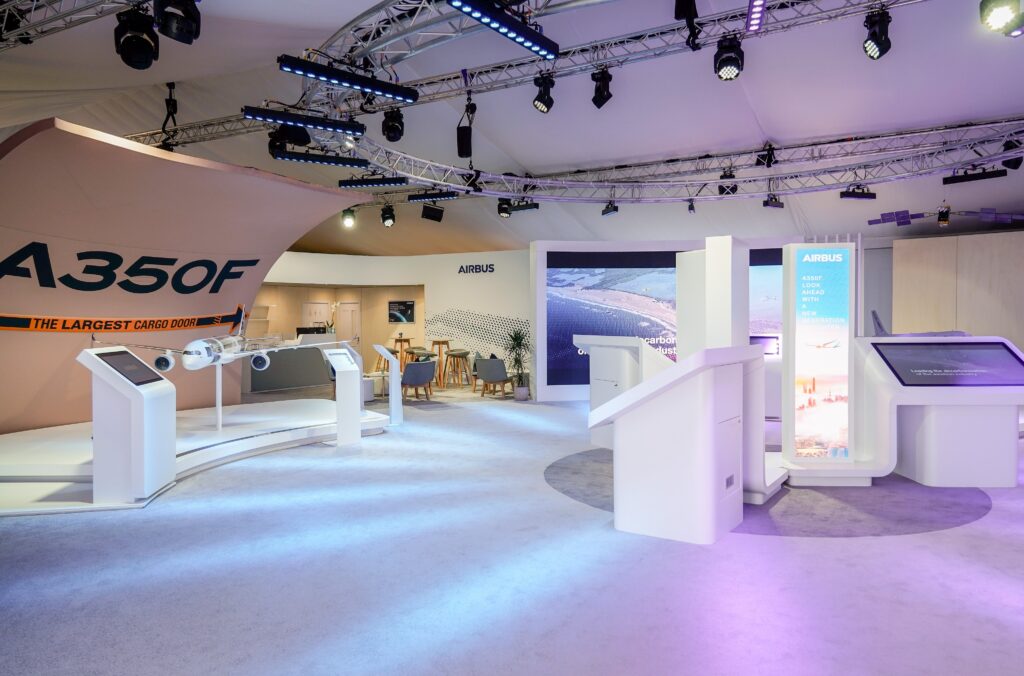
Brazilian airframer, Embraer, the world’s third largest aircraft company, did not announce commercial aircraft orders at the show but instead revealed wide-ranging upgrades and performance improvements on the E195-E2, E190-E2, and E175, including fuel burn and range improvements, avionics and cabin upgrades.
Embraer has updated the E195-E2 to be 12.5 per cent more fuel efficient than competitor aircraft, up from 10% earlier. “This is also helped by an improvement to the bleed management system which extracts less bleed, demanding less from the engine and therefore saving fuel. This improvement is worth US$1 million per aircraft and reinforces the E2´s position as the most sustainable aircraft in the single aisle market,” the airframer stated in a release. Range has now increased to 3000NM from 2600NM previously, while Engine improvements on the E2 GTF engines will increase time on wing by 10 per cent, which is expected to save operators $0.5million over 15 years.
Importantly Embraer has undertaken cabin optimisation on the E195-E2, allowing it to fit in an additional row of four seats into most configurations. An aircraft configured for 136 seats, will now be able to seat 140 passengers, with Recaro seats also available as an option. One extra row of seats can generate extra revenue for airlines equivalent to US$4.5m per aircraft over a period of 15 years. The E175 last received its update in 2016 which improved fuel burn by 6.4 per cent. The latest updates will see incorporation of features from the E2 including next generation weather and data avionics, multi-band satellite connectivity, larger overhead bins, mood lighting and Recaro seats.
eVTOLs Gather Pace
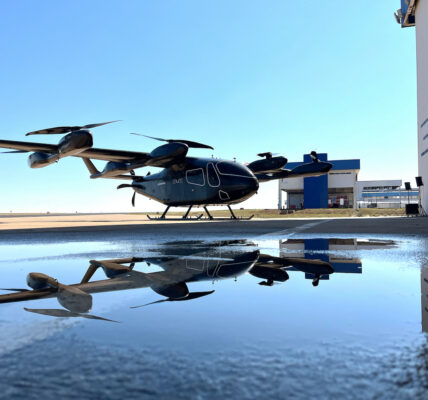
Numerous eVTOLs were on display at FIA 2024, showcasing the incredible pace of progress being made in this arena. The Advanced Air Mobility (AAM) company Wisk Aero displayed its 6th Generation air taxi, which it says is the most advanced in the world. According to company officials, “Generation 6 combines industry-leading autonomous technology and software, human oversight of every flight, and an overall simplified design to deliver one of the safest passenger transport systems in commercial aviation.” The Boeing-owned firm has also stated that it expects its AAMs to start carrying passengers before the end of the decade.
Hyundai Motor Group’s AAM company, Supernal LLC displayed its full-scale S-A2 eVTOL vehicle product concept at FIA 2024. Supernal aims to begin commercial flights in 2028. An important distinction with the S-A2 as compared to many other eVTOLs in the AAM space is that it is being engineered to achieve global commercial aviation safety standards with a robust airframe structure that includes redundant components in critical systems such as powertrain, flight controls and avionics.
European sustainable electric mobility solutions provider Crisalion Mobility, which made its FIA 2024 debut, announced two pre-orders at the show for its Integrity eVTOL, which is currently in development. The Integrity eVTOL will be able to accommodate five passengers and a pilot. Wilbur Air, a wholly owned airline subsidiary of Australian eVTOL infrastructure developer, Skyportz entered into a strategic agreement with Crisalion Mobility for a pre-order of 100 Integrity aircraft, while Dubai-based private aviation operator Air Chateau made a pre-order of 10 Integrity eVTOLs. Crisalion and Air Chateau will work closely together in support of the UAE’s strategic mobility plans and will work closely together on a growth plan for electric air taxi services in major cities, including Abu Dhabi and Dubai.
Drive for Sustainability
One of the most important commitments to the future is the civil aviation industry’s commitment to achieving net zero CO2 emissions by 2050. To meet this goal, the industry OEMs, Governments and industry partners are working to boost the production, distribution, and uptake of qualified Sustainable Aviation Fuels (SAF), develop advanced new aircraft and propulsion technologies, and improve aircraft operations with greater efficiency, all for the goal of achieving net zero CO2 emissions. Efforts such as FAA-ASCENT and CLEEN, SESAR projects such as CICONIA, Airbus led ECLIF3 and VOLCAN, and the Boeing ecoDemonstrator Explorer projects include significant research and flight test campaigns across both Europe and North America.
At FIA 2023, the Chief Technology Officers of Airbus, Boeing, Dassault, GE Aerospace, Rolls-Royce, RTX and Safran came together to advocate for government research programmes that would further enhance the scientific understanding of aviation non-CO2 effects such as contrails, nitrogen oxides (NOx), Sulphur, aerosols and soot.
Boeing announced at FIA 2024 that it was joining forces with Clear Sky, an investment company dedicated to aviation sustainability. Both firms will work to accelerate the development of sustainability solutions for aviation. Their first project together will be to help in testing and advancing Firefly Green Fuels’ cutting-edge technology to increase SAF production in the UK. “SAF offers the greatest opportunity to decarbonise aviation, and the industry’s collective challenge of bringing it to scale globally requires new sustainable pathways,” said Brian Moran, Boeing’s chief sustainability officer. Presently SAF represents only 0.1 per cent of global jet fuel use.
Firefly uses Hydrothermal Liquefaction (HTL) to transform sewage waste feedstock into SAF. HTL uses heat and high pressure to convert waste into biocrude oil and a powdery substance biochar that can be used as a fertilizer. SAF produced from this abundant, yet untapped feedstock reduces lifecycle CO₂ emissions by more than 90 per cent compared to traditional petroleum jet fuel, according to independent analysis.
Commitments from Airbus, ATR and Braathens
Airbus announced at the show that it is investing in LanzaJet, a leading sustainable fuels technology company and producer. The Airbus investment will support the development of the Alcohol-to-Jet (ATJ) pathway, enabling LanzaJet to scale its proprietary Ethanol to Sustainable Aviation Fuel (SAF) process technology. “Sustainable aviation fuels are one of the most important levers available to decarbonise aviation, but their production is still limited. Our partnership with LanzaJet demonstrates Airbus’ commitment to work with leading energy technology suppliers to explore innovative production pathways and scale SAF,” said Julie Kitcher, Chief Sustainability Officer at Airbus.
ATR showcased an ATR 72-600 belonging to Braathens Regional Airlines at FIA 2024. In a statement released at the show, ATR said, “The ATR 72-600 aircraft is prepared to fly with 100 per cent SAF, and we’re waiting for international fuel standard validation to fully implement these advancements and move towards a more sustainable future.” BRA, ATR, and Neste have been working together since 2008 towards 100 per cent SAF flights, working on technology, operations, and the SAF supply itself. The world’s first-ever commercial flight using 100 per cent SAF in both engines on an ATR 72-600 aircraft was operated by BRA took place in June 2022.
Braathens’ regular service from Stockholm to Angelholm serves around 120 passengers daily across 550 kilometres, which is a six-hour train journey or a nine-hour bus journey. However, on an ATR 72-600 it is a 75-minute flight with lower CO2 emissions than a sole-occupancy car. According to ATR, the CO2 emissions decrease even further from 56kg to 34kg per passenger when powered by SAF.
Change Around the Corner
The Global aviation industry is now in the midst of a once in a generation shift in aircraft and propulsion technologies with the eVTOL, hybrid-electric propulsion, Urban Air Mobility (UAM) Net Zero developments which all have to be managed with China, Russia, Iran and North Korea increasingly appearing to act in concert.
China’s rise has driven the global aviation industry for well over a decade, with strong industrial supply chains also created there. Importantly, the Chinese aerospace industry which now has its own commercial aircraft in the COMAC ARJ 121, C919 and the twin-aisle C929 in development could find ready markets for its aircraft in Russia, Iran and North Korea. While China will still require large quantities of Western jetliners in the near to medium term, in areas such as Urban Air Mobility, China is one of the global leaders.

Lessons for India from Farnborough
Our commercial aviation industry which made a splash at PAS 2023 with large aircraft orders, was on mute at FIA 2024. However, it is quite clear that Indian carriers will continue to make sizeable commercial aviation orders over the next two decades. As a result India, will remain one of the most important markets for Western OEMs, until 2040 or even beyond. The Indian Government must grasp this unmatched opportunity to make the country a destination for the latest in aviation technology. This is especially true when it comes to the huge emerging opportunity in sustainable aviation, where India could emerge as major contributor in SAF production.
Rather than trying to build a commercial aircraft domestically, India must first ensure that global aviation supply chains for eVTOLs, next-generation aircraft propulsion, aircraft airframe and cabin, engine Maintenance, Repair and Overhaul (MRO) are well-established. While the temptation to start a national commercial aircraft programme is high, the fact is that India’s domestic aerospace industry which is primarily geared to support military aircraft programmes is not yet ready for the rigours of design, development, testing, production and lifecycle support for a medium to large civilian aircraft.
Regional Transport Differentiator
Deutsche Aircraft’s D328eco could fill a market niche for a highly efficient 40 seat regional commuter aircraft
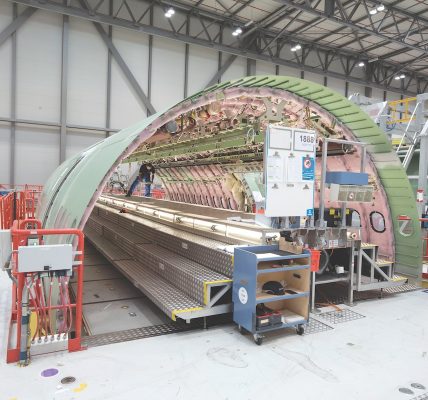
Deutsche Aircraft presented important updates on its D328eco programme at FIA 2024. The German Original Equipment Manufacturer (OEM) announced at the show, the start of the fuselage cut of the D328eco test aircraft at its Final Assembly Line in Leipzig. The company officials said this significant milestone sets the stage for the test aircraft’s maiden flight. The first test aircraft, TAC 1, will feature an extension of the D328 fuselage, allowing it to seat 40 passengers. Deutsche Aircraft has taken over the Type Certificate (TC) rights for the Dornier 328 platform (D328) and is now leveraging its capabilities to deliver the most advanced, energy-efficient and cost-effective regional aircraft.