

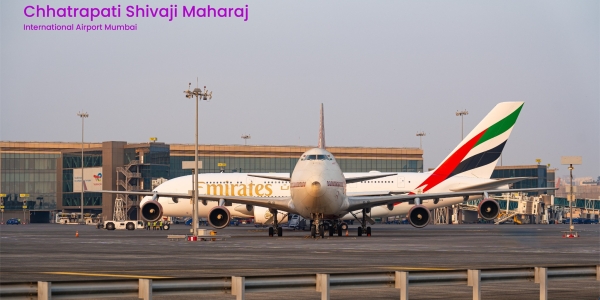



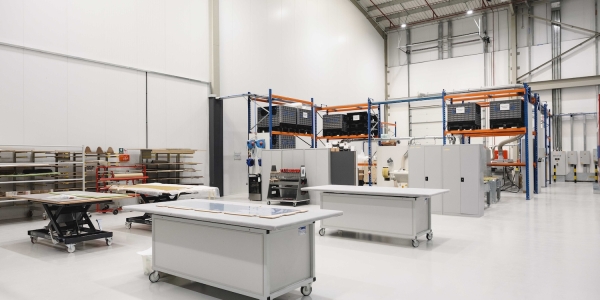









- Artificial Intelligence is transforming air cargo and last-mile delivery by optimising logistics, cutting costs, and improving efficiency.
- Although challenges remain, AI-driven solutions offer the potential for transformative growth in the cargo industry.
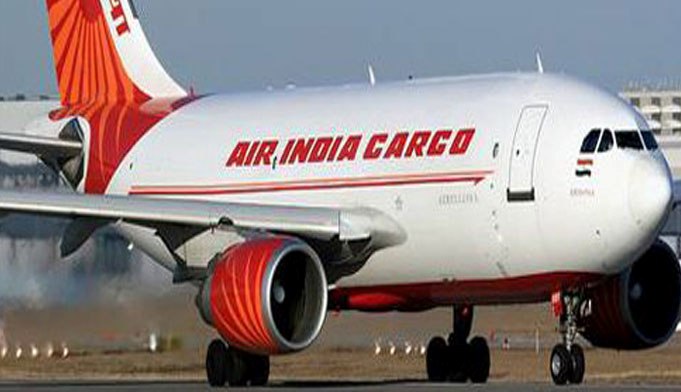
Artificial Intelligence (AI) is ushering in a new era across several sectors, and one of them is aviation, including the slow-to-adopt-digitalisation air cargo industry. Though the 2020 pandemic accelerated digital adoption in the air cargo industry, which had to move vaccines and other medical necessities across the globe in double quick time and with fewer people working on the ground at that time, AI adoption in the sector is still in its nascent stages.
The laggard digital adoption is due to the many stakeholders in the entire air cargo supply chain – freight forwarders, logistics providers, ground-handling agents, regulators, airports, airlines, etc. In such a scenario, AI integration becomes that much more complex, and we get to presently see AI in silos, nevertheless a beginning. Some of the airports and airlines in India have introduced AI, starting with passenger experiences and then moving on to cargo and other services. Air India was the first airline in the world to deploy a Generative AI virtual agent ‘Maharaja AI’, though basically enhancing passenger experience.
The connection between the passenger and the airline is pretty simple, unlike the cargo segment, due to the different stakeholders at play with varying challenges. For instance, at airports, one of the biggest challenges is the dwell-time or the turnaround time, whereas for a surface transport provider, it could be an issue of tracking and tracing. The longer a cargo (particularly time-sensitive ones) continues to be on the pallet or on the truck, the logistic cost not only goes up, but also impacts quality, safety and security, critical elements in end-to-end delivery.
Reducing Dwell Time
The objective at Indian airports is to reduce the dwell time of exports from the present level of 4 days to 12 hours, and of imports from the present level of 4 weeks to 24 hours to bring in line with internationally achieved norms, and this cannot happen without AI getting deployed extensively. While the Airports Authority of India (AAI) understands that AI can be transformative but it needs to push harder for enhanced infrastructure at airports, such as modern cargo terminals, automatic storage and retrieval systems, computerisation and AI. A few years back, AAI unveiled a Rs. 190 billion plan to modernise the ailing airport infrastructure across the country, and most of the investment has gone into improving physical infrastructure, less on digitalisation.
Recently, the Civil Aviation ministry also indicated that it would take up cargo-specific enhancements, including Satellite freight cities with multimodal transport connections, Dedicated cargo terminals and cold storage facilities for perishables, Automated storage and retrieval systems to boost efficiency, Mechanized cargo handling systems to reduce manual errors and improve throughput, and Electronic Data Interchange (EDI) systems.
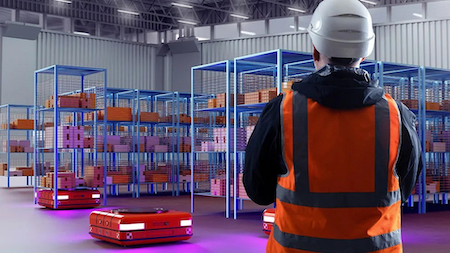
What is holding back some of the AAI airports from going to whole hog is funding, exclusively for digitalization, while they are totally aware that AI algorithms help in analysing vast amounts of data, including flight schedules, cargo patterns, warehouse capacities etc, to forecast demand and optimize flight routes, thus ensuring on-time performance, besides reducing fuel consumption. At the warehouse level, robotic palletizers and automated guided vehicles (AGVs) are becoming the norm to move cargo efficiently and without causing any damage while handling, a risk when manually done. There is a cost to it, no doubt, but AI pays off in the long run, and some of the private airports have taken the lead in this direction.
Not just passengers, airports focussing on cargo
Privately managed airports such as the Kempegowda International Airport, Bengaluru, run by the Bangalore International Airport Limited (BIAL) and the Rajiv Gandhi International Airport, Hyderabad, of the GMR group, have already set in motion several AI initiatives. The BIAL has been working with Amazon Web Services (AWS) to drive the development and adoption of digital solutions. The digital roadmap includes a combination of technologies, including cloud computing, Blockchain, Internet of Things (IoT), analytics, machine learning (ML), artificial intelligence (AI), robotics, and augmented and virtual reality (AR/ VR).
Hari Marar, MD & CEO, BIAL had said at the partnership event, “The new Joint Innovation Center between BIAL and AWS will enable us to develop modular, scalable, innovative digital solutions that can benefit all stakeholders in the aviation domain and help reimagine air travel in India.”
Airports are critical touch points and are among the first of the stakeholders to deploy AI. Only this December, GMR Airports launched an AI-powered digital twin platform at the Rajiv Gandhi International Airport in Hyderabad, aiming to revolutionize airport operations and transform the passenger experience. Built on an innovative platform, it also unveiled its one of a kind next-generation Airport Predictive Operation Centre (APOC), a transformative advancement in airport management and operations, a platform which integrates airside, landside, and terminal operations into a unified system, utilizing real-time data to optimize decision-making, minimize disruptions, and ensure seamless operations. Though primarily, it focuses on passenger experience, the platform offers real-time Insights which enhances throughput, gate usage, and dwell times for cargo too.
GMR mentions that the next-gen APOC include virtual simulations for various operational scenarios, enhancing airside efficiency and supporting proactive decision-making. APOC integrates multiple stakeholders, including airlines, ground handlers, and air traffic control, fostering collaborative decision-making and comprehensive situational awareness. The Smart Traffic Monitoring for landside operations reduces traffic congestion and improves passenger handling through early detection of issues, while the IoT Analytics which is real-time monitoring helps in improved traffic planning, streamline parking operations and enhance road safety.
Route Optimisation, among other benefits
At the air cargo terminal, the warehouse is the lifeline and managing inventory can be a challenge here and this is where AI-powered systems help in inventory optimization. With predictive data on hand, cargo terminals can connect with the freight forwarding community to plan schedules, making life a lot easier.
Explaining the importance of AI, the Group Chief Operating Officer, Digital Technology, DP World, Mike Bhaskaran mentions the benefits include logistics optimisation, cost reduction, better resource allocation and improved reliability. “AI enhances demand forecasting, route optimisation and maintenance scheduling, leading to faster deliveries.”
The big players such as DHL are leading the path of AI integration. Recently, DHL Supply Chain launched a Generative AI, a suite of innovative AI applications at scale to enhance its data management and analytics capabilities, aiming to improve the provision of insights and directly unlock greater value for customers.
DHL Supply Chain’s first key Gen AI application is a sophisticated data cleansing tool which cleans, sorts and provides an initial analysis of data submitted by potential customers, ensuring DHL engineers have accurate data for designing logistics solutions quickly and efficiently. This not only enhances the effectiveness of solutions provided but also significantly reduces the time to market.
The second Gen AI application of DHL supports the sales teams by providing insight during the initial stages of proposal development. The tool enables faster analysis of the customer’s requirements, enabling the sales team to quickly create more accurate and personalized proposals, that cover each customer’s unique requirements.
“These AI-driven tools are not just technological novelties, but practical applications aimed at transforming key business processes”, says Sally Miller, Global Chief Information Officer at DHL Supply Chain. “It is crucial to note that our AI applications are focused on enhancing our analytics capabilities to provide deeper insights and unlock greater value for our customers. These initiatives underscore our commitment to being even more customer-centric, enabling us to better serve our customers and meet their needs with greater precision and efficiency by using cutting-edge technology.”
AI the best bet for E-commerce
Oliver Facey, Senior Vice President of Global Network Operations Programs at DHL Express, said ”AI is opening up exciting opportunities for our network. It’s certainly not a new technology, but the pace at which it is developing means we are now being presented with opportunities to optimize processes for us – and our customers – that weren’t available even a year ago.
As a logistics leader, our remit has always been to enable faster and smoother last-mile deliveries for our customers – something which AI is certainly helping with. But it’s also having a transformative effect further up the supply chain – on predictive forecasting, parcel sorting, customer service, the overall ability of a business to adapt to challenges… Many of our small business clients are within the e-commerce space, which is highly competitive. Every minute saved packing an order, or every inch of space saved within the warehouse, can quickly add up to big cost savings for them. And that’s exactly what AI is doing.”
Last-mile Delivery Route Optimisation
The DHL credo is built on the philosophy that the end customer should be fully aware of when the deliveries arrive as equally important as information to the sender. “Our customers increasingly want to know when their deliveries will arrive, but we manage many international shipments, and with flights going all around the world, there’s a lot to track. So, we’ve done extensive work with forecasting and prediction models. We can use that data to know, for example, with 90%-95% certainty, that specific volumes of shipments are going to arrive in a certain facility for this day. We then use that information to start planning the couriers’ routes, matching volumes, service and other important variables.
Once the packages are in the delivery vehicle, we then further optimize the route using AI-powered software from Wise Systems. In just a few seconds, it can take a route with 120 stops and order the sequence based on parameters such as an urgent medical express delivery, or a delivery that must be with a customer before 9am, or generally taking into account distance per stop to get the best possible route sequence.”
In short, artificial intelligence is enabling possibilities for smarter route planning which means logistics operators can deliver faster – with less fuel wasted. In conclusion, AI, indeed, is going to be transformative by helping airports, airlines, freight forwarders and other logistics players in cargo routing, capacity optimisation, enhancing efficiencies at the warehouse level and all in quick time. As the industry continues to advance towards digitalisation, artificial intelligence will be the cornerstone in achieving optimised efficiencies and improved costs. And for this to happen, the workforce has to be in sync with the fast-changing digital world, and that is certainly happening. The next few years will see an encouraging momentum of AI adoption, majorly benefitting the cargo community