




- Vistara has flown into the sunset following its merger with Air India, marking a significant step in the Tata Group’s ambitious aviation transformation.
- While the merger brings opportunities for growth with an expanded fleet and network, it also poses challenges in preserving Vistara’s service ethos and navigating complex integration processes.
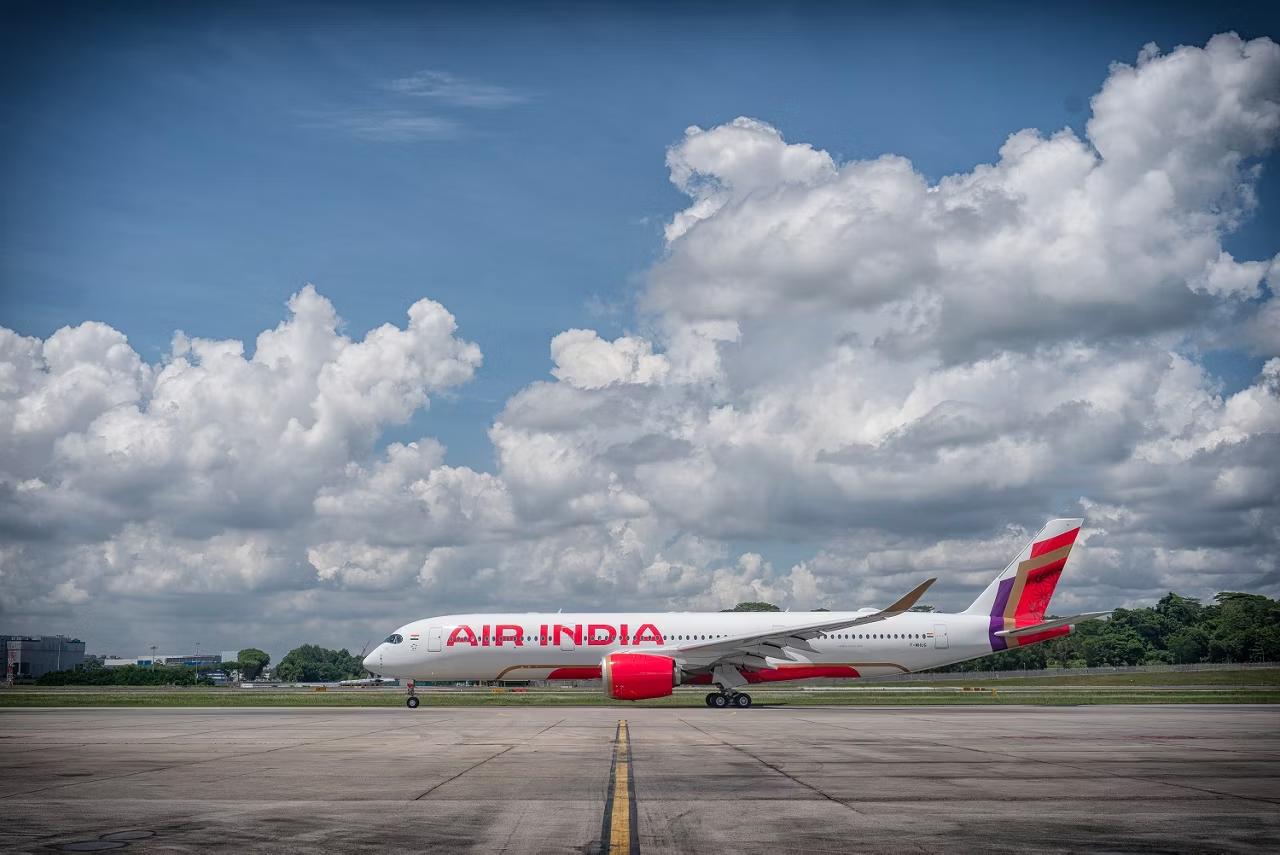
Air India completed the full merger of the Full Service Carrier Vistara (TATA SIA Airlines Limited) in November, marking an important chapter in the revival of the former following its acquisition by Tata Sons in January 2022. Since taking over Air India, the Tata Group has moved to revive the airline swiftly, integrating Air Asia India, Air India Express and now Vistara.
“It has been a little over two and a half years since the homecoming of Air India to the Tata Group. The merger between Air India and Vistara is an important milestone in our commitment to transform Air India into a world-class global airline. Singapore Airlines continues to be our strategic partner in our aviation journey, and we welcome them to Air India,” said Natarajan Chandrasekaran, Chairman, Tata Sons, following the merger.
The merger of Vistara and Air India is an important milestone in Tata Group’s effort to make Air India a truly world-class airline. Campbell Wilson, Chief Executive Officer & Managing Director, Air India, said, “The joint team looks forward to offering our guests an expanded network, additional flight options, an enhanced frequent flyer program and the best of both antecedent airlines and are grateful for the support of our loyal customers through this next phase of building a world class, world scale, global airline with an Indian heart.”
Tough Task
Over the past two years, Air India’s top executives have been working hard to complete the unprecedented merger of four airlines (Air India, Vistara, Air India Express and Air Asia India) into two, in what is one of the most complex mergers in aviation history. Cross-functional teams across Air India and Vistara worked together for several months to make a smooth transition of aircraft, flying crew, ground-based crew without impacting paying customers. The four airlines will now operate as two; Air India being the full-service carrier and Air India Express operating a Low- Cost Carrier.
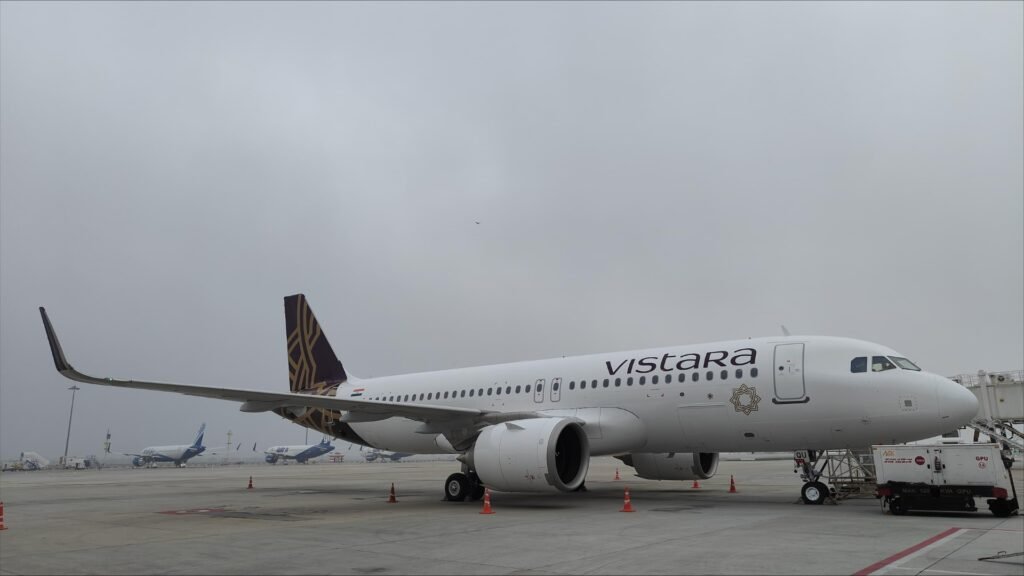
Vinod Kannan, Chief Executive Officer, Vistara, said, “We are immensely grateful to all our customers for their support and patronage over the last 10 years. As we progress further in our growth journey, we want to emphasise that this merger is about offering them more choice with a larger fleet and a wider network, while elevating the overall travel experience. Vistara and Air India are committed to ensuring that this transition is smooth and hassle-free. We are excited about this new phase in our journey and look forward to welcoming our customers again soon – as Air India.”
Kannan was holding the role of Chief Integration Officer for the full-service airlines’ merger and will now continue as CEO post-merger. He will be a member of the Management Committee and report directly to Air India CEO Campbell Wilson. Deepak Rajawat, who was Chief Commercial Officer at Vistara, has now moved on as Chief Financial Officer role at Air India Express, reporting to CEO Aloke Singh. Capt. Hamish Maxwell, Vistara’s SVP Flight Operations, is now in an advisory role to the CEO of Air India Express.
Unbeatable Combination
Following the merger of Vistara with Air India last month, the latter announced that in December, nearly 115,000 customers who had purchased Vistara tickets pre-merger were expected to fly on unified Air India. Over the last few months, 270,000 customers who had booked Vistara flights have been migrated to Air India and have been notified about the change. Further, over 4.5 million Vistara loyalty programme members are being migrated to Air India’s loyalty programme.
At the time of the merger, Vistara operated a fleet of 70 aircraft, including 53 Airbus A320neo, 10 Airbus A321neo, and 7 Boeing 787-9 Dreamliner aircraft. Vistara took delivery of its last and 70th aircraft this year in March, with the delivery of its final Boeing 787-9 Dreamliner. This marked the conclusion of its 2018 orders for 56 aircraft with Boeing and Airbus. Its new Airbus A321s were also the first to offer life-flat seats on this aircraft in Asia. All Vistara aircraft are now operated by Air India and are identified by a special four-digit Air India code beginning with the digit “2” (For eg, UK 955 will become AI 2955). These aircraft will operate on the same routes and schedule operated by Vistara, feature the same in-flight experience, and also be serviced by the same crew. Vistara’s catering, which was much appreciated by its passengers, will now also be extended to Air India.
Vistara Airlines, a Joint Venture by Tata Sons (51%) and Singapore International Airlines (49%), began operations in January 2015 and eventually grew into India’s second-largest domestic airline, with over 10% market share till its merger with Air India. Over its operating history, Vistara flew more than 65 million passengers and developed a reputation for excellent customer service and outstanding in-cabin passenger experience. Vistara continues to collect accolades leading up to its eventual merger with Air India.
In June this year, it won the ‘Best Airline in India & South Asia’ award for the fourth consecutive year and the ‘Best Airline Staff Service in India & South Asia’ award for the sixth time in a row at the coveted 2024 World Airline Awards by Skytrax. It was also recognised for ‘Best Cabin Crew in India & South Asia’ for the fourth time in a row and ‘Best Business Class Airline in India & South Asia’ for the third successive year. The airline maintained its ranking as the 16th best airline globally, making Vistara the only Indian carrier to feature in the list of the World’s Top 20 Airlines three times in a row. It also maintained the 8th position amongst the ‘Best Airlines in Asia 2024’.
SIA Stays for the Journey
Vistara had crossed the $1 billion revenue mark in 2022, and Singapore International Airlines (SIA) will now continue its association with Air India.Goh Choon Phong, Chief Executive Officer, Singapore Airlines, said: “This merger marks a pivotal moment for Indian aviation. Working with our valued, long-standing partner Tata Sons, the SIA Group will support the ongoing transformation of the enlarged Air India Group, offering our stewardship and expertise where possible. We are focused on helping to restore Air India to its leading position in the Indian aviation market and creating an airline Group that everyone in India can be proud of.
Following the Air India-Vistara merger, which was first announced in November 2022, SIA’s consideration comprises its 49% interest in Vistara and Rs 2058 crore in cash (equivalent to S$318 million) in exchange for a 25.1% equity interest in the enlarged Air India. Upon the completion of the transaction, the SIA said it expects to recognise a non-cash accounting gain of approximately S$1.1 billion. At the same time, it will also start equity accounting for its share of Air India’s financial results. SIA will also make an additional capital injection, which is expected to be Rs 3194 crore (equivalent to S$498 million), based on Tata’s funding to Air India to date. This was to occur after the completion of the merger and within November 2024 through subscription to new Air India shares.
The merged entity will have a significant presence across all key Indian air travel segments, including domestic, international, full-service, and low-cost operations and SIA’s continued presence in Air India will strengthen the Singaporean carrier’s multi-hub strategy, allowing it to continue to participate in India’s large and fast-growing aviation market. Air India and SIA had only recently agreed to significantly expand their codeshare agreement, adding 11 Indian cities and another 40 international destinations to their network. This also marked the first extensive expansion of codeshare arrangements between the airlines since 2010.
Forward Flight
Air India must now focus on delivering a seamless passenger experience with a strong focus on customer satisfaction, now that the heavy lifting of integrating the different airlines is largely complete. Post the merger with Vistara, the Air India Group now operates a combined fleet of 300 aircraft covering 55 domestic and 48 international destinations, with 312 routes and 8,300 flights per week. It offers extended worldwide connectivity to over 800 destinations through more than 75 codeshare and interline partners. Air India’s collective staff strength now stands at over 30,000 employees.
Most importantly, Air India’s narrowbody fleet continues to be upgraded with new aircraft being delivered, while legacy aircraft are being refitted with entirely new interiors. The retrofit programme with the first A320neo narrow body aircraft is now underway and a total of 27 narrow body legacy aircraft will be totally refurbished and retrofitted. The retrofit of these aircraft is likely to be completed by the middle of 2025. Air India’s widebody fleet is now being rapidly modernised, with six new A350 aircraft already flying between Delhi and London and Delhi and New York.
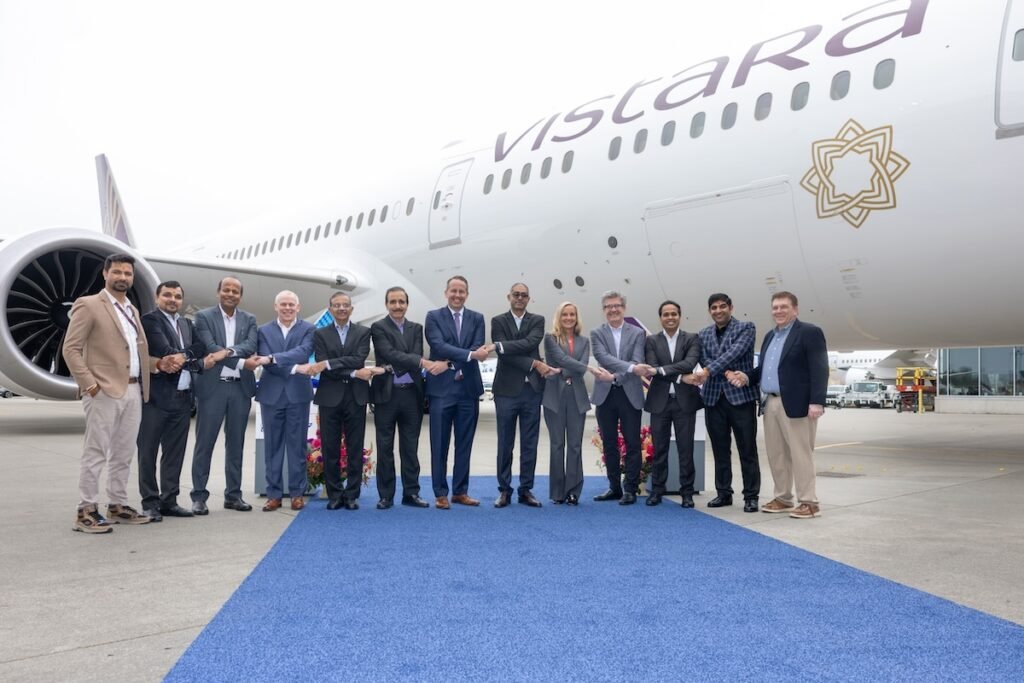
There is much to celebrate with the merger of Vistara and Air India, which aims to transform the latter into a premium full-service carrier both on domestic and international routes. The challenge for Air India however, is to ensure that the customer centric DNA and ethos of Vistara is not subsumed but allowed to spread across Air India Group. At the present moment however, all portends well for Air India, which now has the size, scale, financial muscle and visionary leadership to emerge as an Asian airline powerhouse.