









- Mumbai airport will suspend dedicated freighter operations from August 2026 to May 2027 for runway, taxiway and apron reconstruction, affecting an airport that handles nearly 25% of India’s air cargo.
- While passenger belly cargo will continue, it cannot replace freighters that move large volumes in single rotations, making Mumbai’s long-established cargo ecosystem — warehousing, cold chain and trucking- difficult to replicate elsewhere.
- With airspace restrictions already increasing flight times and costs, shifting cargo to NMIA or other hubs risks added delays and operational strain, especially if alternative infrastructure is not fully ready.

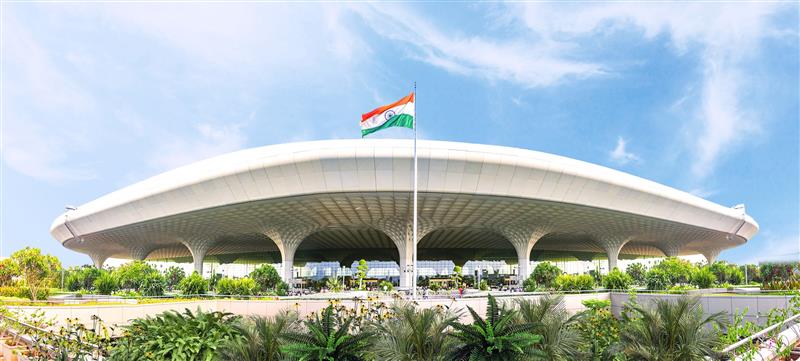
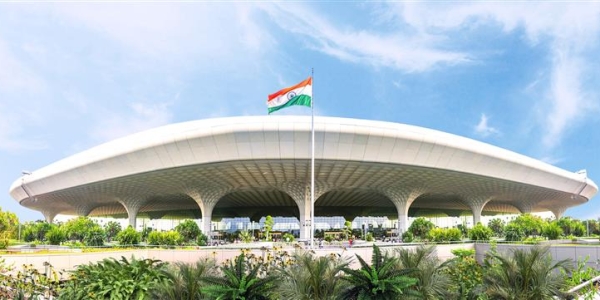
Mumbai’s Chhatrapati Shivaji Maharaj International Airport (CSMIA) has long been India’s most indispensable air cargo gateway. That status now faces its most severe test in decades. From August 2026 to May 2027, the airport will suspend all dedicated freighter operations for nearly nine months—a decision that has alarmed airlines, logistics providers, exporters and global industry bodies, and reopened uncomfortable questions about how India balances infrastructure modernisation with trade continuity at a time when external shocks are already straining cargo networks.
The decision, formally communicated by Mumbai International Airport Ltd (MIAL), the Adani Group–led operator of CSMIA, did not emerge in isolation. As early as April–May 2025, MIAL had circulated internal proposals to relocate cargo flights to the upcoming Navi Mumbai International Airport (NMIA) in August 2025. That plan triggered strong resistance from airlines and industry bodies, forcing a temporary rethink. The newly announced nine-month shutdown is therefore being viewed by many stakeholders as the culmination of a process they have been pushing back against for over a year.

MIAL maintains that this time the suspension is unavoidable. The scale of planned works — runway re-carpeting, construction of a parallel taxiway, and the complete rebuilding of Apron G, the airport’s only dedicated cargo apron — leaves, in its assessment, no operational room to keep freighters running. Earlier attempts in 2025 to curtail freighter activity were blunted by stakeholder opposition; the current plan, however, has been framed as an engineering compulsion rather than an operational preference.
The stakes are unusually high because Mumbai is not just another cargo airport. In FY2024–25, CSMIA handled close to 890,000 tonnes of freight — nearly a quarter of India’s total air cargo throughput. On a typical day, seven to eight freighters depart carrying pharmaceuticals, perishables, high-value electronics and express shipments that depend on speed, reliability and proximity to dense manufacturing and consumption clusters.
This ecosystem has been built over decades. Warehouses, customs brokers, cold-chain facilities and trucking networks are tightly clustered around Mumbai. For exporters — particularly pharmaceutical manufacturers in western India — CSMIA is not merely a runway; it is the anchor of an entire supply-chain architecture.

That is why the proposed nine-month halt has caused such unease.
While belly cargo on passenger flights will continue, industry executives stress that belly capacity cannot substitute for freighters.
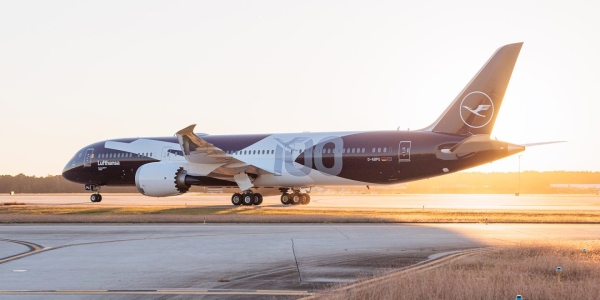
A widebody freighter can lift 90–100 tonnes in a single rotation — a capacity that would otherwise require multiple passenger flights to replicate, assuming space is even available during peak periods.
MIAL’s argument rests on hard physical constraints. CSMIA is among the world’s most capacity-constrained airports and the only single-runway airport handling more than 55 million passengers annually. Apron G has reached the end of its pavement life and must be fully rebuilt. Simultaneously, Taxiway E is being constructed parallel to Runway 14 to reduce runway crossings and raise long-term capacity. These works directly intersect with existing cargo infrastructure.
According to MIAL, no alternative apron can be carved out during construction without compromising passenger operations at an airport already operating at the edge of its limits. “All possible alternatives were examined,” the operator said, before concluding that a temporary suspension is unavoidable. From an engineering standpoint, the argument is coherent. From a cargo-industry perspective, it is deeply unsettling.

The sharpest opposition has come from the International Air Transport Association (IATA), which has described itself as “deeply disappointed” and called for a rollback of the decision.
IATA has criticised the lack of granular detail and warned that shutting freighters at India’s second-largest cargo hub risks damaging the country’s credibility as a trading partner. More pointedly, it has suggested that the move resembles “capacity gaming” — using infrastructure constraints to pressure airlines into shifting operations to NMIA.
The Air Cargo Agents Association of India (ACAAI) has echoed those concerns, warning of severe disruption, higher freight rates and delivery delays if freighter operations are halted for such an extended period. It has also flagged the absence of a clearly articulated transition plan, arguing that abrupt shifts risk destabilising supply chains that depend on Mumbai’s predictability.

MIAL has strongly rejected allegations of coercion. In May 2025, it denied IATA’s assertion that capacity constraints and slot changes were designed to encourage migration to NMIA, stating that “all decisions have been taken after following a transparent, consultative, and regulator-driven process” under the supervision of the Airports Economic Regulatory Authority of India (AERA). The operator points to consultations through the airport user consultative committee and AERA’s public hearings as evidence that it has not acted unilaterally.
Tensions, however, extend beyond cargo operators. A group of airlines and business aviation users have also objected to notices mandating the relocation of aircraft from CSMIA by July 31, 2025, to free up parking bays for taxiway construction. Carriers including Air India, SpiceJet and Akasa Air, along with business jet operators represented by the Business Aircraft Operators Association (BAOA), have written to AERA and the Ministry of Civil Aviation seeking reconsideration.

BAOA has argued that CSMIA, as a public infrastructure asset, must remain accessible on a fair and non-discriminatory basis.
It has also flagged steep parking charges proposed at NMIA, including a ₹20-crore parking stand fee and annual charges around 30% higher than those at CSMIA.
Adani Airport Holdings Ltd (AAHL) has responded that no extension to relocation deadlines is under consideration and that NMIA’s tariffs align with AERA-approved rates.
Even so, relocation has become a flashpoint across Mumbai’s aviation ecosystem.
If freighters are barred from CSMIA after August 2026, airlines will shift operations to NMIA or divert to other gateways — Delhi, Hyderabad, Bengaluru and Ahmedabad being the most likely beneficiaries. While these airports have modern infrastructure, none match Mumbai’s proximity to Western India’s manufacturing base or its dense consumption markets.
A central question remains: will NMIA be fully ready to handle its own cargo flows as well as volumes diverted from CSMIA? Additional trucking legs, longer transit times and higher costs appear inevitable. For pharmaceuticals and perishables, even marginal delays can erode margins or compromise quality. Exporters also fear congestion at alternative hubs during peak seasons.

The timing compounds the disruption. Indian cargo carriers are already grappling with external shocks, most notably the closure of Pakistan’s airspace to Indian aircraft, which has forced longer routings to Europe, Central Asia and parts of West Asia. The impact has been particularly acute for Air India Cargo, with longer flight times, higher fuel burn, crew-duty complications and reduced aircraft productivity.
For cargo operators, airspace detours are not a temporary inconvenience but a structural shift in network economics. Combined with the loss of access to Mumbai for nine months, the risk multiplies.
NMIA, which began operations on Christmas Day 2025, is being pitched as Mumbai’s pressure valve and long-term growth engine. Adani Airports Director Jeet Adani has argued that Mumbai “lost the hub race” due to prolonged capacity stagnation and that NMIA is key to restoring the region’s global aviation relevance, with cargo at its core. Whether a nine-month cargo shutdown at CSMIA will accelerate that ambition — or expose fresh vulnerabilities — remains an open question.
The cargo industry remains cautious. Airports are not plug-and-play assets. Customs readiness, certified screeners, ground handlers and airline network planning take time. NMIA has missed earlier opening targets, and while progress is visible, shippers fear a fragile transition in which neither airport can fully absorb freighter demand.

Mumbai’s cargo shutdown thus exposes a deeper structural dilemma in Indian aviation.
Infrastructure upgrades at ageing, overstressed hubs like CSMIA are unavoidable. But air cargo runs on certainty.
Prolonged shutdowns at critical gateways ripple through supply chains, disrupt exporter commitments and dent India’s trade credibility — especially when carriers are already absorbing higher costs from rerouted international sectors.
Stakeholders are therefore pressing for mitigation: phased works, partial freighter windows or interim solutions that preserve at least limited all-cargo operations during construction. Whether such compromises are operationally feasible remains unclear. What is clear is that August 2026 will mark more than a temporary suspension. It will test whether India can modernise its busiest airports without undermining the cargo flows that underpin its manufacturing and export ambitions. If the transition to Navi Mumbai falters, the cost will not just be measured in tonnes diverted — but in confidence lost.
Also Read: China’s ‘10-Flight Rule’ Keeps Indian Cargo Carriers Grounded