








Navi Mumbai International Airport Opens for Commercial Flights,Ushering in Dual-Airport Operations

- Commercial flights commence at NMIA, easing pressure on Mumbai’s primary airport.
- Airlines begin phased operations as the new airport enters service.
- The launch marks a significant step in Mumbai’s long-term aviation infrastructure plan.


After nearly two decades of planning and development, Navi Mumbai International Airport (NMIA) formally entered commercial service on December 25, 2025, marking one of the most significant milestones in India’s civil aviation journey. The opening adds long-awaited capacity to the Mumbai Metropolitan Region and sets the foundation for a true dual-airport system serving the country’s financial capital.
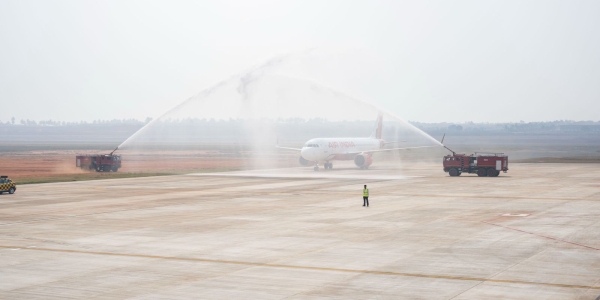
The first commercial arrival, IndiGo flight 6E460 from Bengaluru, touched down at 08:00 hours and was welcomed with a ceremonial water salute. By the end of the first day, the airport had handled 48 scheduled flights connecting nine domestic destinations and served more than 4,000 passengers, signalling operational readiness from day one.

Developed by Adani Airports Holdings Limited (AAHL), NMIA is India’s newest greenfield international airport. Spread across 1,160 hectares, it has been designed to ultimately handle up to 90 million passengers annually, with an initial capacity of 20 million passengers per year. The airport is intended to operate alongside Chhatrapati Shivaji Maharaj International Airport (CSMIA), easing long-standing congestion and distributing traffic more evenly across the Mumbai region.

Chairman Gautam Adani marked the opening by welcoming passengers and interacting with airport staff and frontline workers.
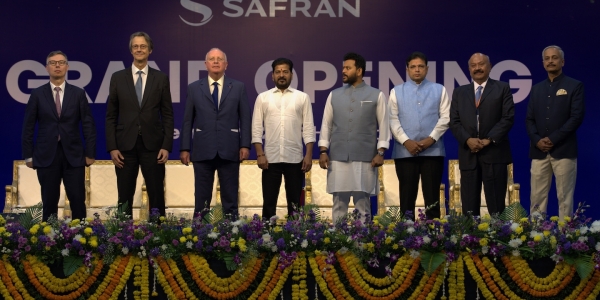
The inauguration included cultural performances, a commemorative postal cover released by India Post, and a ceremonial flag-hoisting by Param Vir Chakra awardees, underscoring the national importance attached to the launch.
A New Aviation Hub Takes Shape
The start of operations at NMIA immediately alters the aviation dynamics of western India. Designed as a complementary airport to CSMIA, it introduces a twin-hub model similar to those seen in global aviation centres such as London, Tokyo and New York.

On the first day of operations, multiple airlines began scheduled services. IndiGo commenced flights connecting Navi Mumbai with key domestic cities, including Bengaluru, Delhi, Hyderabad, Kochi, Jaipur, Nagpur, Mangaluru and Lucknow, with additional routes being added in phases through the final week of December.
Air India Express also launched operations on the same day, beginning with services to Bengaluru and Delhi, with further frequency additions planned from January 2026.
Akasa Air announced its entry into NMIA operations, initially serving Goa and adding further destinations in the following days. Star Air also began operations from Navi Mumbai, contributing to early regional connectivity.

These initial services formed the first phase of commercial operations at NMIA, as airlines began activating their networks from the new airport.
While operations were largely smooth, initial days also reflected expected early-stage adjustments such as phased availability of lounges, retail outlets and landside access — typical of large airport openings worldwide.
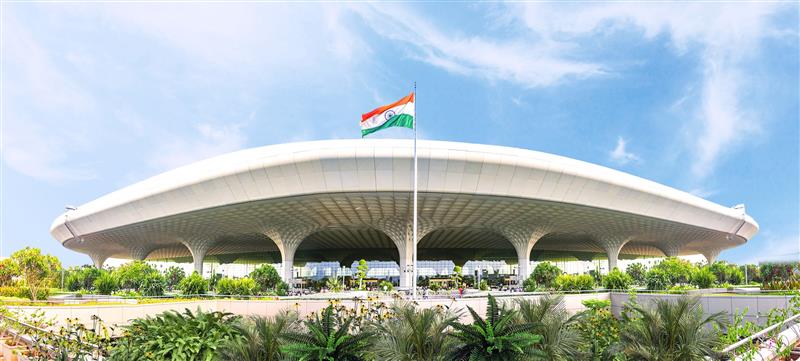
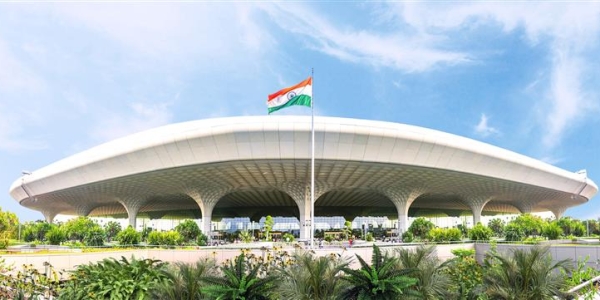
Beyond passenger operations, NMIA has been planned as a long-term aviation and logistics hub. Designed by Zaha Hadid Architects, the terminal draws inspiration from the lotus flower, combining cultural symbolism with functional design. Sustainability features such as natural lighting, passive cooling and water conservation systems have been integrated into the infrastructure.
Cargo will form a key pillar of the airport’s long-term role. With proximity to Jawaharlal Nehru Port and planned multimodal connectivity, NMIA is positioned to support sea-air transhipment, time-sensitive cargo and pharmaceutical logistics. At full development, cargo capacity is expected to reach 3.2 million tonnes annually.

From a regional development perspective, the airport is expected to reshape growth patterns across Navi Mumbai, Panvel and the wider Raigad region.
Improved road connectivity, upcoming metro links and direct access via the Atal Setu are expected to support decentralisation from Mumbai’s core while strengthening the broader metropolitan economy.
The opening of NMIA marks the culmination of a long journey that began in 2007, involving land acquisition, environmental clearances and complex engineering challenges. As operations stabilise and networks expand, the focus will shift toward scaling capacity, improving passenger experience and integrating the airport fully into India’s aviation ecosystem.
With two operational airports now serving the Mumbai region, India enters a new phase of aviation development — addressing long-standing capacity constraints through expanded infrastructure.
Also Read: A Lotus Takes Flight: Inside Zaha Hadid Architects’ Vision for Navi Mumbai International Airport