













- Airlines, SAF manufacturers and other stakeholders are lagging behind.
- India’s potential remains largely untapped.
- At the IATA annual meeting in Delhi on June 1-3, will they revisit the 2050 target?

Alarm bells are already ringing. The probability of not achieving Net Zero by 2050 is getting real. Raising the concern, the Director General of the International Air Transport Association (IATA), Willie Walsh, recently said that IATA may have to revisit the 2050 target it had set in 2021 as ‘we are not making as strong a progress on (sustainable aviation fuels—SAF) as we thought’.
Walsh did not mince words at the recent International Society of Transport Aircraft Trading Americas conference, where he said, “There will be a re-evaluation, there will be airlines that say we cannot do this. The industry will be a bit more fragmented.”
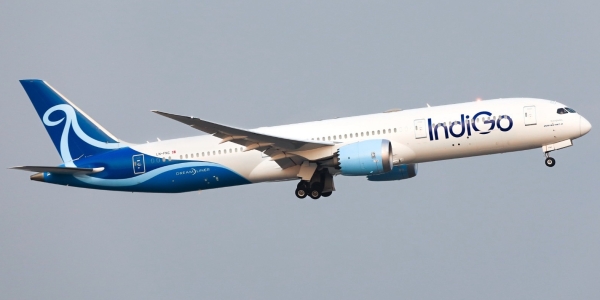
In this background, the annual meeting of IATA from June 1 to 3 in New Delhi, hosted by IndiGo, has assumed greater importance. The meeting, it is hoped, will also give leads on tapping the enormous potential India has to generate SAF.
Globally, SAF production volumes reached 1.3 billion litres) in 2024, double the 600 million litres produced in 2023. SAF accounted for just 0.3% of global jet fuel production and 11% of global renewable fuel. This year, IATA has forecast that SAF production may reach 2.7 billion litres or 0.7% of total jet fuel production and 13% of global renewable fuel capacity. The production rates could do better.
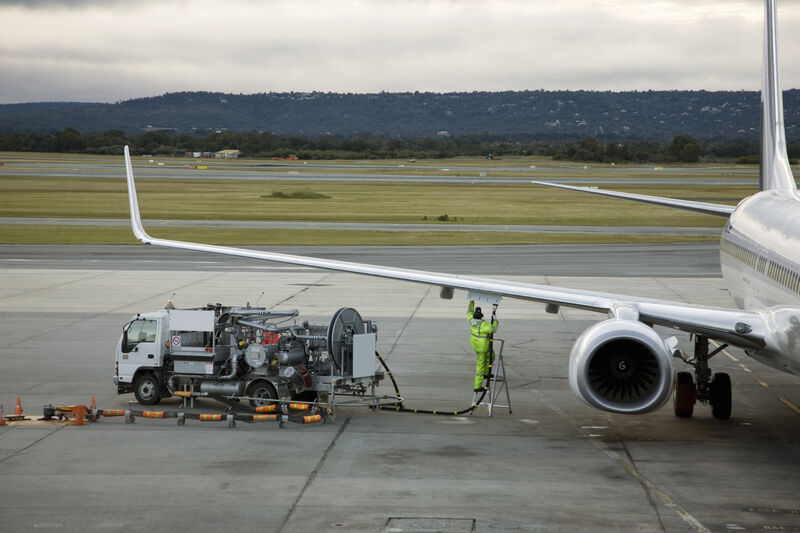
Oil Companies Continue to Receive Subsidies
“SAF volumes are increasing, but disappointingly slowly. Governments are sending mixed signals to oil companies, which continue to receive subsidies for their exploration and production of fossil oil and gas. And investors in new generation fuel producers seem to be waiting for guarantees of easy money before going full throttle. With airlines, the core of the value chain, earning just a 3.6% net margin, profitability expectations for SAF investors need to be slow and steady, not fast and furious. But make no mistake that airlines are eager to buy SAF, and there is money to be made by investors and companies who see the long-term future of decarbonisation. Governments can accelerate progress by winding down fossil fuel production subsidies and replacing them with strategic production incentives and clear policies supporting a future built on renewable energies, including SAF,” added Walsh.
India’s SAF Journey Has Just Begun
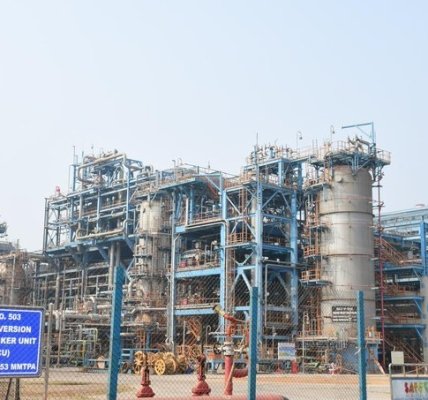
Countries need to delink subsidies with oil production and incentivise companies producing SAF. Some of the top companies producing SAF are Gevo, World Energy, Neste, SkyNRG, Lanzatech, Honeywell UOP, Total Energies, and Shell, but none are from India, though the Indian oil companies have initiated SAF production programmes. Bharat Petroleum Corporation Limited (BPCL) plans to set up its first SAF production facility by 2027; Hindustan Petroleum (HP) has partnered with Boeing to explore opportunities to scale SAF production; and Indian Oil Corporation has tied up with Lanzajet. Airbus has partnered with the Council of Scientific and Industrial Research – Indian Institute of Petroleum (CSIR-IIP) to develop domestic SAF using Hydro-processed Esters and Fatty Acids (HEFA) technology.
It remains to be seen how these ventures are going to scale SAF production, considering that fossil fuels are the bread and butter of oil companies. The Indian government’s proposed 1% SAF blending mandate with aviation turbine fuel (ATF) by 2027 will require an annual SAF production capacity of approximately 140 million litres. The 2025-26 estimates for ATF consumption in India are 9,954 TMT (thousand metric tonnes), requiring over 113 million litres of SAF.
Are the Indian airlines pushing oil companies towards increased SAF production? Though the answer is yes, presently the SAF flights are far and few, simply because the cost of SAF is two to three times more than that of ATF. It was in February 2022, IndiGo completed its first-ever flight using SAF. In May 2023, India’s first commercial passenger flight using an indigenously produced SAF blend operated between Pune and Delhi on an Air Asia flight. The SAF blended ATF was produced by Praj Industries using indigenous feedstock, supplied by Indian Oil Corporation Ltd. However, the switch to SAF is not encouraging, though the intent is there, as airlines are grappling with their own set of problems.
The challenge before the airlines is twofold: accessibility and affordability. India reportedly has feedstock (agricultural waste, used cooking oils and municipal solid waste) for the potential production of 19 to 24 million metric tonnes of SAF every year, but is far from that target. Efforts by the stakeholders need to get aggressive, and it is hoped that the newly formed India SAF Alliance (which includes representatives from the government, industry, and academia) will be the catalyst. Also, the outcome of the Delhi IATA meeting will probably lay the roadmap, not just for India but for the world.