














New Aviation Safety Rules Trigger Crackdown on Airport Obstructions Nationwide

- Following the Ahmedabad crash, the government introduced new aviation safety rules empowering authorities to demolish structures that violate height limits near airports.
- A strict four-step enforcement system minimises bureaucratic delays, with limited rights to appeal and no compensation for post-rule violations.
- Despite the policy shift, challenges like political sensitivities, land disputes, and technical complexities may hinder effective implementation across regions.
The draft Aircraft (Demolition of Obstructions) Rules, 2025, unveiled on June 18—just six days after the Air India Flight 171 catastrophe—grants authorities unprecedented power to identify and demolish buildings, trees, or structures that violate height limits near airports.
The draft rules are set for immediate implementation upon official gazette notification. Experts claim this marks a radical shift from India’s historically lax enforcement of aerial obstruction laws, despite years of warnings from pilots, courts, and safety experts. Yet, beneath its technical prescriptions lies a complex web of corporate and geopolitical pressures, and a nation confronting the paradoxes of rapid development.
Industry watchers have long reminded that while India needs more airports, these should be developed at a distance from cities. This advice was overlooked during the country’s decade-long infrastructure boom, under which the number of airports doubled to 160, with 50 more planned by 2030.
The draft regulations establish a rigorous four-step enforcement mechanism designed to eliminate bureaucratic delays that previously allowed violations to proliferate. First, aerodrome officers must immediately issue formal notices to owners of any building or tree suspected of exceeding height limits, citing the specific violation under Section 18(1) of the Bharatiya Vayuyan Adhiniyam, 2024. This provision grants the Central Government authority to define regulated “airspace safety zones” around airports, extending up to 20 km for Visual Flight Rules (VFR) aerodromes and 56 km for Instrument Flight Rules (IFR) airports, within which it can specify maximum allowable heights for buildings, structures, and trees.
Owners are given 60 days to submit detailed structural documentation—including site plans and dimensions—or formally dispute the claim. Second, authorities wield unilateral verification powers: officers can conduct daylight inspections after providing “reasonable prior notice,” entering properties without owner consent if necessary. If access is denied, violations may be assessed using satellite imagery or other evidence, with cases escalated directly to the Directorate General of Civil Aviation (DGCA) for enforcement.
Third, for non-compliant owners, District Collectors are mandated to execute forced demolition or height reduction within 60 days (extendable once), mirroring procedures for unauthorised constructions. Crucially, if a building or structure is constructed after the rules come into effect and violates the height restrictions, the government will not offer any compensation when it is demolished or reduced.
Finally, while affected parties retain a limited right to appeal—by filing to appellate officers within 60 days with a ₹1,000 fee and supporting evidence—compensation eligibility under Section 22 of the Act hinges entirely on full compliance with demolition orders. This ‘comply first’ principle aims to prevent frivolous litigation from delaying safety-critical actions.
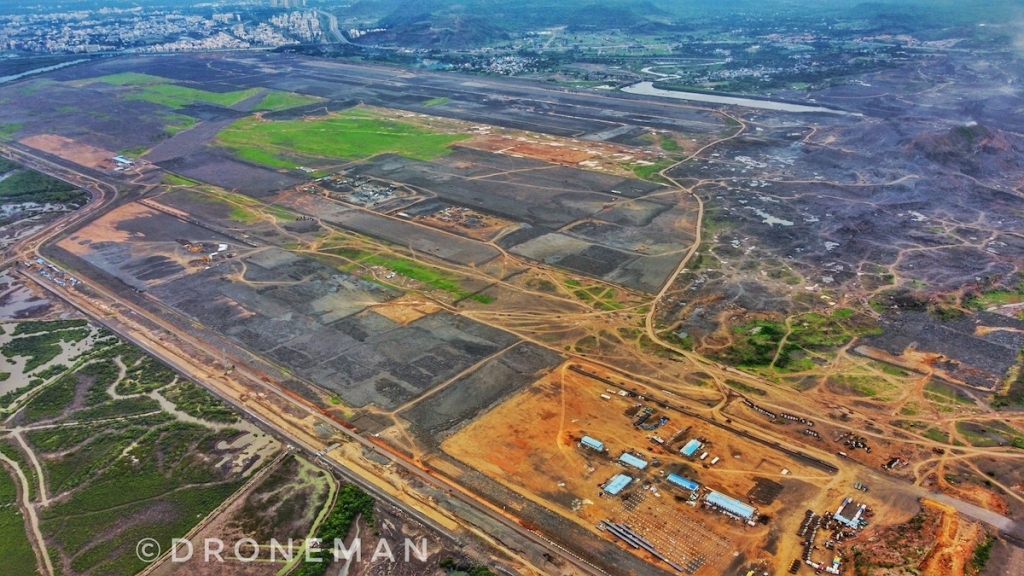
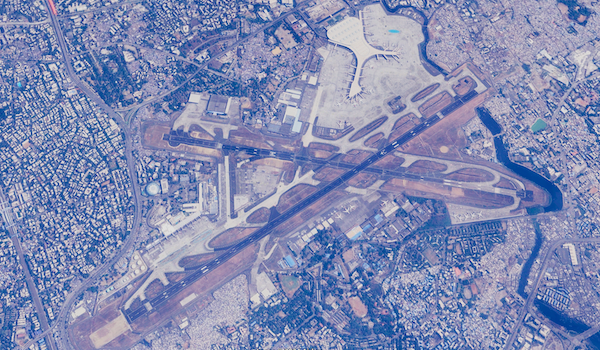
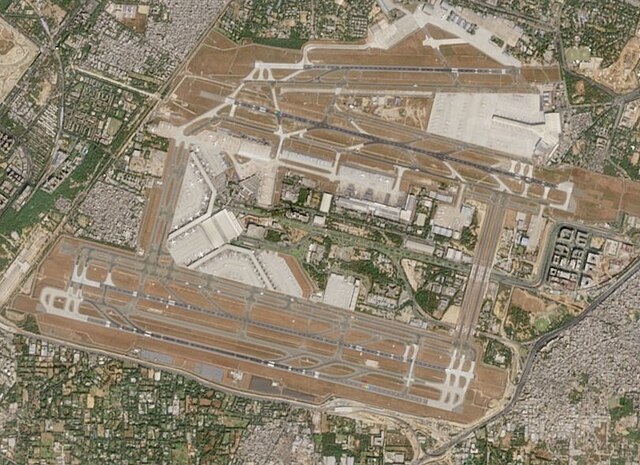
The rules confront an epidemic of unchecked urban encroachment. In Mumbai alone, courts ordered the removal of 137 obstructive structures near the airport in 2017, yet builders stalled demolitions via appeals. By 2022, violations had ballooned to over 1,000 structures. Similar hazards plague Delhi (365 obstructions), Nagpur (63), and Surat (27), where courts rebuked authorities for inaction. The issue reflects a systemic failure—while the US enforces binding FAA ‘obstruction standards,’ India’s regulations were routinely bypassed by developers with political connections. Even new projects like Navi Mumbai International Airport (NMIA) faced compromises, where regulators relaxed nearby height limits. The original restriction near NMIA was 55.1 metres (180 feet) above mean sea level (AMSL) within a 20 km radius. This was relaxed to 160 metres (525 feet) in July 2022, as confirmed by CIDCO (City and Industrial Development Corporation) and the Airports Authority of India (AAI). Notably, the change occurred before the airport’s completion (scheduled for 2025). The AAI had already granted No Objection Certificates (NOCs) for 104 buildings up to 160 metres by August 2022, with 19 more pending.
Yet, India’s efforts aren’t merely theoretical. Several airports offer real-world precedents. For instance, the Bombay High Court’s directives led to the removal of obstructive structures from seven buildings near Mumbai Airport. This action was confirmed in a compliance report filed on June 17, 2025, by the suburban collector’s office. The structures removed included permanent fixtures like overhead water tanks, antennae, and iron pipes that violated aviation height norms and obstructed flight paths. The High Court intervened in response to a Public Interest Litigation (PIL) filed by advocate Yeshwanth Shenoy, highlighting threats to aircraft safety from high-rises near the airport. The court had earlier criticised authorities for endangering passenger lives by ignoring height violations.
The court’s March 26, 2025, order mandated the removal of obstructions after granting time for one building to appeal to the DGCA. The removal was verified through joint physical inspections by the Mumbai Airport and DGCA, confirming compliance.
In Kolkata, as confirmed by multiple June 2025 reports from the AAI, the Obstacle Limitation Surface (OLS) study identified 377 obstructions—including buildings, mobile towers, water tanks, and trees—90 of which have been addressed, while over 280 remain.
In Nagpur, Mihan India Limited (MIL) flagged 68 buildings near the airport over a year ago. By June 2025, only 8 had been demolished. Sixty violations remain unresolved due to jurisdictional conflicts between MIL, DGCA, and district authorities.
While the rules signify a watershed moment for aviation safety, their practical execution faces significant headwinds rooted in India’s complex socio-political landscape. Land acquisition disputes pose a critical obstacle, as evidenced by the protracted battle over runway extensions at Kozhikode Airport, where compensation conflicts stalled vital safety upgrades for five years—despite the fatal 2020 Air India Express crash that claimed 21 lives. Political will remains equally precarious, particularly in sensitive states like Gujarat, where demolishing residential areas risks triggering public fury. By delegating enforcement to District Collectors, the rules place immense pressure on local bureaucrats to navigate volatile community sentiments while balancing top-down mandates. Compounding these issues is the need for technical precision, as defining ‘obstruction’ requires meticulous, airport-specific mapping of flight paths by the DGCA—a formidable task given India’s diverse topography, where a single miscalculation could render entire neighbourhoods vulnerable to erroneous demolition orders. Together, these hurdles underscore the gap between regulatory ambition and on-ground realities.
While the Ministry has invited public feedback within 20 days, swift implementation is likely given the rules’ ‘preventive’ framing. For many aviation experts, as India races toward its 2030 infrastructure targets, these rules will test whether economic ambition and safety can truly coexist.
Read More: Wipro Acquires LAUAK Stake, Strengthens Global Aerospace Footprint