












- India’s offshore helicopter sector is rebounding strongly, driven by renewed demand from the oil and gas industry, fleet modernisation, and advancements in safety and technology.
- With over 1 million passengers transported in 2023 and contracts like ONGC’s new deals with Heligo and Pawan Hans, the sector is set to play a vital role in supporting offshore operations and future energy growth.
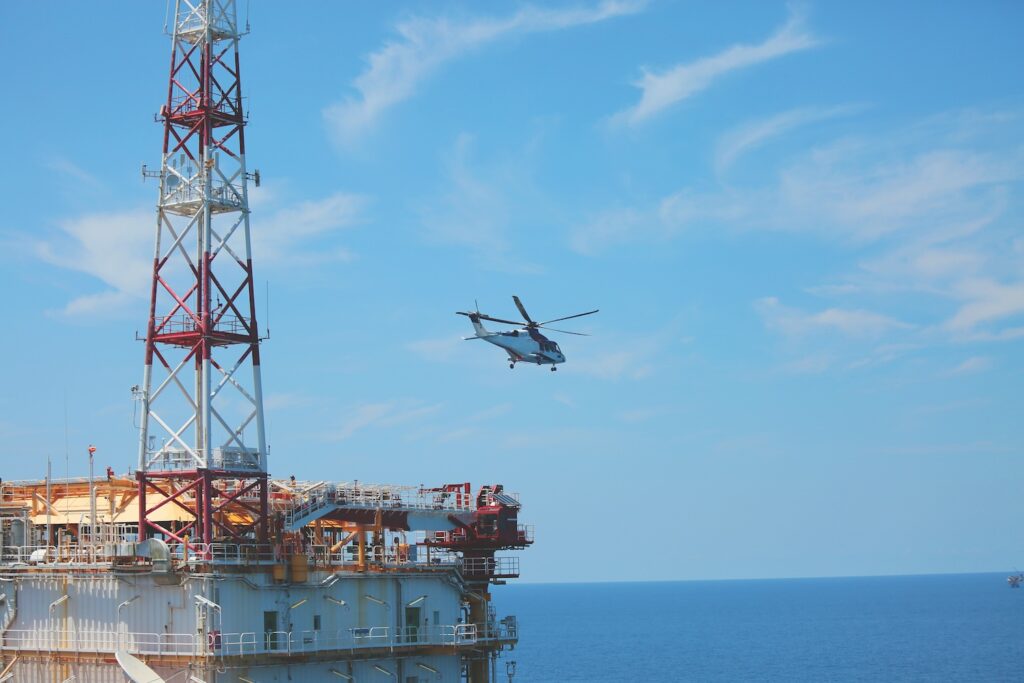
India’s offshore oil and gas sector plays a vital role in meeting the country’s energy needs. As exploration and production activities extend further offshore, the need for reliable, efficient, and safe transportation has become paramount. Helicopters serve as lifelines in these operations and with advancements in technology and growing demand, the helicopter industry in India is poised for significant transformation to better support offshore operations. According to the Directorate General of Civil Aviation (DGCA), the Indian offshore helicopter fleet transported over 1 million passengers and 50,000 tonnes of cargo in 2023 alone.
This comes after the turbulence of a few years. Facing contract cancellations and relentless pressure for lower rates from oil companies, helicopter operators and lessors had been pushed to the brink. This downward pressure triggered a crisis within the industry, culminating in Chapter 11 bankruptcy filings by the world’s three largest offshore operators—CHC, PHI, and Bristow—between 2016 and 2019, as they sought to restructure their finances, reduce debt, and downsize their fleets.
Then struck Covid. According to Rystad Energy analysts, the COVID-19 pandemic resulted in a 15 per cent decrease in offshore helicopter passenger traffic, falling from 483 million passenger miles in 2019 to 410 million in 2020.
Even in the early 2022, the outlook was bleak. The sales of new aircraft had plummeted, and leasing companies were scrambling to find alternative uses for idle helicopters. Fast forward to today, and the picture is completely different. A surge in demand from oil companies has created a shortage of helicopters, driving up contract and lease rates for the first time in years. This dramatic reversal, initially sparked by post-pandemic economic recovery, gained significant momentum following the Russian invasion of Ukraine in February 2022.The change that came about in just one year is remarkable.
The global offshore helicopter services market, valued at $2.7 billion in 2024, is projected to reach $3.5 billion by 2033, growing at a CAGR of 2.74 per cent between 2025 and 2033. This growth is driven by factors such as increasing demand for emergency services, infrastructure development in remote offshore locations, the rising need for resource extraction and renewable energy projects, globalisation of offshore operations, advancements in helicopter technology, and a heightened focus on safety and environmental regulations.
In the realm of offshore oil and gas operations, the significance of transportation cannot be overstated, with helicopters playing a crucial role in ensuring efficient and timely access to remote sites. These rotorcraft are indispensable for ferrying personnel, equipment, and emergency supplies to and from offshore platforms, thus enhancing operational capabilities and safety measures in a challenging environment. Modern advancements in helicopter technology have led to superior designs that optimise fuel efficiency and payload capacities, ultimately driving down operational costs while improving reliability.
Innovations in rotor blade technology, materials, and avionics are enhancing flight performance and safety-critical factors in challenging maritime environments. Lighter composite rotor materials improve fuel efficiency and extend range, while advanced avionics with real-time data analytics enhance navigation and situational awareness, reducing accident risk. These enhancements, as highlighted in recent safety reports, reflect lessons learned from past incidents.
Furthermore, specialised helicopters equipped with cutting-edge navigation and communication systems have significantly increased the safety of aerial operations in unpredictable weather conditions. Innovative flight safety programs, such as Flight Operational Quality Assurance (FOQA), have been adapted to helicopter operations, leading to the development of Helicopter FOQA (HFOQA) software. This tool utilises a combination of qualitative insights from industry experts and quantitative flight data, enabling operators to analyse various flight phases and operational events for improved safety metrics and efficiency benchmarks. Additionally, research highlights the potential for rotorcraft to integrate seamlessly with other transportation modalities, thereby expanding their utility in logistical operations in remote areas.
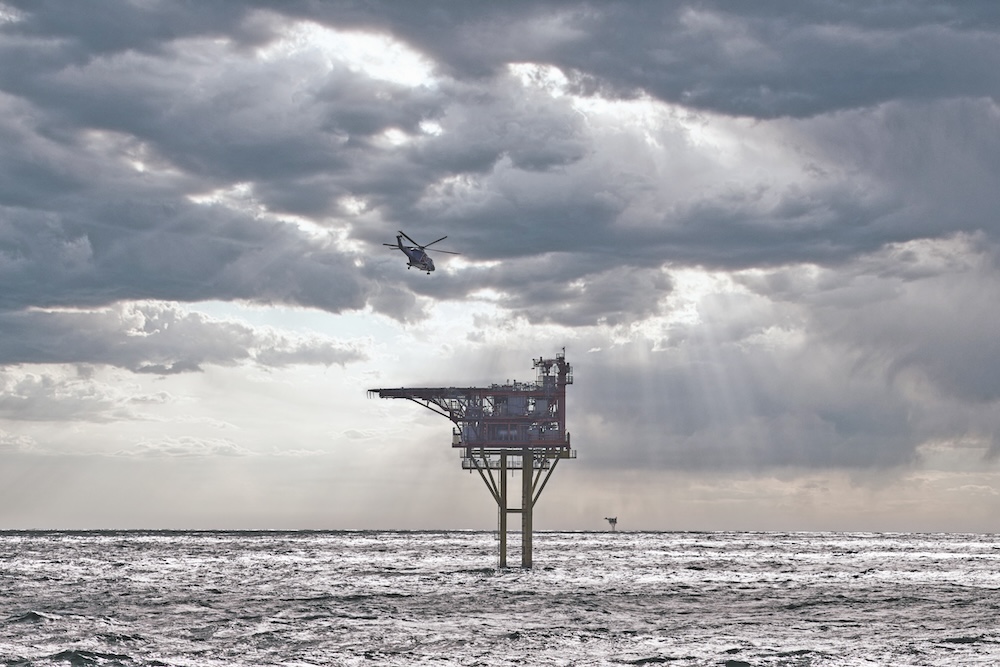
Despite its vast population, India’s helicopter industry suffers from extremely low penetration. With only 250-270 civil and Para public helicopters—of which Airbus Helicopters holds a majority share with 130—the market is significantly underdeveloped for a country of India’s size.
In the summer of 2024, Heligo Charters Pvt Ltd (HCPL) made history by launching India’s first Airbus H145D3 helicopter for offshore oil and gas operations with ONGC. This pioneering aircraft, with its distinctive five-bladed design, offers enhanced performance and reliability crucial for the demanding offshore environment.
Then in December 2024, public sector helicopter service provider Pawan Hans won a substantial 10-year contract with the Oil and Natural Gas Corporation (ONGC), valued at over Rs 2,000 crore, to supply four Dhruv NG helicopters manufactured by Hindustan Aeronautics Ltd (HAL).
The government plans to deploy the domestically produced Advanced Light Helicopter (ALH) Dhruv Mark-III in offshore oil and gas operations. The HAL-made ALH Civil Dhruv-NG, a civilian version of the military ALH Mk-III powered by ‘Shakti’ engines and featuring a civil-certified glass cockpit, is being considered for deployment by state-run Pawan Hans. While the ALH Civil Dhruv has been in service since 2003, this would mark its first use in offshore operations, pending regulatory approval.
India’s offshore oil and gas sector, led by companies like ONGC and Reliance Industries, is driving demand for advanced helicopter services. Fleet Expansion: Indian operators are acquiring state-of-the-art helicopters to meet growing offshore demands. ONGC, for instance, recently announced plans to induct 10 new-generation helicopters by 2025.
Further, helicopter manufacturers are looking to the government to foster the development of new market segments to stimulate demand.
However, safety remains a paramount concern, reflected in the statistical data indicating higher accident rates associated with rotorcraft compared to commercial aviation. This highlights the urgent need for stringent airworthiness operation standards similar to those established in the commercial air transport sector. Furthermore, enhancing cross-border cooperation in safety practices could improve resilience within the industry, ultimately reinforcing the integral role of helicopters in these challenging environments.
Industry experts note that India’s offshore oil and gas operations are particularly challenging due to high humidity, ambient temperatures, low cloud bases, haze, and frequent visibility of less than one km. Successfully deploying a new helicopter in this environment would provide the global market with an additional option for complex offshore operations, alongside existing offerings from Airbus, Agusta-Leonardo, Bell, Sikorsky, and Russian Kazan Mil-Mi.
There has been an increase in demand for flexible, dynamic helicopter solutions across the Indian offshore oil and gas sector. To address these changing requirements, helicopter builders are turning more toward modular approaches, providing improved operational flexibility and efficiency.
Modular helicopters are widely configurable and enable operators to accommodate a variety of missions. They can also be rapidly reconfigured for other uses, from search and rescue (SAR) operations to the delivery of essential personnel and equipment. There are many benefits of fast reconfiguration — Rapid reconfiguration reduces the period an aircraft is grounded and maximises its use, ultimately enhancing operational efficiency and cost-effectiveness.
With modular designs, operators can meet broader mission requirements, increasing offerings for users and gaining more of the market. Further, modular designs can lead to lower maintenance costs through standardised components and simplified maintenance processes. One example of how modularity can work comes by way of Pawan Hans. In line with this diversity of its fleet, the company launched helicopter services on six routes in Assam under the RCS-UDAN program in February 2023.
With the offshore energy sector only projected to expand and grow, the demand for versatile and adaptable helicopter solutions will only grow further. India’s future of offshore helicopter operations will be defined by mobility and flexibility, so modular designs that are economical to operate and maintain must be at the forefront.
As India strives to reduce its carbon footprint, the offshore helicopter sector is aligning with these goals. It may be mentioned that unlike crew transfer vessels (CTVs), which consume significantly more fuel in rough seas due to increased power demands, helicopters maintain consistent fuel efficiency regardless of sea conditions. This difference is further amplified by operational practices: a helicopter completes its mission quickly and shuts down, while a CTV must maintain engine power to hold position, resulting in continuous fuel consumption. Consequently, helicopters generate significantly lower CO2 emissions per transported technician than CTVs. The aviation industry’s commitment to carbon neutrality is evident in the development of modern helicopters capable of operating with up to 50 per cent sustainable aviation fuel (SAF), with the ultimate goal of achieving 100 per cent SAF usage in the near future.
The advancements in helicopter technology play a pivotal role in optimising offshore oil and gas operations. As offshore exploration expands into more remote and hostile locations, the strategic evolution of helicopter services will remain vital, fostering a sustainable and economically viable future for the oil and gas sector. Additionally, the integration of sophisticated systems, such as helmet-mounted displays and environmental sensors, enhances situational awareness for pilots, thereby mitigating the challenges posed by adverse weather conditions. These innovations not only facilitate safer operations but also contribute significantly to the operational flexibility necessary for tasks such as emergency medical services and personnel transfers. Industry watchers and experts agree that the potential for helicopters to revolutionise operational efficiency is evident, marking them as indispensable assets in the evolving landscape of offshore energy production.