













- At the 52nd Farnborough International Airshow, supply chain disruptions overshadowed new aircraft orders, as OEMs like Airbus, Boeing, and Embraer grapple with delivery delays.
- The article highlights how pandemic aftershocks and geopolitical tensions continue to challenge the aviation industry.
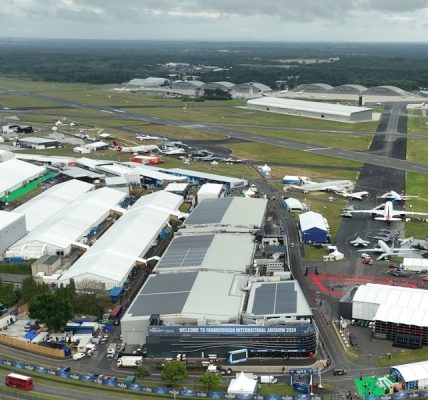
There were no screaming aircraft orders at the 52nd edition of the prestigious Farnborough International Airshow (July 22-26), even while the show cemented its position further as a must-attend aviation event. It is here that one gets to hear the sector’s rumblings and this time, it was agog with supply-chain issues that have left the original equipment manufacturers (OEMs) and airlines in a spot of bother.
Aerospace majors Airbus, Boeing and Embraer are a worried lot. In over a decade, between the two iconic airshows (Paris and Farnborough), the 2024 edition has seen the least number of commercial aircraft orders – totalling 286, including 124 firm orders, 140 tentative deals and 22 options, amounting to $105bn at list prices. This is a far cry from the 1266 orders at Le Bourget last year, where airlines from India (Air India and low-cost carrier Indigo) had majorly propped up the aircraft business for the OEMs. In fact, Farnborough’s best record was not too long ago – in 2018, it had recorded 1,464 aircraft sales, the highest in its history.
Pandemic’s Residual Effect
Understandably, the buzz at the Airshow was how supply chain issues continue to weigh down the aviation sector, even while passenger and cargo tonnage growth numbers have been impressive coming out of the COVID-19 pandemic. However, the residual effect of the pandemic persists to adversely impact aircraft manufacturing, and the OEMs did not shy away from discussing how to navigate through these difficult times.
It was Embraer’s President & CEO, Francisco Gomes Neto, who was quite vocal about how the ruptured supply chain had left the sector in such a vulnerable position. With deliveries impacted, he was of the view that OEMs needed to re-strategise and even regroup to resolve the crisis. Neto mentioned how Embraer itself was strategising on global procurement and supply chain, for which the company has taken a more holistic and combined approach. Embraer has created a new organisational structure for global procurement and supply chain, with an executive vice president heading it. The new structure connects Embraer’s business needs with an extensive and complex supplier base in over 60 countries. It has also put in place multidisciplinary teams working with critical suppliers, supply chain digital integration and transparency, and suppliers’ C-suite engaged in recovery and deliveries.
Roberto Chaves, who heads the new structure, said, ‘We strongly believe that collaboration and resilience in connection with safety first and quality always are the foundations of our supply chain. I sincerely appreciate the suppliers who have demonstrated these values, working consistently to deliver efficiency and generate value for our companies and industry.” With this confidence, Embraer has kept its delivery timelines the same for 2024. In 2023, it was one unit short of its planned 65 aircraft target.
Embraer’s Goal 90 Annual Deliveries
Neto mentioned, “Our goal is to return to around 90 annual deliveries, which we achieved in 2018 and 2019. And although the 2023 revenue was nearly the same as 2019, we are still only at 70% of pre-pandemic output. We are working with our suppliers to ensure they deliver what we commit to the market. We could have delivered more aircraft, but we have to work within the limits of our planning cycle. There’s still room for improvement, particularly with faster shipment of supplies to the production line.”
Airbus’ Next Steps for Production Ramp-Up
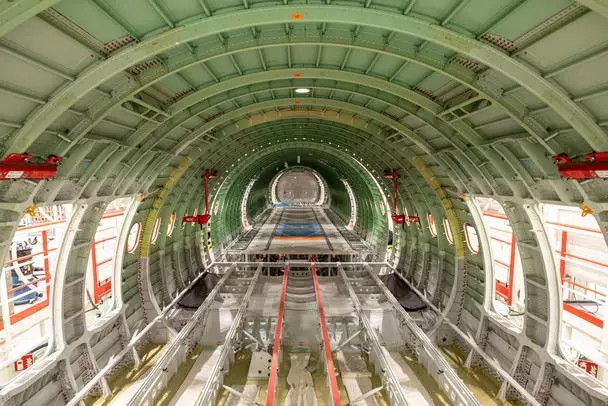
European aerospace global behemoth Airbus is also reworking its aircraft production plan, which is affected by ongoing supply chain issues. Airbus, which is sitting with an order backlog of 8,585 commercial aircraft, as declared at the end of June 2024, is also concerned that it will not be able to meet its target of 800 aircraft in 2024, falling short by 30. Worse, its plans of increasing production of the A320 neo family to 75 aircraft per month reportedly have been pushed to 2027, an indication that supply chain issues are likely to persist for over a year. “We are focused on deliveries and preparing the next steps of the ramp-up while addressing specific supply chain challenges and protecting the sourcing of key work packages,” said Airbus CEO Guillaume Faury.
The situation is Not Getting Any Better
Faury added, “We delivered first quarter 2024 results against the backdrop of an operating environment that shows no sign of improvement. Geopolitical and supply chain tensions continue. In that context, we delivered 142 commercial aircraft.” He said the ‘situation is not getting any better’, forcing the company to rework its target for the year. Airbus has pointed out that there is a shortage of engines, aircraft structural components and interior cabin equipment.
Airbus said that the A220 ramp-up continues towards a monthly production rate of 14 aircraft in 2026, with a focus on the programme’s industrial maturity and financial performance. “We started 2024 with a solid order intake across our businesses. The strong momentum on widebody aircraft underpins our decision to increase the production rate for the A350 to 12 aircraft a month in 2028. Our ramp-up plans are continuing, supported by investments in our production system that rely on our core pillars of safety, quality, integrity, compliance, and security.”
In its 2024 guidance, Airbus said it targeted 770 aircraft, assuming no additional disruptions to the world economy, air traffic, the supply chain, the company’s internal operations, or its ability to deliver products and services.
Boeing Saddled with Safety Problems Too
For its competitor from the US, Boeing, the problems are aplenty. The aerospace giant is going through difficult times with regulators tightening the screws on the aircraft manufacturer on safety issues. Boeing has a backlog of over 5,400 commercial airplanes, amounting to $516 billion.
The outgoing President and CEO, Dave Calhoun, who recently came under severe flak by US senators on aircraft safety issues, said, “Despite a challenging quarter, we are making substantial progress strengthening our quality management system and positioning our company for the future. We are executing our comprehensive safety and quality plan and have reached an agreement to acquire Spirit AeroSystems. While we have more work ahead, the steps we’re taking will help stabilise our operations and ensure Boeing is the company the world needs it to be. We are making important progress in our recovery and will continue to build trust through action and transparency.”
Safety First, Ramp-up Next: Boeing
Boeing has indeed taken a major hit, which is reflected in the second quarter results with revenues of $6 billion from commercial airplanes due to lower deliveries. Meanwhile, the company has submitted its comprehensive safety and quality plan to the Federal Aviation Administration (FAA). It also announced that the 737 programme had gradually increased production during the first 2024 quarter and plans to increase production to 38 per month by year end, up from 25 jets a month in July 2024—the 787 programme plans to return to five per month by the year-end. Boeing’s strategy is very clear – emphasis on product quality (having come under thorough scrutiny by regulators over recent aircraft mishaps) rather than on immediate production ramp-up.
15,700 Aircraft Backlog
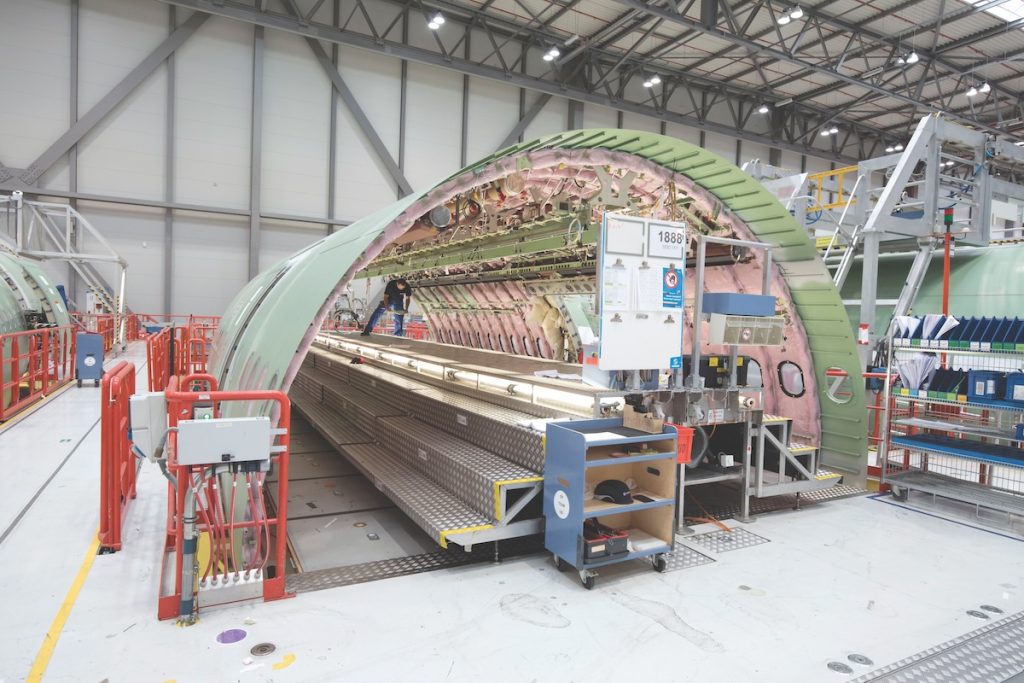
All said and done, the backlog of about 15,700 aircraft from different OEMs is likely to be cleared in about 13 years, keeping the 2023 production rates as the base, as per a report by McKinsey.
Many of the aircraft orders will not see on-time deliveries. For instance, the Japan Airlines order of 10 Boeing 787-9 and 10 options for an undisclosed 787 variant, 20 Airbus A350-900 widebody aircraft, and 11 A321 single-aisle aircraft is scheduled to be delivered no earlier than 2028 and completed by 2032.
Airlines thus have a long wait before they get their orders delivered, which may explain the low strike rate at Farnborough. On day 1, US-based global cargo airline National Airlines opened the account by picking up four Boeing 777 Freighters. The first of these aircraft is likely to be delivered in the second half of 2025 and 2026, quicker deliveries as they are Passenger-to-Freighter (P2F) conversions.
Embraer Eyeing Freighter Conversion
Embraer is converting some of its passenger aircraft into freighters to meet the growing demand for cargo transport from e-commerce and to keep production cycles alive. At Farnborough, upgrades to the P2F conversion programme were announced, including structural changes to the aircraft, such as the removal of seats, widening of the main deck door, and reinforcing the floor to support heavy containers. The company is also enhancing the smoke detection sensors and storage of hazardous materials, a new cargo handling system, among others. The upgrades are to cost $1 million per aircraft.
Slow production rates
The concerns of aviation experts at Farnborough are real as OEMs continue to struggle with regard to sourcing components critical to aircraft manufacturing, finding raw materials, electronic components etc. The production rates of OEMs have indeed slowed down. However, the industry leaders expressed how the industry needs to innovate and become smart and agile in sourcing. Even as the total number of travellers is expected to reach 4.96 billion in 2024, a record high and total air cargo volumes are expected to touch 62 million tonnes, the industry has to get its act right quickly by working on supply chain.
Splintered Geopolitical Environment
McKinsey has stated that OEMs and suppliers are dealing with multiple challenges simultaneously: quality control issues, new regulations, talent shortages, and an increasingly splintered geopolitical environment.
The unending Russia-Ukraine conflict, drawing NATO countries into the picture, and the protracted Israel-Hamas war with some of the Middle Eastern countries getting involved have compounded the supply chain issues. For instance, titanium from Russia is used by Airbus, Boeing and Embraer in different percentages, and the conflict has led to disruption of titanium supply, and the OEMs have started looking elsewhere – China, Japan, and Kazakhstan for their titanium needs. The Russian corporation VSMPO-AVISMA has been the largest producer globally, supplying almost 40% of the aerospace requirement. Most of Boeing’s B787 aircraft variants sourced titanium from here, but Boeing is said to have made alternate arrangements with the conflict.
McKinsey added, “Since 2020, OEMs have struggled to obtain adequate quantities of many components essential to aircraft manufacturing, including raw materials, finished castings and forgings, semiconductors, and electronics components. As a consequence, production lines have slowed or stopped, the fleet age is climbing, and repair and overhaul times are sometimes significantly off target. Adding to the challenge, many suppliers provide components and materials for both original equipment and the aftermarket. If they have only a limited supply of parts and components, they may have to make production trade-offs between supplying OEMs and servicing the aftermarket.”
Are Indian airlines insulated?
On day 1 of the Paris Air Show last year, low-cost carrier IndiGo placed a historic order for 500 Airbus aircraft, and it was followed up by the Tata Group-owned Air India, which signed a deal for 470 aircraft, a mix of Boeing and Airbus. In January 2024, Akasa Air placed an order for 150 Boeing 737 Max planes. These orders were placed notwithstanding the rumblings in the aircraft supply chain that have been around since the pandemic and worsened in the subsequent years. According to industry experts, supply chain woes will likely continue into 2026.
Credit rating agency Icra, in its mid-term outlook on the aviation sector, said, “Supply chain challenges and engine failure issues remain the headwinds in the near term. The deliveries, however, are likely to be gradual, spanning over the next decade, and will also be impacted by the current supply chain challenges encountered by engine and aircraft OEMs.”
Suprio Banerjee, Vice President and Sector Head for Corporate Ratings at Icra, said, “More recently, the Indian aviation industry has been affected by engine failures and supply chain challenges. This has resulted in the grounding of aircraft for select airlines, thus impacting overall industry capacity (as measured by Available Seat kilometres or ASKMs).”
Air India, IndiGo, and Akasa Air did not respond to questions about how they had strategised their network expansion in light of the disrupted supply chain. Nevertheless, Air India CEO and MD Campbell Wilson, in an interview with an agency, had mentioned that the airline was ‘reasonably insulated’ in the short term, explaining that it had taken 36 aircraft on lease, besides the 470-order (the bulk of the planes’ expected timeline is mid-2025) and that it was hopeful of getting white tail aircraft (ordered by other airlines but cancelled) which already exist. Acknowledging that there is always a production risk in the aviation industry, he said Air India’s short-term growth, however, remains unaffected.
As the supply chain volatility continues, the OEMs, more so the airlines and maintenance, repair and overhaul (MROs), have adopted new strategies to minimise overheads, including keeping inventory that is only immediate requirement – a conscious shift from ‘just-in-time’ to ‘just-in-case’ inventory.
Wafer-thin Profits
The Director General of the International Air Transport Association (IATA), Willie Walsh, said: “The airline industry is on the path to sustainable profits, but there is a big gap still to cover. A 5.7% return on invested capital is well below the cost of capital, which is over 9%. And earning just $6.14 per passenger is an indication of just how thin our profits are—barely enough for a coffee in many parts of the world. To improve profitability, resolving supply chain issues is of critical importance so we can deploy fleets efficiently to meet demand. And relief from the parade of onerous regulations and ever-increasing tax proposals would also help. An emphasis on public policy measures that drive business competitiveness would be a win for the economy, jobs, and connectivity. It would also place us in a strong position to accelerate investments in sustainability.”
The road ahead is not an easy one as there are no quick-fix solutions to the supply chain constraints, which IATA forecasts may last till 2026, even though the OEMs are keen on pushing production levels up. The heartwarming part is that airline traffic is soaring and demand for aircraft is there, if one goes by the commercial outlook of both the big players – Boeing’s projection of 44,000 new airplanes through 2043 and Airbus has pegged it at 42,000 new airplanes. And that we hope will enthuse the supply chain to fall in place, easier said than done.