











- Urban Air Mobility providers are accelerating their eVTOL development programmes.
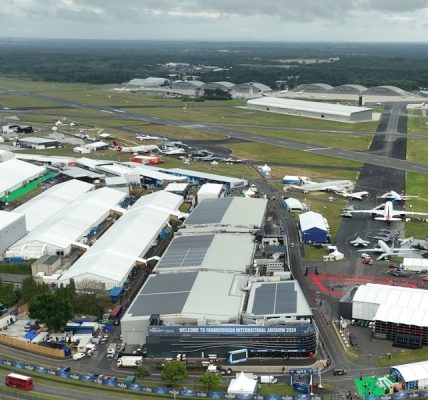
The recently concluded Farnborough International Airshow, provided an unprecedented insight into the latest developments underway at major Urban Air Mobility (UAM) providers.
There is no doubt that the future air mobility (FAM) market is large. A June 2023 McKinsey study stated that the industry had orders in hand for over 18,000 aircraft, representing an estimated $111 billion in sales. In comparison, the order backlog for commercial aviation stood at 16,500 aircraft (14,300 firm orders and 2,200 options).
However, the report went on to state that while the size of the current order backlog is notable, the durability of these orders remains in question with less than 1 per cent of all orders mentioning any type of aircraft deposits or pre-payments and just over half (51 per cent) being firm orders with the remainder being Letters of Intent (LOI) and options.
The McKinsey study highlights an important aspect which UAM companies need to guard against. It says that many orders are contingent on OEMs achieving specific technical milestones such as test flights, conforming prototypes, or type certification. As a result, delays in aircraft development or performance shortfalls could result in orders evaporating rapidly.
Eve Nears Take-Off

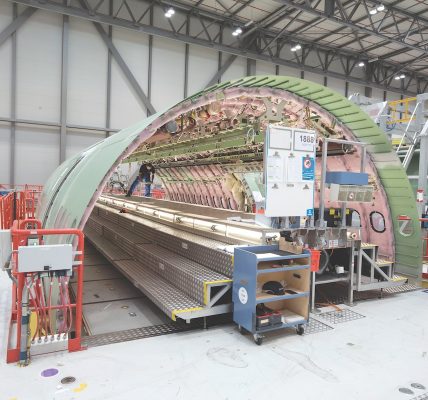
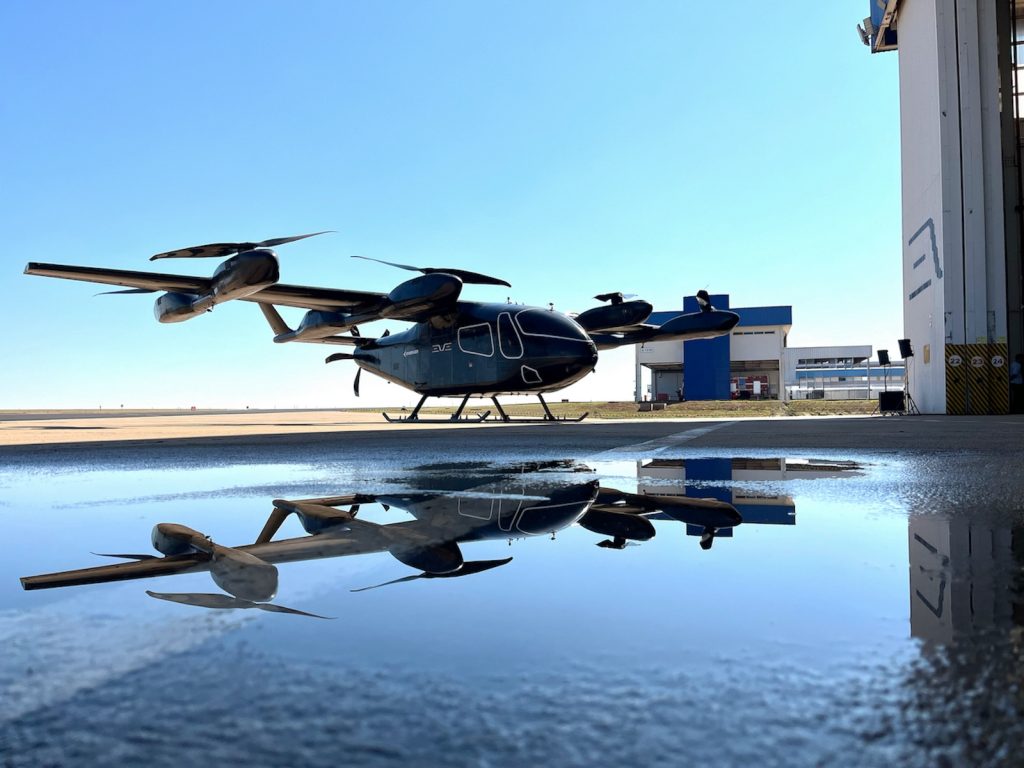
One of the global leaders in the electric Vertical Take-Off and Landing (eVTOL) sector, Eve Air Mobility (Eve) announced at FIA 2024, the assembly of its first full-scale eVTOL prototype being built in the Embraer test facility of Gaviao Peixoto, Sao Paulo State. “Our global team of engineers has shown exceptional dedication and expertise to successfully assemble our first full-scale eVTOL prototype,” said Johann Bordais, CEO of Eve Air Mobility, following the announcement. Eve is now turning its attention toward the preparation of a rigorous testing campaign. “This extensive testing phase begins the next fundamental step in our journey,” said Bordais. “It ensures that our eVTOL meets the high standards and expectations we’ve set for performance and safety.”
Eve also announced later that it has completed the selection of the primary suppliers for its eVTOL aircraft. Diehl Aviation will be the designer and producer of the interior and ASE has been named as the supplier for the eVTOLs power distribution system.
Eve’s eVTOL utilises eight dedicated propellers for vertical flight and fixed wings to fly in cruise, with no change in the position of these components during flight. The concept includes an electric pusher powered by dual electric motors that provide propulsion redundancy with the goal of ensuring the highest levels of performance, safety , dispatch reliability and low cost of operation.
Eve, which shares a close relationship with Embraer, the world’s third-largest aircraft manufacturer, already has Letters of Intent (LoI) for 2,900 eVTOLs. Eve will also benefit from Embraer’s existing global network of service and support locations, that will help ensure reliable, safe, and efficient operations.

Joby Puts on a Show
Joby Aviation made its European debut at this year’s Farnborough International Airshow, showcasing its all-electric, vertical take-off and landing air taxi. This was the first time that the California-based transportation company had displayed its eVTOL in the UK. Company officials said they had fruitful discussions with dozens of key stakeholders on the path to launching their services in the UK.
Prior to FIA 2024 in July, Joby’s hydrogen-electric, vertical take-off and landing demonstrator aircraft completed landmark 837 km flight. According to the company, the test flight is believed to be the world’s first forward flight of a VTOL aircraft powered by liquid hydrogen. A converted Joby pre-production prototype battery-electric aircraft fitted with a liquid hydrogen fuel tank and fuel cell system was used for the test flight.
Joby, which first began flying full-scale pre-production prototype aircraft more than four years ago, now has two production prototype aircraft. The second aircraft is expected to join the first production prototype at Edwards Air Force Base later this year. The company’s two pre-production aircraft have accumulated over 1,500 flights, covering a total distance of over 50,000 km, including over 100 flights with a pilot onboard.
Two further aircraft are now in final assembly. Joby has also committed to the US Air Force that it will deliver two aircraft to MacDill Air Force Base in 2025. Joby has also completed its pre-production flight test programme, having completed more than 1,500 full-scale eVTOL flights. The Californian eVTOL manufacturer is the first – and so far only – electric air taxi company to have its final airworthiness criteria published by the US Federal Aviation Administration (FAA). “The safety of our pilots, passengers and surrounding communities has been a guiding principle in the design and development of our aircraft from the very beginning. Compared to traditional single-propeller airplanes and helicopters, the Joby aircraft has greater redundancy across flight-critical systems to guard against failure,” says Claire Boland, Sustainability Lead, Joby Aviation.
Joby has stated that it plans to start commercial operations as soon as 2025, using its battery-electric air taxi, which can carry a pilot and four passengers at speeds of up to 200 mph, with a fraction of the noise produced by helicopters and zero operating emissions.
Supernal Makes a Splash
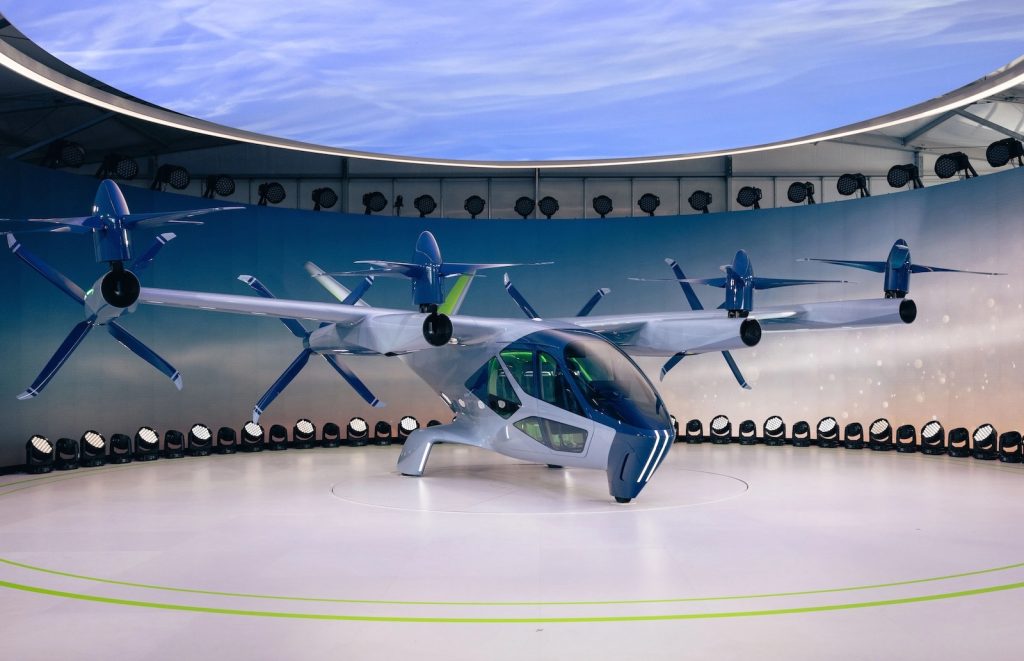
Supernal LLC returned to the biennial Farnborough International Airshow, displaying its full-scale eVTOL vehicle product concept, S-A2, in what was its international debut and marked the introduction of the S-A2 to the aviation community. The company officials stressed that the S-A2 is engineered to achieve global commercial aviation safety standards with a robust airframe structure that includes redundant components in critical systems such as powertrain, flight controls and avionics.

Supernal has stated that it plans to begin prototype testing of the S-A2 in 2025, while the Full-Scale Technology Demonstrator (FSTD) is slated to begin test flights this year. Supernal aims to launch commercial flights in 2028. “With our ‘right product, right market at the right time’ philosophy, S-A2 embodies critical work Supernal is conducting with fleet operators, suppliers, governments and Hyundai Motor Group to ensure AAM becomes a safe, economically viable and widespread mode of transportation in the coming decades,” said Jaiwon Shin, president of Hyundai Motor Group and CEO of Supernal.
Supernal also announced a partnership with Sigma Air Mobility – a Luxaviation Group company at the show. Both companies will now work together to identify and develop targeted markets for future AAM infrastructure and investments, targeting key markets in South and Southeast Asia and potential opportunities in Southern Europe.
Supernal is also placing a strong focus on interior modularity and battery upgradability, which includes the ability to replace the battery module as technology advances. Supernal is leveraging a large 600-person team and the vast technical and business capabilities of Hyundai Motor Group as also Hyundai’s mass production capability. “S-A2 is a true representation of ‘auto meets aero.’ Drawing on the competence of Supernal’s top aerospace engineers and Hyundai Motor Group’s world-renowned automotive designers to create human-centric design that maximises passenger experience and safety,” said Luc Donckerwolke, president, chief design officer and chief creative officer, Hyundai Motor Group.
The S-A2 builds on Supernal’s S-A1 vision concept, which first debuted at CES 2020. It features a V-tail eVTOL design, which can attain an altitude of 1,500 feet, cruise at a speed of 200 kmph and operate on typical city operation needs of 40 to 64 km. The S-A2 features a distributed electric propulsion architecture and has eight all-tilting rotors. At entry into service, Supernal claims its eVTOL air vehicle will operate as quietly as a dishwasher: 65 dB in vertical take-off and landing phases and 45 dB while cruising horizontally.
Vertical Aerospace Makes Progress
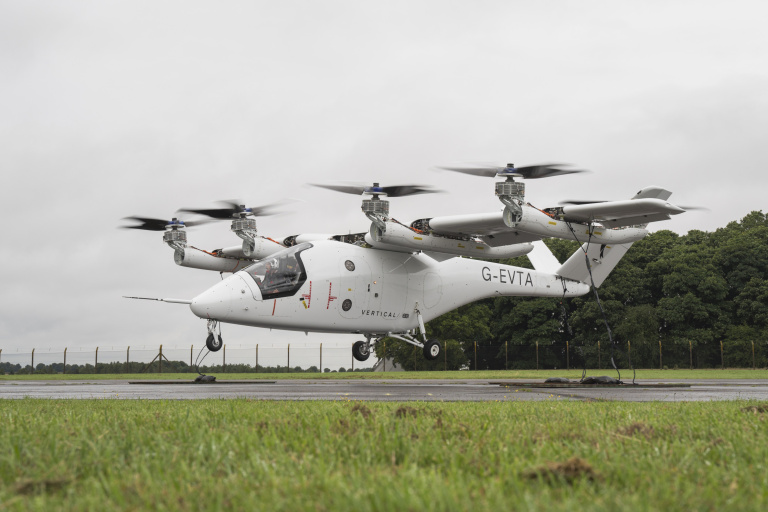
Vertical Aerospace, whose next generation full-scale VX4 prototype is the only eVTOL designed, built and assembled in the UK, first unveiled in July, skipped the Farnborough airshow. However, it announced at the show that the full-scale VX4 prototype had begun its initial powered ground tests, including propeller balancing, which were successfully completed. On July 26, the company announced that the VX4 prototype had successfully performed a piloted flight while loosely tethered to the ground, during whichover 20,000 flight and system parameters were measured to verify thrust, handling qualities and system performance.
Vertical Aerospace will now progress flight testing that will see the VX4 take-off and land vertically and conduct low speed flight manoeuvres with lift generated by the propellers. The company says, wing borne or conventional flight and the final critical test stage of piloted transition flight will follow, only once the CAA’s rigorous approval for this final phase of testing has been granted.
This next-generation VX4 features a 20 per cent increase in its power-to-weight ratio, enabling the aircraft to reach speeds of up to 250 kmph, making it faster and more powerful than Vertical Aerospace’s previous full-scale prototype. The new VX4 prototype also features Vertical’s new proprietary propellers designed specifically for eVTOLs which are made of carbon fibre composite using a single-shot cure process and are optimised for low noise. Vertical has customers across four continents, including Virgin Atlantic, American Airlines, Japan Airlines, GOL and Bristow and has accumulated 1,500 pre-orders of the VX4 worth $6 bn.