


















Rajiv Gandhi International Airport Targets 50 Million Passengers and Net Zero by 2030

- Hyderabad’s Rajiv Gandhi International Airport is expanding capacity to 50M passengers, backed by new terminals, cargo hubs, and Aerotropolis projects.
- It has emerged as India’s pharma export hub, handling over 60% of the country’s pharmaceutical air freight.
- With solar power, water conservation, and a Net Zero 2030 pledge, RGIA is positioning itself as one of Asia’s most sustainable airports.
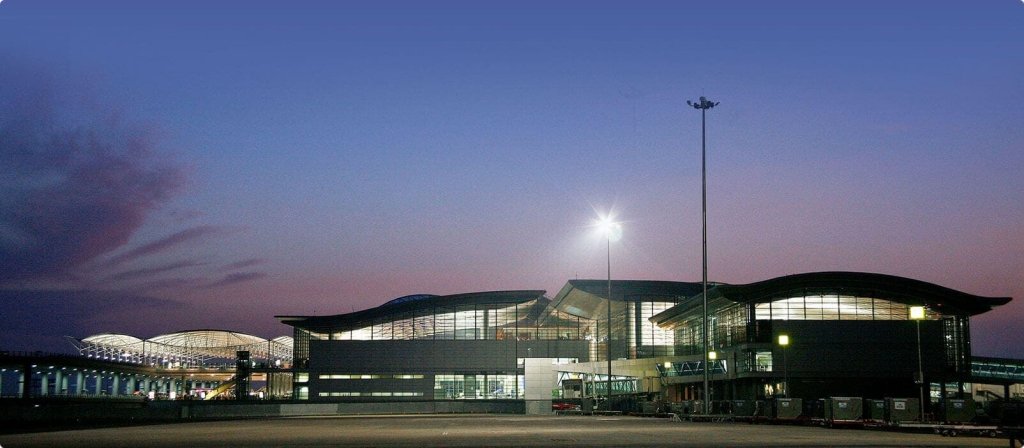
Rajiv Gandhi International Airport
When Rajiv Gandhi International Airport (RGIA) opened its doors on March 23, 2008, it marked more than the inauguration of a new aviation hub it was the beginning of a new chapter in India’s aviation journey. Spread across 5,500 acres in Shamshabad, Hyderabad, RGIA is not only one of the largest airports in the country by land area but also one of its most forward-thinking. Built to replace the congested Begumpet Airport, it was India’s second greenfield airport after Cochin International Airport and the first to be developed under a public-private partnership, a model that has since inspired many.
Today, nearly two decades later, Hyderabad Airport is more than just a transit point it is a symbol of India’s aviation ambition, a confluence of scale, technology, and passenger-centric design.
Architecture and Infrastructure: Built for the Future
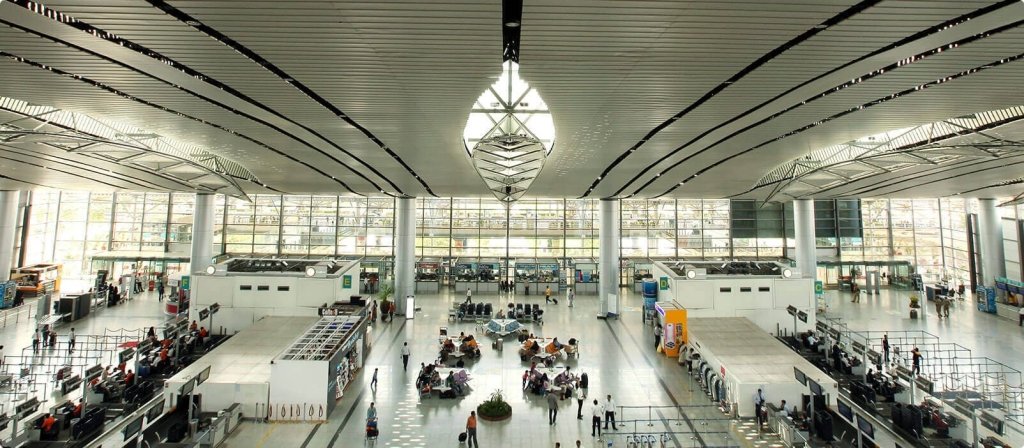
RGIA’s integrated terminal handles both domestic and international travelers under one roof, ensuring efficiency alongside architectural appeal. The airport’s design is future-ready, with an emphasis on scalability, sustainability, and seamless passenger movement.
At its heart are two world-class runways:
- Primary runway (4,260 meters) – among the longest in Asia, capable of handling ultra-large aircraft such as the Airbus A380.
- Secondary runway (3,707 meters) – enables simultaneous operations, helping reduce congestion during peak hours.
The airport also boasts:
- Modern cargo facilities, including India’s first dedicated Pharma Zone for temperature-sensitive goods.
- MRO facilities, including GMR Aero Technic.
- An aviation training academy and a dedicated fuel farm.
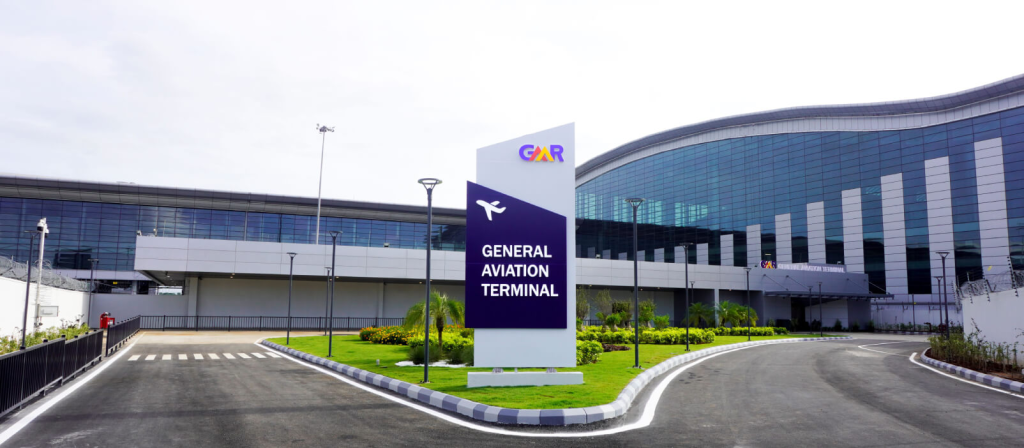
- Lifestyle additions, such as a go-karting track and a separate General Aviation terminal for charter and business jets.
RGIA’s cargo terminal is also CEIV-Pharma certified by IATA, which strengthens Hyderabad’s global position as a pharmaceutical export hub.
Airlines and Connectivity: The Numbers That Matter
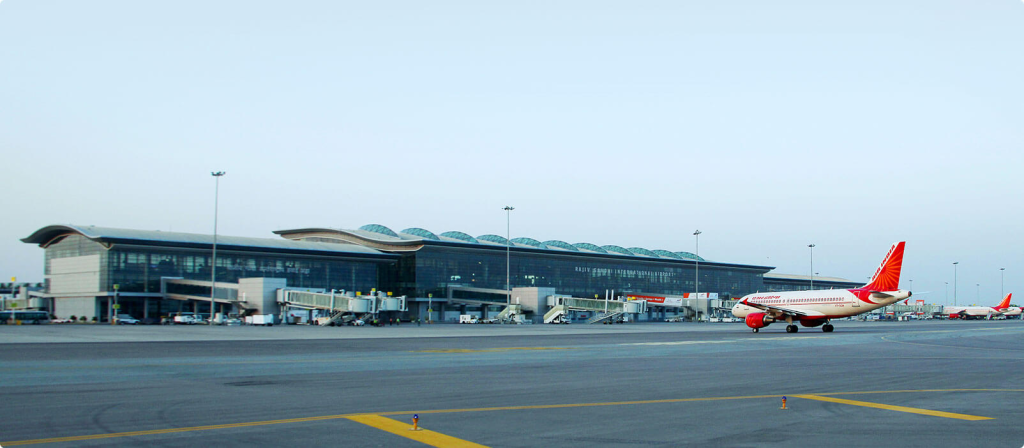
Hyderabad has established itself as a key aviation hub for South India. RGIA is home to 30+ domestic and international carriers, operating 500+ daily flights. The airport is often ranked among the most well-connected in India in terms of seat capacity growth, according to OAG data.
- Domestic: Links all major metros, tier-1 cities, and an expanding list of tier-2 destinations under the government’s UDAN scheme.
- International: Strong links to the Middle East (Dubai, Doha, Abu Dhabi), Southeast Asia (Singapore, Kuala Lumpur, Bangkok), and East Asia, with emerging long-haul services to Europe and North America.
DGCA data shows Hyderabad accounts for one of the highest international traffic shares among South Indian airports, underscoring its growing strategic importance.
Passenger and Cargo Growth
The airport has witnessed exponential growth in both passenger and cargo traffic. In FY 2023–24, Hyderabad Airport served ~30 million passengers, with double-digit YoY growth. On peak days, traffic touches 90,000 passengers.

- RGIA ranks as the fourth busiest airport in India, behind Delhi, Mumbai, and Bengaluru.
- Cargo throughput exceeds 160,000 tonnes annually, driven by pharmaceuticals, perishables, and e-commerce logistics.
According to ACI, over 60% of India’s pharmaceutical air exports are handled through Hyderabad, further cementing its reputation as the country’s life-sciences logistics capital.
Technology and Innovation
Innovation has been at the core of RGIA’s operations since inception. It was India’s first airport to introduce end-to-end paperless e-boarding, a model now adopted nationwide. The airport has also been a pilot site for several Ministry of Civil Aviation initiatives such as DigiYatra facial-recognition boarding.
Other initiatives include:
- AI-powered Airport Operations Control Centre (AOCC) for predictive planning.
- Cloud-based water management systems.
- Sustainable ground operations, including electric vehicles for airside use.
These investments not only improve passenger experience but also make RGIA a testbed for next-generation airport technologies in India.
Awards and Recognition
RGIA consistently features in global rankings, reflecting its operational excellence and passenger service:
- Skytrax 2023: Best Regional Airport in India & South Asia, 4-star certification.
- Airports Council International (ACI): Multiple ASQ (Airport Service Quality) Awards for customer service.
- Carbon Accreditation: Certified under ACI’s Airport Carbon Accreditation (ACA) programme.
It also won ACI’s “Best Airport by Size & Region” (15–25 million passengers) in 2022, reaffirming its reputation on the global stage.
Expansion and Aerotropolis Vision
RGIA’s passenger capacity has been expanded to 34 million annually, with upgrades aimed at 50 million by 2031. The ongoing expansion has included a new integrated domestic and international departures concourse and additional contact gates to handle rising demand.
Planned developments include:
- A new cargo terminal with 400,000-tonne capacity.
- An Aerotropolis spread across hundreds of acres, housing hotels, business parks, convention centers, and entertainment hubs.
- A Metro Express link connecting directly to Hyderabad’s urban network.
- Investments in renewable energy and advanced water recycling.
According to GMR statements, the Aerotropolis has already attracted investment interest from IT, biotech, aerospace, and logistics firms, positioning Hyderabad as a multi-sectoral business destination.
Sustainability at Core
RGIA operates with sustainability embedded in its strategy. Over the past decade, the airport has steadily reduced its carbon footprint by adopting renewable energy, advanced irrigation, and sustainable mobility solutions. It has also aligned its roadmap with India’s commitment under ICAO’s CORSIA framework.
Key initiatives include:
- Solar power plants supply a large part of its energy needs.
- Smart irrigation and water management save 35% of consumption annually.
- Commitment to Net Zero Carbon by 2030, in line with ACI’s global aviation sustainability goals.
In addition, the airport has enforced a ban on single-use plastics, introduced extensive rainwater harvesting with a 20 million litre/day capacity, and achieved Level 3+ accreditation under ACI’s carbon programme.
A Symbol of Hyderabad’s Global Rise
Rajiv Gandhi International Airport has transformed Hyderabad into a world-class aviation hub. Beyond infrastructure, it is an economic growth engine—fueling trade, pharmaceuticals, IT exports, and tourism—and a mirror of Hyderabad’s global ambitions. For the city, the airport is not just an aviation gateway but a catalyst driving its transformation into a global investment and innovation hub.
Also Read: Regional airports: Mushrooming with challenges galore