












- The 2050 net-zero carbon emissions goal is just 25 years away.
- Yet global aviation is struggling to take off in its decarbonisation push.
- Against this harsh reality, India’s SAF blending targets—1 per cent by 2025, 2 per cent by 2027, and 5 per cent by 2030—seem way too modest.

One of the pressing concerns in global aviation today is the extensive use of fossil fuels, which contribute significantly to emissions. A key solution to decarbonising the sector is Sustainable Aviation Fuel (SAF), which is not a single substance but a range of potential alternatives to conventional jet fuel, each with its own production pathway and raw material sources, often referred to as feedstocks. These feedstocks include but are not limited to, waste vegetable oils, grains (rice and wheat straws), animal fats, greases, sugars, alcohol, biomass, municipal solid waste, agricultural and forestry residues, wet wastes, and more. Feedstock flexibility is crucial for SAF as it allows for the utilisation of regionally available resources such as low-input, sustainable biomass crops and utilised cooking oils, thus supporting local economies and reducing transportation-related emissions.
SAF is ‘sustainable’, as its feedstocks do not compete with food crops or output, nor require incremental resource usage such as water or land clearing, and more broadly, do not promote environmental challenges such as deforestation, soil productivity loss or biodiversity loss. Whereas fossil fuels add to the overall level of carbon dioxide (CO2) by emitting carbon that had been previously locked away, SAF recycles CO2 absorbed by biomass during its lifecycle.
SAF is central to aviation’s goal of achieving net-zero carbon emissions by 2050, as it can reduce greenhouse gas emissions by up to 80 per cent compared to kerosene-based jet fuel. As a near-term solution, SAF bridges current practices with future innovations, setting a benchmark for eco-friendly aviation. Its production involves advanced technologies like the Hydroprocessed Esters and Fatty Acids (HEFA) process, converting oils and fats into renewable jet fuel; the Fischer-Tropsch process, synthesising fuel from gasified biomass; and the Alcohol to Jet (AtJ) process, transforming sustainable alcohols into jet fuel.
Global Initiatives and Hurdles
Scaling SAF production and reducing costs are pivotal for a greener aviation future. The European Union’s ‘Fit for 55’ package, the US target of 100 per cent SAF production by 2050, and the ReFuelEU Aviation initiative—aiming for a 55 per cent reduction in net greenhouse gas emissions by 2030 and climate neutrality by 2050—are driving forces. Collaborative efforts are also key, with Airbus and Neste leading initiatives to reduce aviation emissions. Virgin Atlantic’s recent historic flight, powered entirely by SAF, serves as a testament to what can be achieved through determination and innovation.
Despite these efforts, SAF powers only 0.1 per cent of flights, constrained by limited supply and costs much higher than conventional jet fuel.
The SAF Registry, operated by the Civil Aviation Decarbonisation Organisation, facilitates a global market to support the 2050 net-zero target, while IATA’s upcoming CO2 Connect for Cargo will enhance emissions tracking, including SAF usage. However, Florian Guillermet of the European Union Aviation Safety Agency (EASA), the regulatory body responsible for ensuring aviation safety and environmental protection across the European Union, warned at Aero Friedrichshafen, “Up to 2030, we are meeting the blending mandate; beyond that production capability is not enough. New technology has to kick in because the ramp-up of SAF—whether it is biofuel or synthetic fuel—is definitely not up to where it should be in terms of preparing the production, development and testing that is required.” EASA’s December 2024 report projects sufficient SAF for a 6 per cent blend by 2030 but highlights uncertainty for the 20 per cent target by 2035, citing potential delays and import reliance.
Emissions Growth and SAF Realities
Aviation emissions, at 1.03 billion metric tons annually (2.5 per cent of global totals), are projected to double to 2 billion by 2050 as travel demand grows. Global jet fuel consumption reached 90.53 billion litres in 2024, with SAF at 1.3 billion litres (0.3 per cent). SAF production doubled from 0.5 million tonnes in 2023 to 1 million tonnes in 2024 but missed the 1.5 million tonne forecast due to US delays.
SAF’s potential to reshape aviation is clear, but its success hinges on accelerated action and global collaboration. A Boston Consulting Group (BCG) report has highlighted slow progress, with SAF at 2 per cent in 2025, rising to 6 per cent by 2030, but constrained by costs. Pelayo Losada, Managing Director and Partner, and the global lead for Climate & Sustainability within BCG’s aerospace and defence work, told Reuters, “We are going in the positive direction, but clearly not at the speed we need. Despite continuing to scale the availability of SAF and we see that trend very clearly, there is a slowdown in the development of projects and even bigger gaps to some of the commitments that some of the companies have made.” A 2024 McKinsey & Company report too has underscored the need for trillions in infrastructure investment to meet 2050 demand, calling for global regulatory coordination
India’s Path to Sustainable Aviation
India, now the world’s third-largest aviation market, accounts for 2.5 per cent of global aviation emissions, yet the sector contributes only about 1 per cent to the country’s total carbon emissions—below the global average for aviation’s share of national emissions. However, this modest contribution conceals a rapidly growing challenge: with air travel demand projected to surge exponentially, emissions are poised to rise in tandem. SAF remains the most viable short-term solution for reducing aviation emissions, and India has shown promising technical capabilities. In 2018, SpiceJet conducted India’s first SAF-powered flight from Dehradun to Delhi, using fuel developed at the Indian Institute of Petroleum.
At the MakeMyTrip Foundation’s India Travel and Tourism Sustainability Conclave 2025, Ajay Singh, chairman and managing director of SpiceJet, underscored the fact that sustainability clearly was not on the airlines’ minds during the COVID-19 pandemic, when survival took precedence. As the recovery has now picked up momentum, sustainability will again take centre stage but it has to make economic sense. However, the high cost of SAF—2.5 times that of conventional fuel—remains a barrier for most carriers as they cannot pass that on to consumers who will avoid paying excessively exorbitant costs of travel.
Experts at the conclave raised concerns about the Carbon Offsetting and Reduction Scheme for International Aviation (CORSIA), set to become mandatory in 2027, warning that airlines will face increased financial burden if SAF production doesn’t scale up. India currently lacks a mature carbon offset market, exacerbating the challenge. Aditya Ghosh, co-founder of Akasa Air, admitted candidly that no concrete steps are underway to meet the SAF challenge, a view shared by other panellists. It is a matter of deep concern that India is just two years away from CORSIA norms coming into effect globally.
CORSIA, a global initiative led by the United Nations’ International Civil Aviation Organization (ICAO), will require airlines in most major aviation nations to pay for “carbon credits” to make up for any extra pollution they produce compared to 2020 levels. Carbon credits are permits that airlines buy to balance out their extra pollution by funding projects that reduce emissions elsewhere, like planting trees or promoting renewable energy. CORSIA has set formidable targets as it tries to limit countries to the emission levels of the number of aircraft that it had in 2020. The 2027 targets are very tough for countries like India, requiring them to work with ICAO to ease the burden of their hasty implementation.
Aloke Singh, managing director of Air India Express, warned that the burdens of carbon offset, due to CORSIA, would rise further if the SAF production does not get accelerated and optimised. Kapil Kaul, CEO of Centre for Asia Pacific Aviation (CAPA), suggested that Indian carriers’ unpreparedness for CORSIA targets might necessitate a deferment of the deadline.
Commercial scalability remains a significant hurdle. Globally, SAF production is only 0.53 per cent of total fuel consumption, and even in Europe—where adoption leads—KLM and Air France achieve just 0.84 per cent and 0.42 per cent, respectively. According to CAPA India’s internal assessment, the world is more than 5 million tonnes short annually of the SAF needed to meet 2030 targets.
Despite these challenges, Ghosh sees a unique opportunity for India, rich with feedstock of about 160 million tonnes, which can be used for SAF production. In fact, the country has a chance to become a net SAF exporter with its huge feedstock and technical expertise. However, to achieve this goal, effective and practical steps are required ranging from identifying the feedstock, manufacturing, building logistics and treating this as an export-focused sector.
The barriers are not just technical and economic but extend to political will too. To begin with, government support, such as viability gap funding—similar to what spurred electric bus infrastructure in India—could jumpstart SAF production.

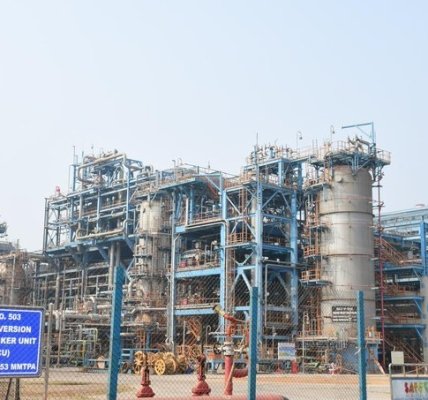
Significantly, Nitin Gadkari, Union Minister of Road Transport and Highways, has emerged as a passionate advocate for bio-aviation turbine fuel (bio-ATF), derived from agricultural residues like rice straw and bamboo. He has pointed to the Indian Oil Corporation’s (IOC) 88,000-tonne-per-year bio-ATF plant in Nagpur as a milestone, expressing hope that aircraft will soon land at Nagpur’s international airport fuelled by bio-ATF sourced from Vidarbha’s farmers. Gadkari’s persistence has led to innovations such as IOC’s expanded ethanol production and plans to make bio-ATF cheaper than petroleum-based alternatives, positioning India as a potential leader in SAF production.
Ambitious Targets vs. Practical Realities
In 2023, global SAF production was around 0.5 million tonnes, a figure that must increase exponentially by 2050. The IATA has announced plans to establish an SAF Registry to track and accelerate the fuel’s adoption by accurately reporting emissions reductions.
Scaling SAF production faces technological bottlenecks too. Of the 13 ASTM-approved pathways for SAF production, only a few are commercialised. Pertinently, 80 per cent of SAF facilities globally are using hydrotreatment technology. Other technologies are not getting clearance or are still in the research phase.
A core dilemma pertains to the tension between sustainability and cost. While measures like engine efficiency and operational improvements often align with cost savings, SAF increases expenses. Sustainable alternatives drive up costs, reversing the economic incentives that historically fuelled aviation efficiency.
India’s SAF blending targets—1 per cent by 2025, 2 per cent by 2027, and 5 per cent by 2030—appear far too modest. If airlines are committing to net zero by 2050, policymakers have to take sharper targets. Implementation of SAF norms from the highest levels of government remains crucial. Without significant SAF production or a robust offset market, Indian airlines will struggle to meet global frameworks like CORSIA, even with best practices and fleet modernisation.
Despite the challenges, there are reasons for cautious optimism. Indian carriers are investing heavily in next-generation aircraft. In five years, they will be flying the youngest fleet in the sky, resulting in the least emission. Collaborative efforts, such as Airbus’s partnership with the Indian Institute of Petroleum and government initiatives like the Global Biofuels Alliance, signal progress.
The industry is increasingly relying on gradual efficiency gains—about 2 to 2.5 per cent annually over recent decades—through better engines, newer aircraft, and optimised operations. Recent years have seen a reduction in emissions per passenger emissions by half of what it was some years back.
Incremental practices like continuous descent operations, climb optimisation (OptiClimb), single-engine taxiing, shorter, better air routes, flexible use of airspace and maintaining cleaner aircraft surfaces offer immediate efficiency gains. Air India Express estimates that approximately 30 such initiatives can improve efficiency by 4 to 5 per cent.
However, airlines cannot achieve sustainability goals alone. One cannot expect them to bear an additional 15-20 per cent cost to make this happen. Here it becomes imperative for the government to collaborate with the industry to establish a “significant incentive and logistic structure” for SAF production. To begin with, the government can motivate oil marketing companies like IOC, BPCL, and HPCL to explore building mini SAF refineries within existing facilities. The government can also allocate spaces closer to airports for SAF refineries to minimise transportation costs which is the largest chunk of the SAF cost. While fleet modernisation and efficiency gains offer incremental benefits, the consensus is clear: achieving net zero by 2050 requires the government to treat aviation sustainability as a national priority, balancing economic realities with environmental goals.