










Safran Marks a Strategic Shift with Hyderabad Emerging as the New Global LEAP Engine Hub

- The inauguration of Safran Aircraft Engine Services India’s LEAP-engine MRO in Hyderabad makes India the only country outside the US-EU axis where Safran operates the full industrial stack at scale, engines, avionics, electricals, nacelles, defence propulsion and deep-level servicing.
- Safran is building Indian capability in advanced materials, turbine engineering and systems design aligned with the GE-Safran RISE Open Fan roadmap, positioning the country for future propulsion development rather than just MRO capacity.
- A rapidly expanding aerospace MSME network and entry into the CFM export chain are transforming India from a high-growth aviation market into the strategic backbone of the GE-Safran engine ecosystem, creating a counterweight to China in global aero-engine manufacturing.

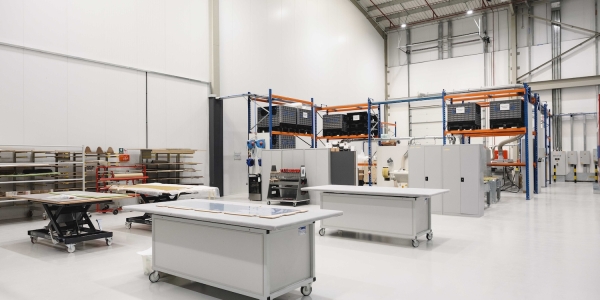
Photo: Safran

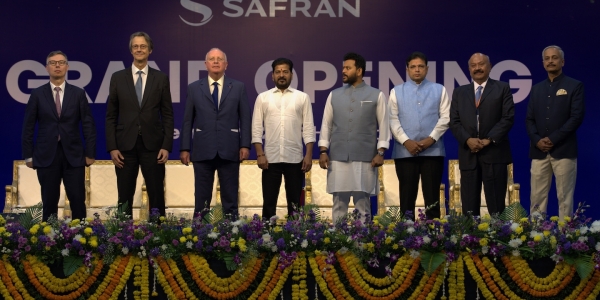
When Prime Minister Narendra Modi pressed the virtual switch to inaugurate Safran’s massive LEAP engine Maintenance, Repair and Overhaul (MRO) facility in Hyderabad this week, it marked more than the opening of the world’s largest shop for CFM’s flagship engines. It symbolised a profound strategic shift: India is becoming the only country outside the US-EU axis where Safran operates every major vertical — engines, avionics, electrical systems, nacelles, MRO, and defence propulsion — at an industrial scale.
“Today marks another milestone in the joint story we share with India,” Safran CEO Olivier Andriès said at the ceremony. “Safran is proud to support the growth of India’s aviation sector… The inauguration of Safran’s largest maintenance facility worldwide is strategic in many aspects.”

Those “aspects”, aviation analysts say, go well beyond capacity numbers.
For two decades, CFM International — the GE Aerospace–Safran 50:50 joint venture — has spread its manufacturing footprint across the US, France, Mexico, Morocco and, crucially, China.
But after the Covid-era supply disruptions, rising geopolitical risk and tightening export-control regimes, Safran began scouting for a trusted, scalable alternative.
And for the first time, the French major is openly signalling what insiders have already recognised: India is emerging as Safran’s “non-China” manufacturing and engineering ecosystem, a critical hedge for the world’s most important narrowbody engine programme.

Photo: PMO India/YouTube

Photo: PMO India/YouTube
That alternative is increasingly India. Safran’s India operations today span from the LEAP engine MRO and the M88 military engine MRO (both at Hyderabad) to the Wiring systems and harnesses (Hyderabad & Bengaluru), Avionics and engineering services (Bengaluru), Landing systems & nacelles components (multiple suppliers) and a large engineering-R&D–R&D workforce, now crossing 1,500.
India is not just another production base. It is the only location outside France where Safran undertakes deep-level servicing of the LEAP engine, including hot-section work, rotating parts manufacturing, and soon, advanced engine test-bed operations.
Civil Aviation Minister Ram Mohan Naidu captured the moment at the inauguration, saying the Hyderabad project would become “a gateway for more global players to set up units in India” and that the MRO complex “marks India’s emergence as a credible link in the global aviation supply chain.”

For Safran, it does more: it de-risks the most valuable engine programme in the world — one that powers nearly 80% of India’s single-aisle fleet and a majority of the global A320neo and 737 MAX lines.
While the Hyderabad MRO grabbed headlines, the more consequential story is unfolding quietly in Safran’s engineering pipeline. Safran and GE are jointly developing the RISE (Revolutionary Innovation for Sustainable Engines) programme, including the highly disruptive Open Fan architecture slated for the mid-2030s. Although no formal India link has been announced, several indicators point to the country becoming a future co-development and co-manufacturing node.

The first such indicator is the Indian talent base that is slowly and surely being built up.
Safran is on a recruitment spree in India, hiring systems engineers, materials specialists, turbine designers, and data analytics teams. Industry watchers note that some of these roles align closely with RISE research tracks — ceramic-matrix composites (CMCs), high-pressure compressors, and hybrid-electric systems.
Second, India’s materials science capability is growing. Labs at IIT Kanpur, IIT Madras, DMRL and IISc now work on high-temperature alloys and CMCs, both core to Safran’s next-gen propulsion goals. Ten years ago, India did not have this capability.
And, third, India is proving to be the perfect testbed. With airlines ordering over 1,500 new aircraft and traffic projected to double by 2035, India’s airspace offers an unmatched platform for real-world propulsion validation.
Prime Minister Modi himself nudged Safran in that direction at the inauguration. “I would like you to design propulsion and use India’s talent and opportunities for verification,” he said — remarkably direct language from a head of government.
In a sector where OEMs rarely speak publicly about future bets, this is the clearest signal yet: India will not just host MRO shops; it will soon participate in shaping the engines of the next era.
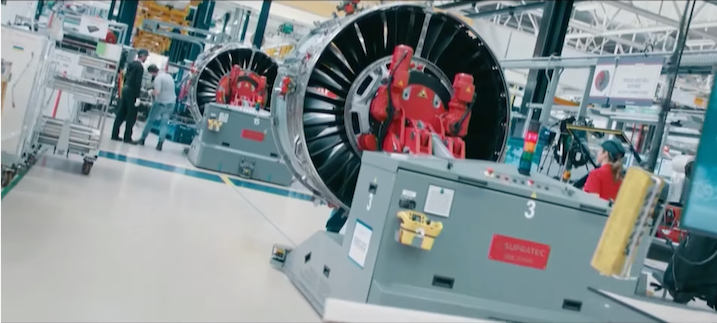
Another under-reported dimension of Safran’s India strategy is the re-engineering of the country’s supplier ecosystem. Five years ago, India’s aerospace industrial base consisted largely of HAL and a handful of Tier-2 machining companies. Today, Safran has catalysed a network of suppliers producing Wiring harnesses for LEAP and M88; Nacelle components and engine composites; Forged and machined rotating parts; and avionics subassemblies.
Hyderabad alone hosts more than 1,000 aerospace MSMEs. Safran’s supplier training programmes, run jointly with the state government of Telangana and private institutes, are pushing them toward global certification. “This facility will create new opportunities for young people in the world of high-tech aerospace,” PM Modi said, noting that 85% of India’s MRO work has historically gone abroad. “For the first time, a global OEM is establishing deep-level servicing in the country.”
For Indian suppliers, the deeper story is that Safran is opening doors to export opportunities in the CFM chain — something Boeing and Airbus have done in structural components, but which engine OEMs had been reluctant to do until now.

Safran’s India revenue is expected to triple to over $3.4 billion by 2030, according to Reuters, growth unmatched anywhere outside China. The reasons are there for all to see:
- India is now the third-largest domestic aviation market.
- Its airlines collectively operate over 500 CFM-powered aircraft, with 2,000 more LEAP engines on order.
- A domestic MRO base saves carriers millions in logistics and downtime.
- Export-controls compliance and political alignment make India a trusted manufacturing campus.
As the Safran CEO pointed out: “In the next 20 years, passenger traffic in India is expected to more than double…This is only the beginning.”
The Hyderabad inauguration is only the visible half of Safran’s India story. The less visible half — future propulsion research, risk-diversified manufacturing, and supply-chain transformation, signals something bigger: India is no longer merely a market. It is becoming a pillar of the global GE-Safran engine ecosystem, and the first major counterweight to China in high-value aviation manufacturing.
In the geopolitics of aerospace, that makes Safran’s India pivot not just a strategic investment — but a historic rebalancing of where the world builds and sustains its most important engines.
Also Read: CFM RISE Program: A Vision for Next-Generation Commercial Engines