



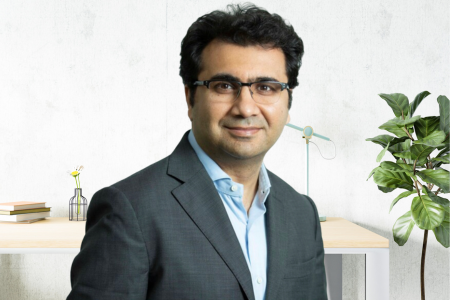




As India’s ground infrastructure reaches its limits, the future of transportation is looking skyward. The conversation is shifting toward short-haul vertical mobility—aircraft designed to lift off and land within cities and connect nearby corridors. The real question now is whether these platforms can be designed, certified and built within Indian cost structures rather than imported as ready-made solutions. That makes production capability, supplier depth and regulatory timelines central to the effort from day one. In this interaction, Rakesh Gaonkar, Co-founder and CTO of Sarla Aviation, discusses how aircraft configuration, powertrain choices and localisation plans are being shaped around those realities.
For readers who are just beginning to track India’s eVTOL space, how would you describe Sarla Aviation’s core vision?
At our core, we are an aerospace OEM building capabilities to enable mass transportation in India. As ground infrastructure reaches its limits, we believe the next transformation in mobility will need to happen vertically, starting with VTOL and CTOL platforms for both urban and regional connectivity.
Over time, once the OEM foundation is firmly in place, we also plan to operate air taxi services. These would begin with airport transfers and expand to hubs, residential areas, and dedicated corridors, helping build a scalable aerial mobility network for the country.
What challenges in Indian aviation made you feel that now is the perfect time to develop Sarla?
India’s biggest challenge today is that mobility demand has outgrown ground infrastructure. Cities are more congested, travel times are unpredictable, and adding more roads or metro lines alone is no longer sufficient.

At the same time, the ecosystem is now ready. Regulators are engaging more deeply, domestic manufacturing and supply chains have matured, and there is a strong push to build aviation platforms locally rather than rely on imports. This combination of rising congestion and a ready ecosystem made it the right moment to build aircraft designed specifically for India, rather than adapting solutions built for other markets.
Sarla is building a six-seat eVTOL while many global players focus on smaller aircraft. Why did you take this route?
Our six-seat configuration is designed to support stronger unit economics by spreading pilot, maintenance, and operating costs across more passengers. This directly translates into more affordable operations for operators and more accessible pricing for passengers.
A six-seat aircraft allows operators to move more people per flight while keeping infrastructure and operational complexity manageable. It is as much an economics and manufacturing decision as it is a design choice and a necessary step toward making air mobility mass-accessible rather than exclusive.
You often speak about affordability and scale. What does “mass adoption” mean in the Indian context?
In India, mass adoption means making air mobility economically viable at scale, not just technically possible. India’s advantage will come from cost discipline, a strong supply chain, and building products that fit local use cases.
This requires designing aircraft with the right capacity and affordability, so unit economics work for operators and fares remain accessible.
We are not focused on being first to fly everywhere; we are focused on building a platform that can scale meaningfully in India, where volume and cost efficiency matter more than early demonstrations.

How much of your current design philosophy is driven by Indian operating conditions rather than global eVTOL trends?
A significant part of our design philosophy is driven by Indian operating conditions and Indian economics. While global players started earlier, India’s opportunity lies in cost efficiency, supply-chain depth, and product–market fit. Our six-seat form factor is a direct outcome of this thinking. It is designed to move more people per flight and make unit economics work at scale.
More broadly, aviation is not constrained by demand; it is constrained by supply, certified aircraft, infrastructure, pilots, and production capacity. As an OEM, our role is to industrialise that supply for India faster and more affordably, with a platform that can serve today’s needs and scale into the future.
You have completed ground testing of your demonstrator. What has been the most significant technical learning so far?
Ground testing has allowed us to validate several critical subsystems early in the program, directly informing design choices and sizing decisions for the full-scale aircraft.

Photo: Sarla Aviation
Gaining clarity on capacity, performance margins, and subsystem behaviour enables more confident and efficient design decisions as we scale up.
These learnings help simplify system architecture, avoid unnecessary over-engineering, and reduce integration complexity.
From an OEM perspective, this lowers development risk, reduces cost, and creates a more efficient path toward a certifiable, production-ready aircraft.
Has anything changed in your original aircraft design after early testing and simulations?
We recognised early that a hybrid powertrain is better suited to our operating conditions and use cases than a purely battery-based approach. It offers a greater range and reliability, aligns better with India’s charging infrastructure, and enables a broader set of missions.
Early testing and simulations have reinforced this direction, particularly around range, utilisation, and operational flexibility. These results help refine system-level decisions while validating the fundamental architecture of the aircraft.
When should we realistically expect to see Sarla’s first piloted flight?
Flight tests will follow once key safety and regulatory milestones are met, with full-scale piloted flight testing expected to begin by the end of 2027, guided by certification and safety readiness.
You’ve announced plans for a large manufacturing facility in Andhra Pradesh. What stage is that project at today?
We have been allocated a 150-acre site, with work underway to conclude incentives and align on next steps for phased development.
How important is localisation for you, and where do you still see gaps in India’s aerospace supply chain?
Localisation is critical to achieving scale and cost efficiency. India already has a strong aerospace manufacturing base, and the remaining gaps will be addressed over time through partnerships and supplier development as we scale production.

You have signed multiple partnerships around vertiports and urban infrastructure. How close are we to seeing actual physical sites take shape?
We are working closely with partners such as Bengaluru Airport and Skyportz to identify and assess potential sites, and engagement has been very proactive. Physical development will begin closer to commercialisation, post-2027, aligned with aircraft readiness and regulatory approvals.
What should the industry watch for from Sarla Aviation over the next 12–18 months?
Over the next 12–18 months, the focus will be on continued technical progress, beginning with hover flight tests with our demonstrator, Sylla, starting the build of our full-scale prototype, Shunya, and making steady progress on certification and manufacturing readiness.
Also Read: Sarla Aviation Begins Ground Testing of India’s Largest Private eVTOL Demonstrator