








Regional aviation in India often swings between optimism and fragility. Star Air’s current phase sits somewhere in between—expanding its footprint, adding capital, and preparing for a larger fleet—yet doing so with a sharp awareness of the constraints that define this segment: thin routes, price-sensitive passengers, and infrastructure that does not always keep pace. The airline is building around fleet commonality, backend systems, cargo lift, and station-level capability, not as add-ons, but as prerequisites to scale. Growth here is not about expanding fast, but about expanding carefully—adding routes and aircraft without putting pressure on the system. Simran Singh Tiwana, CEO of Star Air, speaks about this approach and the airline’s next steps in this conversation.
How does Star Air remain competitive on regional and thin routes in India’s price-sensitive market?
We have adopted a multi-pronged, cost-competitive strategy to operate sustainably in India’s highly price-sensitive aviation market, particularly on regional and thin routes.
At the core of this approach is fleet standardisation around efficient Embraer regional jets. These right-sized aircraft allow us to achieve lower unit costs than would be possible with larger narrow-body aircraft on thin routes, while also benefiting from comparatively lower airport charges and operating costs associated with smaller aircraft categories. Capacity is therefore closely matched to demand, reducing the risk of oversupply.
A significant portion of our network operates under the Government of India’s UDAN (Regional Connectivity Scheme).

The associated viability gap funding (VGF) helps reduce financial risk during the early stages of route development and supports affordable fares while regional markets mature.
Collectively, these strategies enable us to control costs, stimulate and sustain regional demand, and remain competitive against larger carriers while serving India’s underserved markets.
What is Star Air’s approach to fleet expansion in the coming years?
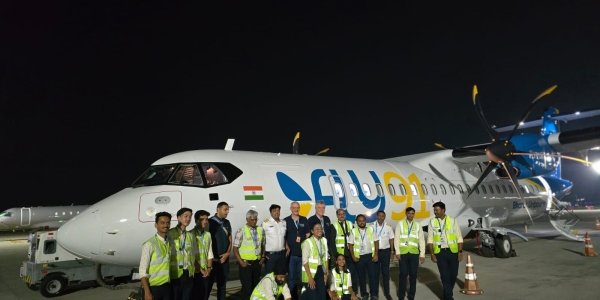
We are working towards a phased fleet expansion plan, with the long-term objective of significantly increasing our scale over the remainder of the decade. With a fleet of 12 aircraft today, we aim to progressively expand our capacity to strengthen connectivity across India’s underserved regional markets. As part of this strategy, we are evaluating the addition of new Embraer regional jets, reflecting confidence in medium-term demand growth and an intent to scale operations in a disciplined manner.
In late 2025, we raised ₹150 crore in Series B funding, our first external capital infusion to support fleet induction, network expansion, and associated infrastructure requirements, including engineering and maintenance capabilities. In the near to medium term, we target steady fleet growth, with plans to reach approximately 25 aircraft by around 2027.
With pilot and technician shortages continuing to affect the industry, how is Star Air strengthening its training and technical capability?
Pilot and technician shortages remain a genuine constraint for airlines in India. Our response has focused on building capability through training, standardisation, and long-term partnerships rather than pursuing rapid, unsustainable scale-up.
On the pilot side, operating a single aircraft family significantly simplifies type-rating, recurrent training, and crew rostering. By following a measured growth trajectory instead of aggressive fleet expansion, we mitigate the attrition pressures often associated with heavy reliance on contract or short-term pilots. Flight crew undergo structured training and recurrent programmes aligned with global standards.
For technicians and engineers, we place strong emphasis on developing in-house capability, supported by close collaboration with OEMs and authorised MRO partners. The standardised Embraer fleet enables our engineers to build deep type-specific expertise, reinforced through OEM-led training, certification, and refresher programmes. While heavy maintenance continues to be undertaken at approved MRO facilities, we are progressively strengthening line-maintenance capability at key regional stations, reducing dependence on technicians deployed from major metros and improving operational resilience.
As you expand, how do you plan to grow your network and operational presence across regional markets?
Over the next 24 months, we plan a meaningful operational expansion aimed at scaling both our fleet and network across India’s regional aviation landscape. With the induction of additional aircraft, we are focused on connecting new cities and deepening our presence across underserved markets, strengthening access to reliable air travel beyond major metros.

As part of this growth phase, we have also developed in-house cargo handling capabilities to enhance connectivity for remote and emerging regions, supporting the movement of time-sensitive goods alongside passenger services. This integrated approach is expected to improve route viability while creating additional value for regional economies.
Beyond network growth, our expansion is envisioned to generate employment opportunities across semi-urban and rural areas, particularly in flight operations, engineering, ground handling, and support functions. Together, these initiatives reflect our broader commitment to sustainable regional development and inclusive growth within India’s evolving aviation ecosystem.
Is Star Air considering adding a new aircraft type, or will expansion remain within the Embraer fleet?
Our current strategy is centred on expanding and modernising our existing Embraer fleet rather than introducing a new aircraft type in the near term. Operating a single aircraft family provides significant operational advantages, including simplified pilot training, maintenance commonality, spares optimisation, and more flexible crew and aircraft deployment.
As demand grows across regional and near-metro markets, we are evaluating additional Embraer aircraft to support capacity expansion in a phased and disciplined manner. This approach allows us to scale while maintaining schedule reliability, cost efficiency, and operational control, which are critical factors in aviation.
How are you identifying and prioritising new tier-2 and tier-3 connections under UDAN and beyond?
Over the next two years, we are prioritising connectivity to tier‑2 and tier‑3 cities across India, both under the UDAN regional connectivity scheme and through commercially viable new routes. We are committed to expanding our network wherever opportunities exist to serve previously underserved or unconnected destinations.
By focusing on these emerging regional markets, we aim to strengthen air access, reduce travel time, and support economic growth in smaller cities, while maintaining operational sustainability and reliable service. We remain flexible and proactive in identifying and launching new connections, ensuring that our network continues to evolve in line with demand and regional development opportunities.
What steps are you taking to improve the passenger experience, including booking systems and customer engagement?
We have upgraded our Passenger Service System (PSS) to streamline the booking experience and make travel smoother for passengers. We are also in the process of implementing a CRM platform, laying the foundation for future loyalty programs and personalised engagement. To reward and retain repeat travellers, we have been offering complimentary business-class upgrades, enhancing the travel experience and encouraging continued patronage.

Which passenger segments are central to Star Air’s regional strategy?
Over the next two years, we are expected to target business travellers, travellers visiting friends and relatives, and short-haul leisure travellers most aggressively.
- Business travellers: With faster, direct connections between Tier‑2 and Tier‑3 cities and major economic hubs, we aim to attract frequent flyers who value time savings and comfort over cost.
- Travellers visiting friends and relatives: Regional flights to smaller cities facilitate family visits and community travel, a significant market in India’s interior regions. Over the years, these routes have helped students and families that may need to travel for education and work.
- Leisure travellers: Short-haul tourist destinations such as Hampi, Goa (Mopa), Shivamogga, and other regional attractions are being prioritized, with convenient schedules and comfortable Embraer E175 cabins designed to appeal to first-time and casual flyers.
By focusing on these segments, we can balance yield and load factors while deepening regional connectivity, rather than competing solely on ultra-low fares in saturated metro-to-metro markets.
Looking ahead, how do you see Star Air contributing to the development of India’s regional aviation landscape?
By 2027, we aim to establish ourselves as a central force in India’s regional aviation ecosystem, helping shape connectivity patterns, operating models, and passenger expectations across the country. With plans to expand our network to over 50 cities and operate a fleet of more than 25 Embraer aircraft, we seek to strengthen reliable air links between underserved Tier-2 and Tier-3 markets, contributing meaningfully to the evolution of India’s regional air map.

Through sustained participation in the UDAN scheme, we continue to demonstrate how government-supported connectivity can be developed thoughtfully and transitioned toward long-term commercial viability.
Our focus on right-sized regional jets, point-to-point operations, and a differentiated onboard offering across business and economy class is steadily raising expectations around comfort, reliability, and convenience in regional flying.
Equally important is our disciplined and scalable growth approach, which offers a practical blueprint for operating thin routes sustainably. As regional demand matures, this model is expected to influence how both regional and larger carriers approach interior-city connectivity. By 2027, we aspire to be more than just a regional airline, positioning ourselves as a catalyst for the next phase of India’s regional aviation growth and a contributor to how air travel beyond the metros is perceived and delivered.
Also Read: Star Air Raises ₹150 Crore in Series B Round to Fuel Fleet Expansion and Growth