









- The aviation industry is advancing zero-emission technologies like eVTOLs and hydrogen-powered aircraft, with major initiatives in New Zealand, Australia, and India.
- While innovation is strong, achieving commercial adoption will require fast regulatory approvals, infrastructure support, and operational readiness.
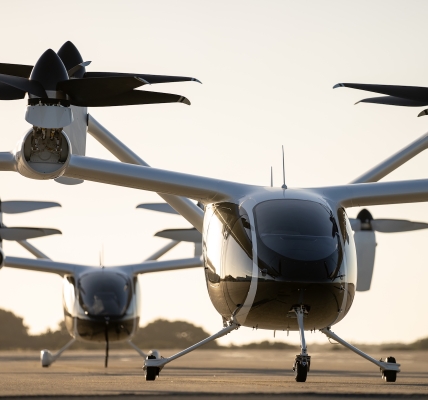
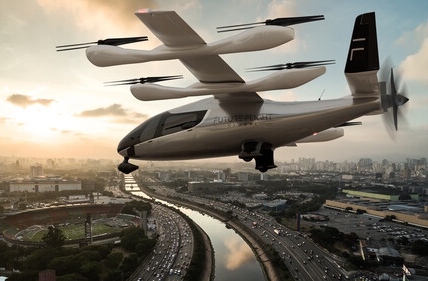
The air transport industry’s efforts at decarbonising aviation in the long term will bring about the sector as never seen before. There are numerous efforts underway worldwide to develop zero-emission aircraft powered by non-fossil fuel sources. Electric vertical take-off and landing (eVTOL) aircraft concepts have emerged as one of the most viable sources for zero-emission transport. Electric propulsion will not only enhance aircraft performance but do so with low or no emissions, reduced operating costs and low noise. In March this year, the Vertical Flight Society (VFS), the world’s leading non-profit organisation working to advance vertical flight, announced that the number of such aircraft being tracked in its World eVTOL Aircraft Directory has now exceeded 1,100 concepts from more than 450 designers.
While eVTOLs are largely targeting personal transport, Urban Air Mobility (UAM) and cargo sectors, just like helicopters, Hydrogen propulsion technologies, hydrogen combustion and hydrogen fuel cells are seen as the panacea for sustainable commercial transport well into the future. Airbus launched its ZEROe project in 2020 to explore the feasibility of two primary hydrogen propulsion technologies. Media reports earlier this year, however, indicated that slower-than-planned progress on the development of the various aspects related to hydrogen propulsion for commercial aviation had resulted in Airbus slowing its ambition to bring a hydrogen-powered commercial aircraft to market. Airbus announced this year that it had selected hydrogen fuel cell technology as the propulsion method for this future aircraft. “The results of the fuel cell prototype and powertrain testing, as well as research into complementary technology such as cryogenics, supported the viability of this technology,” the airframer stated. Airbus’ Hydrogen fuel cells create electrical energy, which is then used to power electric motors that turn a propeller or fan.
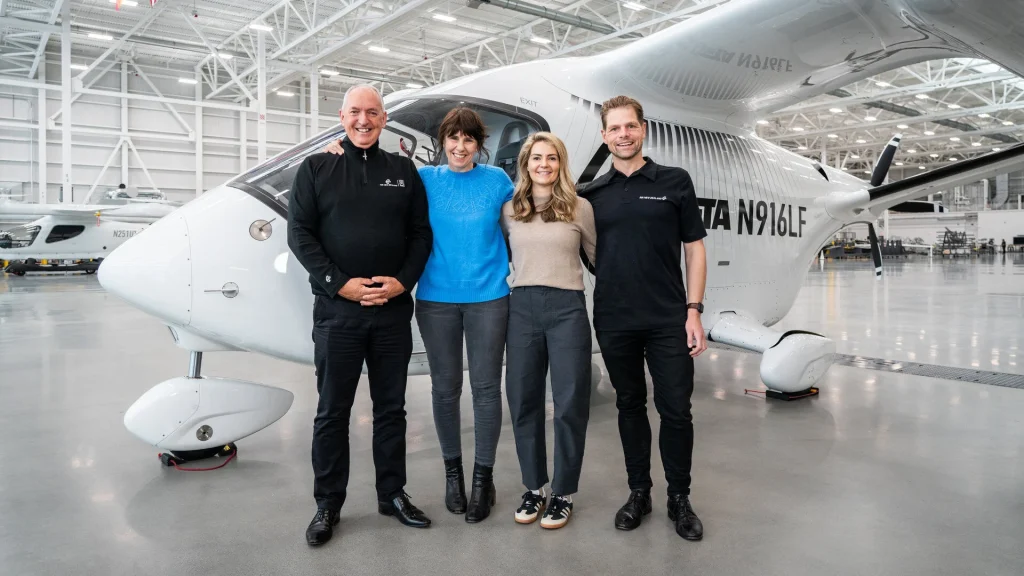
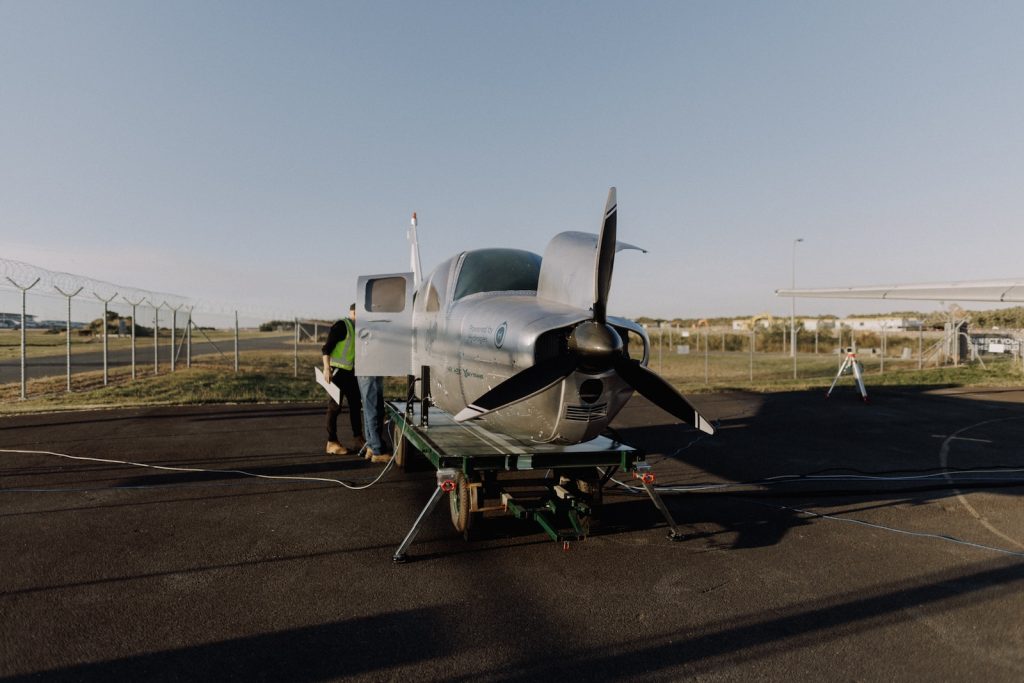
Photo Credit – Beta Technologies
New Zealand Gaining a Lead
Air New Zealand announced in December 2024 that US-based BETA Technologies would fly its ALIA CX300 technical demonstrator aircraft around Aotearoa in New Zealand in 2025.This is a year earlier than originally scheduled. Air New Zealand selected the conventional take-off and landing version of the ALIA in December 2023. The airline has a firm order for one aircraft with options for an additional two aircraft and rights for a further 20 aircraft in what is its first purchase of a next-generation aircraft as part of its Mission Next Gen Aircraft programme. Air New Zealand undertook 18 months of evaluation and diligence for 30 organisations as part of its Mission Next Gen Aircraft programme before settling on four partners to work with. BETA’s ALIA is the first commercial order in the programme. In December last year, BETA Technologies announced that New Zealand Air Ambulance Service (NZAAS) had placed deposits for an order for two ALIA electric vertical take-off-and-landing (eVTOL) aircraft along with options for 10 more. Beta expects to obtain US Federal Aviation Administration (FAA) type certification for the Alia CX300 electric aeroplane this year, followed by the Alia 250 eVTOL model in 2026.
Air New Zealand’s Chief Corporate Affairs and Sustainability Officer Kiri Hannifin said that while this aircraft won’t be operating commercially, it will allow the airline and the broader New Zealand aviation system to understand such aircraft. When Air New Zealand and BETA Technologies perform the first ALIA CX300 test flight in New Zealand, it will provide the former with a better understanding of how this new technology will perform before the battery-electric commercial aircraft arrives in 2026 to fly cargo between Wellington and Blenheim.
The ALIA CX300 programme will initially be based out of Hamilton Airport, where it will complete a series of proving flights. Air New Zealand and BETA plan to then gradually expand flights to surrounding airports before making the journey to Wellington. For Air New Zealand’s initial flights, BETA Technologies is looking at routes of around 150kms in length. Air New Zealand will initially operate the eVTOL as a cargo-only service in partnership with New Zealand Post. On average Air New Zealand’s turboprop flight duration is approximately 350 kilometers.
BETA’s Founder and CEO, Kyle Clark, said the Tech Demonstrator and chargers will allow the company to collect data and refine the operations so Air New Zealand can hit the ground running with low-cost electric service upon delivery of their first certified aircraft. Given the shorter length of the flights Air New Zealand intends to operate, it will likely fly the ALIA at a lower altitude of between 1500 – 3000 metres. The ALIA weighs three tonnes, is just over 12 metres long, and will fly at a speed of up to 270 km an hour powered by one H500A electric motor.
The required charging facilities to support the flights are also being funded by Air New Zealand through its Climate and Nature Fund. The 60kW mobile chargers will be based at Hamilton, Wellington and Blenheim airports and will be able to fully recharge the aircraft in around 90 minutes.
Air New Zealand’s Energy Transition Lead Jake Snelgrove had spent time at BETA’s HQ doing flight training on the aircraft in December last year. Snelgrove is responsible for Air New Zealand’s energy transition. That involves everything from flying aircraft more efficiently to sustainable aviation fuel. “We’re a small country which doesn’t have great roading networks, and we’ve got no high-speed rails like Europe. Aviation is essential to moving our people and products around the country. Because of that, transitioning to net zero is harder for us compared with airlines in other parts of the world. So we looked at the different things we could do to get there. One of the exciting areas of decarbonisation is the “next-gen” aircraft, right? And that’s battery-powered, hydrogen-powered, or hybrid-powered aeroplanes to better connect New Zealand,” he said.
Snelgrove said Air New Zealand had devised the Tech Demonstrator programme as a way for it to test the aircraft and prove its operation as well as the economics. “The big thing for us is this small aircraft is the catalyst for us to say [to the regulators]: we’ve ordered a plane, it’s coming in 2026, and we need you to come with us on the journey to not just get this aircraft certified in New Zealand, but also to get the operator rules and regulations and pilot training and maintenance support and aircraft infrastructure all in place for when the plane is here. And that will create the framework to then go and buy and operate bigger planes in the future.”
Australia Advances Zero-Emission Aviation
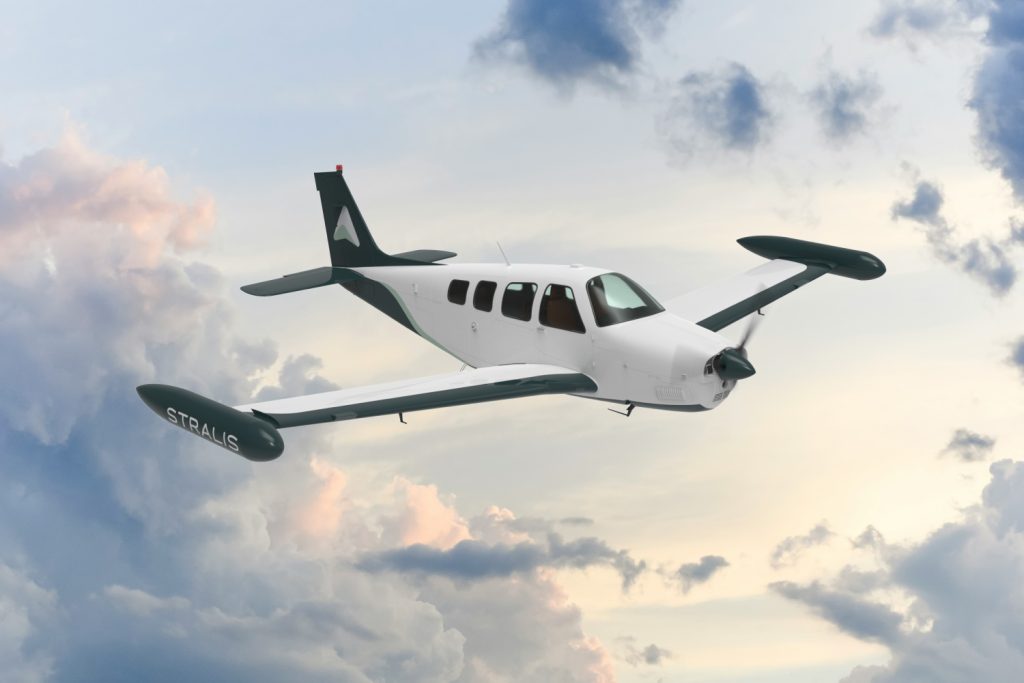
Australia is also emerging as a nation with significant innovation in the design and development of zero-emission aircraft. Late last year, the Australian firm Stralis Aircraft announced that it had successfully performed a hydrogen-electric propeller spin on its Bonanza A36-HE ground-demonstrator aircraft named “Clyde” at Brisbane Airport. As per the company, that was its most significant milestone and an industry-first for the use of fuel cells and gaseous hydrogen at an international airport. Earlier this year, Stralis was awarded a grant from the Australian Government’s Industry Growth Program that will help the company accelerate the building and testing of its proprietary high-temperature PEM fuel cells, which are 6x lighter than competing low-temperature fuel cell systems. In March this year. Stralis announced that it had completed the initial short stack high-temperature PEM fuel cell build and test, successfully advancing to TRL4. Stralis has also secured a contract with a major aircraft industry partner in Japan, providing expertise on high-temperature fuel cells (HTPEM) and hydrogen-electric propulsion systems for aircraft. Stralis has set a goal of flying its A36-HE Bonanza hydrogen-electric technology demonstrator in Japan in 2026.
Stralis has also applied for an experimental certificate for Bonnie, its Bonanza A36-HE flight demonstrator, and the company is aligning with Australia’s civil aviation regulator CASA regarding the experimental test program. Stralis plans to install a prototype powertrain by Q3 2025 into a second Beechcraft Bonanza, known as ‘Bonnie’, for the system’s first flight. The hydrogen-electric powered plane will then be tested in South-East Queensland to further develop the propulsion system for the company’s next project, the conversion of a 19-seat Beechcraft 1900D commuter aircraft to a 15-seat variant, the 1900D-HE, to be powered with liquid hydrogen. Stralis is targeting 2028 for this aircraft’s first flight and 2029-30 for certification and entry into service.
AMSL Aero, the Australian zero-emission aircraft designer and manufacturer, made a landmark flight with its zero-emissions aircraft ‘Vertiaa’ in November last year. The historic test flight was performed on battery power, but AMSL Aero will begin hydrogen-fuelled flight testing of Vertiia in 2025, having already broken records in 2023 by completing the first tethered battery-powered hover. ‘This landmark is proof that the design we pioneered seven years ago works, and it moves us closer to our goal of improving the lives of remote, rural and regional communities in Australia and around the world with an aircraft that conquers the tyranny of distance with zero emissions,’ said AMSL Aero Co-Founder, Chief Engineer and Vertiia inventor Andrew Moore.
Vertiaa is Australia’s first passenger-capable long-range eVTOL aircraft and joins a short list of global leaders to achieve free flight.Since its first untethered flight, which took place in November 2023, Vertiia has taken off, flown and landed successfully more than 50 times. As per AMSL Aero, Vertiia is the most complex civil aircraft ever developed in Australia, with the company planning commercial flights following certification and regulatory approval slated in 2027. The long-range eVTOL has been designed to fly up to 1,000km on hydrogen at a cruising speed of 300km/hour with zero carbon emissions. It can carry up to four passengers and a pilot.
AMSL Aero received deposits for over 26 Vertiia aircraft orders from civil customers, including 20 from Aviation Logistics, which operates the Air Link, AirMed, and Chartair brands for passenger services, aircraft charter, air freight, and aeromedical flights across Australia.
India Targets Clean Air Transport
One of the most ambitious Indian efforts in the arena of zero-emission transport is the foray of The ePlane Company, incubated at IIT Madras. It aims to revolutionise urban mobility with its all-electric, zero-emission air taxi, designed as a compact eVTOL aircraft. The Chennai-based startup had announced that it would develop a certifiable prototype of a flying electric taxi by March this year. “By March next year, we expect to develop the first certifiable prototype. It will take another couple of years to get the certification from the Directorate General of Civil Aviation (DGCA),” Chakravarthy told PTI in 2024. The company holds several patents and is the first private Indian company to receive Design Organisation Approval (DoA) from the DGCA for an electric aircraft. The company is testing a cargo plane for metro cities, with its air taxi programme having started detailed engineering and regulatory audits beginning in FY 2024.
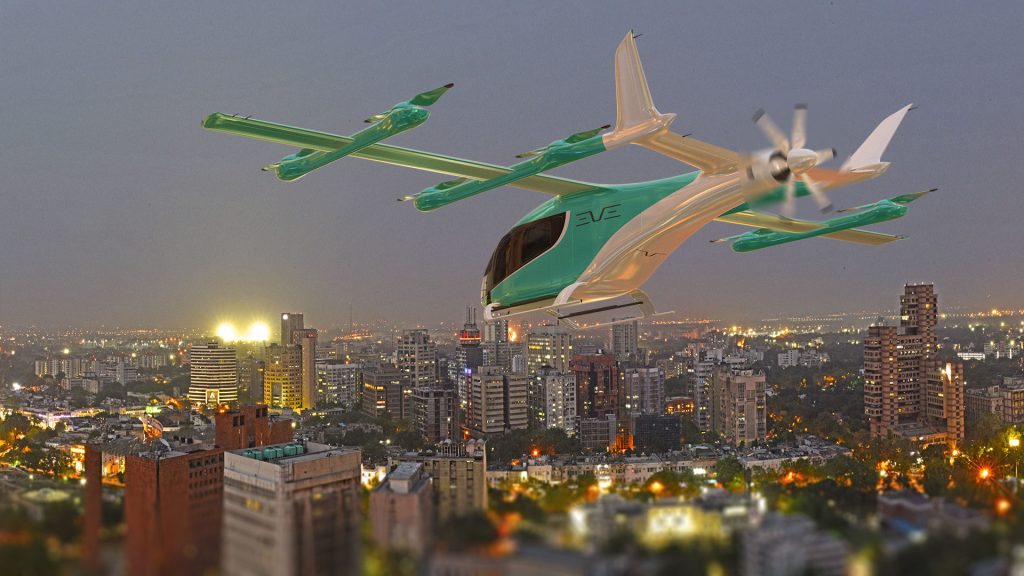
In November 2023, InterGlobe Enterprises entered into a Memorandum of Understanding (MOU) with Archer Aviation to launch and operate an all-electric air taxi service in India, subject to appropriate regulatory approvals and clearances. The partnership announced plans to finance the purchase of up to 200 Archer’s Midnight aircraft for India operations. Archer’s Midnight piloted, four-passenger eVTOL aircraft will be able to fly the 27-km Delhi trip from Connaught Place to Gurugram, in approximately seven minutes as compared to typically taking 60 – 90 minutes by car.
As Zero-emission aviation technology matures, India will be one of the largest markets for such products once regulatory processes are in place. India already has the world’s largest population of over 1.4 billion people, and all of its largest cities are already facing severe congestion challenges in the world, which could be alleviated by the use of zero-emission aircraft. It is expected that the required infrastructure for operating eVTOLs will be set up quickly to facilitate zero-emission flight. Potential operators must be encouraged to begin trial flights with zero-emission aircraft in India at the earliest to better inform all the entities involved in such operations.