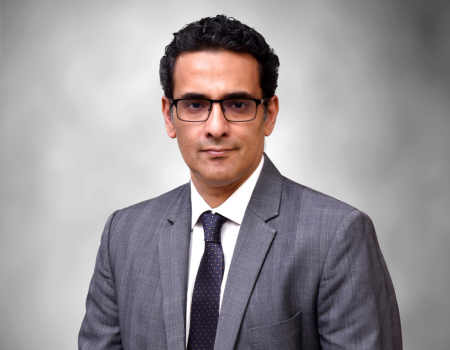







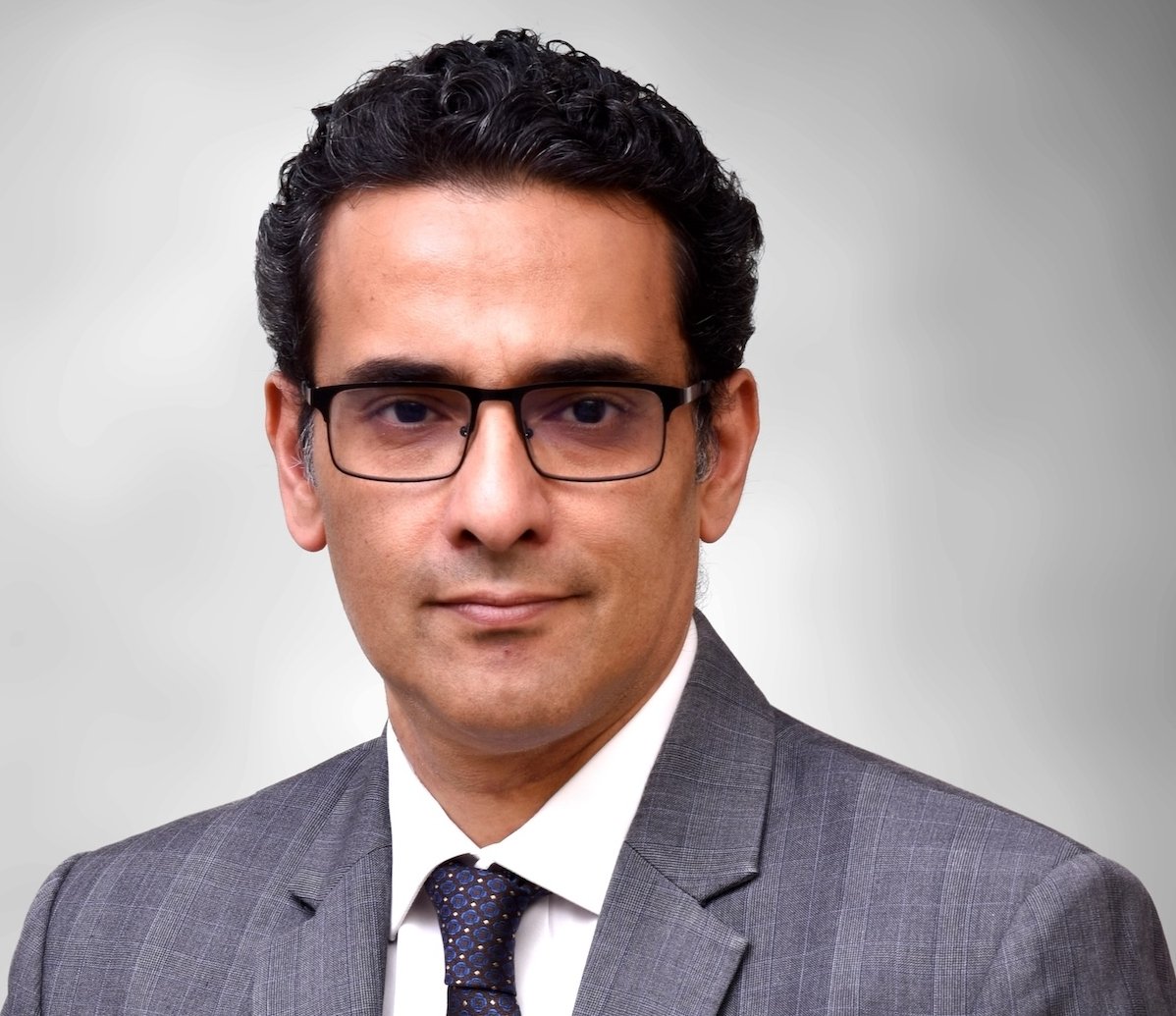
Flying more people is one problem India has largely solved; managing the complexity that comes with it is still a work in progress. That complexity demands stronger digital, industrial and operational capability. Across maintenance support and digital flight operations to cabin systems, biometrics and airspace management, Thales is positioning itself across multiple layers of the ecosystem. Its engineering competence centres in Bengaluru and Noida, along with a growing MRO footprint, reflect a strategy that blends local capability with global programme integration, while cybersecurity and data integrity remain central as airports and airlines become more connected. In this conversation, Ankur Kanaglekar, Vice-President – India, Thales, outlines how the group sees India not just as a market, but as an innovation and delivery hub aligned with the country’s long-term aviation ambitions.
With India’s aviation sector poised for long-term growth, how is Thales positioning its portfolio and investments in the country to support the Aatmanirbhar Bharat vision?
Present in India since 1953, Thales is a trusted partner to the nation’s growing aviation sector, serving several airlines, airport operators, and other stakeholders for avionics, navigational aids, in-flight entertainment, DigiYatra, and MRO, among others. We are fully committed to the ‘Aatmanirbhar Bharat’ vision.
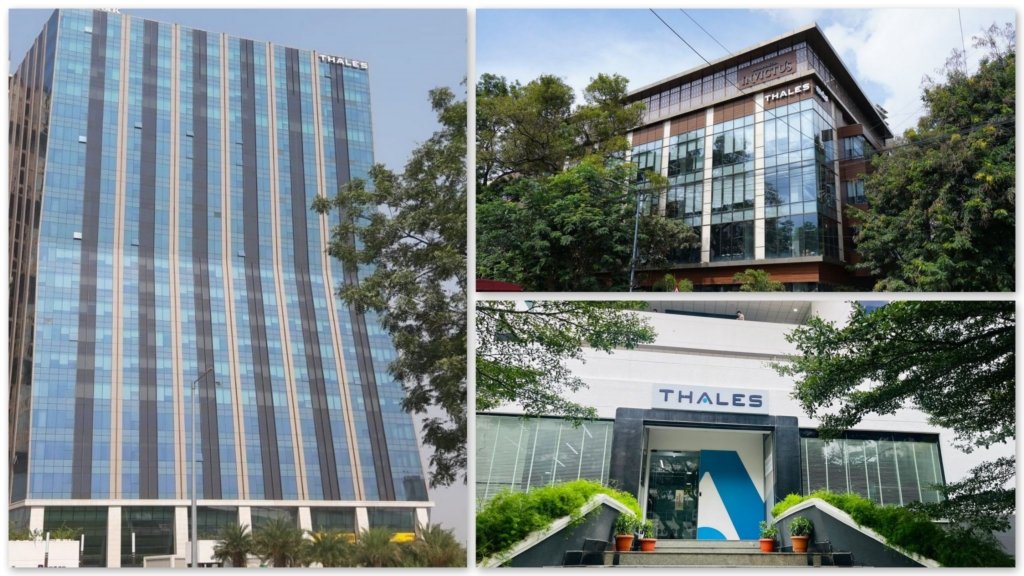
Over the years, Thales has steadily built advanced manufacturing capabilities, critical systems, and services in India through local teams and collaborations with public and private players. We have established a team of over 2,300 employees who are working with Thales and its joint ventures in the country.
Our two engineering competence centres (ECCs) in Noida and Bengaluru, with 1,700 engineers, are focusing on developing advanced solutions in Defence, Aerospace, Cyber and Digital domains for India and for the world. In 2025, Thales opened a dedicated avionics MRO facility in Gurugram, near Delhi airport along with unveiling an Inflight Entertainment & Services Lab at our Engineering Competence Centre in Bengaluru, reinforcing India’s strategic position as an innovation hub for Thales.
Recognising the immense potential of India’s rapidly growing aviation sector, we remain committed to expanding our footprint and co-developing advanced solutions with local partners for a safe, secure and future-ready aviation.
As India’s aviation market continues to expand, how is Thales strengthening its engineering and avionics capabilities in the country, and what role does the Bengaluru engineering centre play in global programmes?
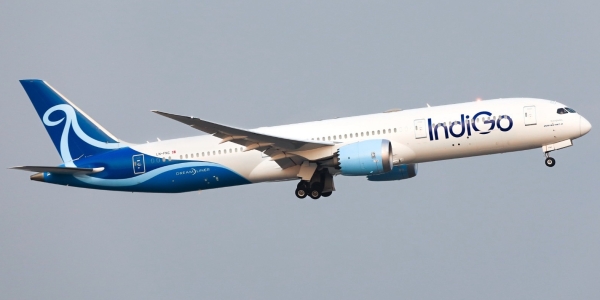
India has emerged as the third largest domestic aviation market in the world with leading airlines such as IndiGo and Air India continuously expanding their fleet to serve the increasing demand. Over the years, Thales has strengthened its engineering and manufacturing capabilities, creating a significant industrial presence in India.
Today, our engineering teams in Bengaluru are working closely with our teams in France for flight avionics development programmes, including the flight management system PureFlyt. The centre is also focusing on high-value software work areas including air traffic management, complex avionics systems, cockpit, connectivity and video systems, and radar software, among others.
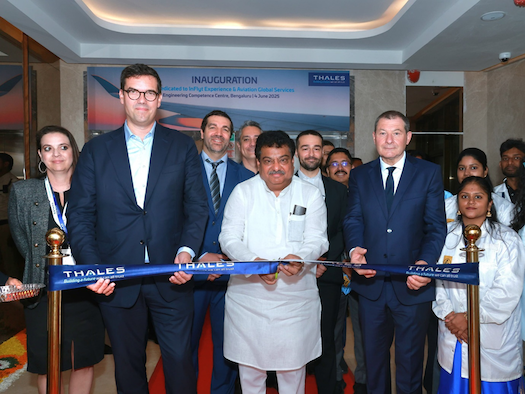
In June last year, Thales unveiled a state-of-the-art Inflight Entertainment (IFE) & Services Lab at our Engineering Competence Centre (ECC) in Bengaluru, dedicated to software development and testing of IFE solutions and advanced tools for support and services to airlines.
We remain committed to leveraging our long-standing technological expertise to support the nation’s growing demand for future-ready avionics solutions.
As aviation becomes increasingly digital, how is Thales strengthening cybersecurity resilience for Indian airlines and airports?
The rapid adoption of technology has given rise to potential challenges in managing cyber vulnerabilities. Thales’ latest report on cyberthreats in the aviation sector reported 600% increase in ransomware attacks in space in one year. In India, the central government recently confirmed reports that seven major airports across India were targeted by cyberattacks.
As a leader in cyber security, Thales provides cutting-edge solutions specifically designed for aviation. The Group is focusing on delivering solutions that not only meet the safety requirements of connected operations but also ensure the privacy, integrity and availability of data being handled and transmitted.

Our engineering centre in Noida is dedicated to the development and delivery of advanced technologies related to Inflight Entertainment (IFE) and Cybersecurity. This IFE Network Operations Centre and Cybersecurity Operations Centre provides 24×7 operations support and cybersecurity monitoring of our IFE solutions flying on airlines worldwide.
From protecting critical systems to ensuring regulatory compliance and enhancing safety, Thales will continue providing comprehensive cybersecurity solutions that empower airports to operate securely and efficiently.
Thales has an avionics MRO facility in Gurugram and a long-term maintenance contract with IndiGo. How does this facility support India’s ambition to become a self-reliant aviation MRO hub?
India is emerging as a global MRO hub with the industry projected to reach $4 billion by 2031. Based on our expertise as a global leader in the aerospace industry, Thales’ new avionics MRO facility near New Delhi airport provides premium support and services to airlines in India.
Since its launch in March 2025, the MRO Centre has been gaining momentum, delivering strong performance to meet the growing demand from airline customers across the region. As we signed an 11-year maintenance contract with IndiGo for the airline’s current fleet of A320 aircraft and future order of over 800 A32X aircraft, the MRO centre is currently focusing on the repair of critical, high-volume avionics components for the Airbus A320 family, while also supporting major service contracts with leading airlines in India.
We remain focused on further increasing the centre’s capacity and broadening its certification scope to support India’s goal of achieving self-reliance in aviation.
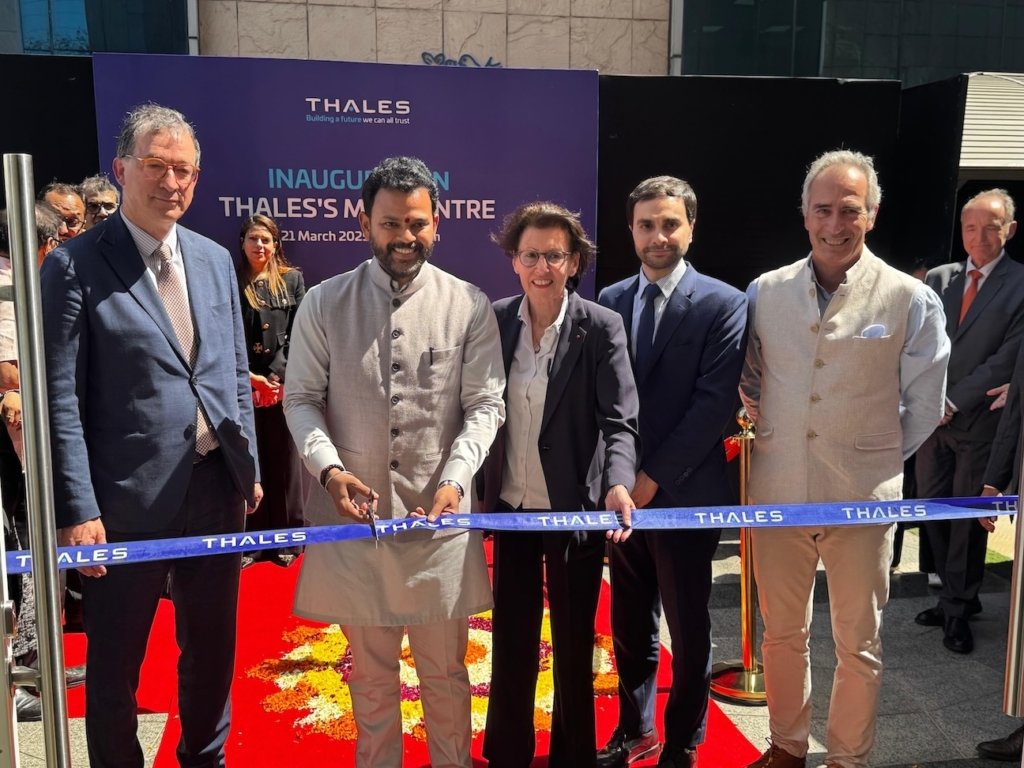
Photo: Thales
With rising traffic and airspace complexity in India, how is Thales positioning its AI- and cloud-enabled Air Traffic Management solutions for the market?
India’s rapidly growing aviation industry , with rising air traffic and increasing complexity, requires next-generation Air Traffic Management (ATM) solutions. As a global leader in airspace management, Thales provides cutting-edge solutions that help air navigation services providers (ANSPs) and airports manage increasing air traffic volumes safely and effectively.
The Group uses its expertise in AI, cloud technology, and cybersecurity to improve air traffic control efficiency, flexibility, and environmental impact. For instance, the use of AI in air traffic control systems enables the optimisation of the sequencing of aircraft on the approach paths to airports, thus contributing to a reduction in their carbon footprint.
We will continue working closely with key stakeholders in India, including Airports Authority of India (AAI), to offer a wide range of solutions that boost ATM efficiency and flexibility.
Thales has deployed its Fly to Gate biometric solution under DigiYatra and implemented Airport Operation Control Centres at multiple airports. How are these solutions improving passenger flow and airport operations?
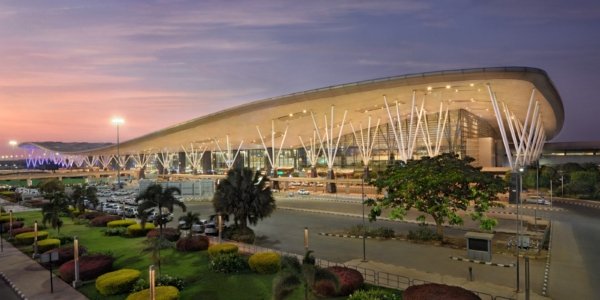
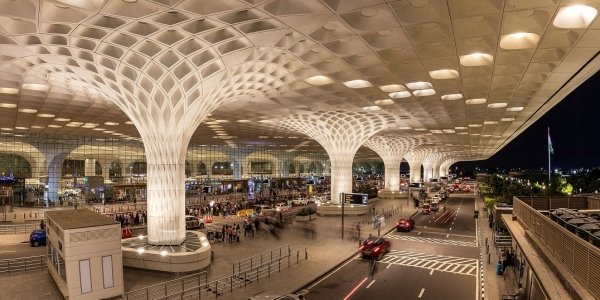
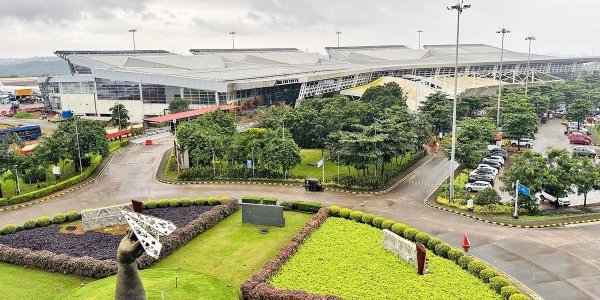
Thales has deployed its Fly to Gate biometric solution for DigiYatra at seven airports in India, streamlining and enhancing the journey for millions of travellers since early 2024. Built on the responsible use of advanced facial recognition technology, the solution serves as secure passenger ID proof that enables pre-enrolled passengers to move through check points from check-in to boarding without the need of presenting physical IDs or boarding passes.
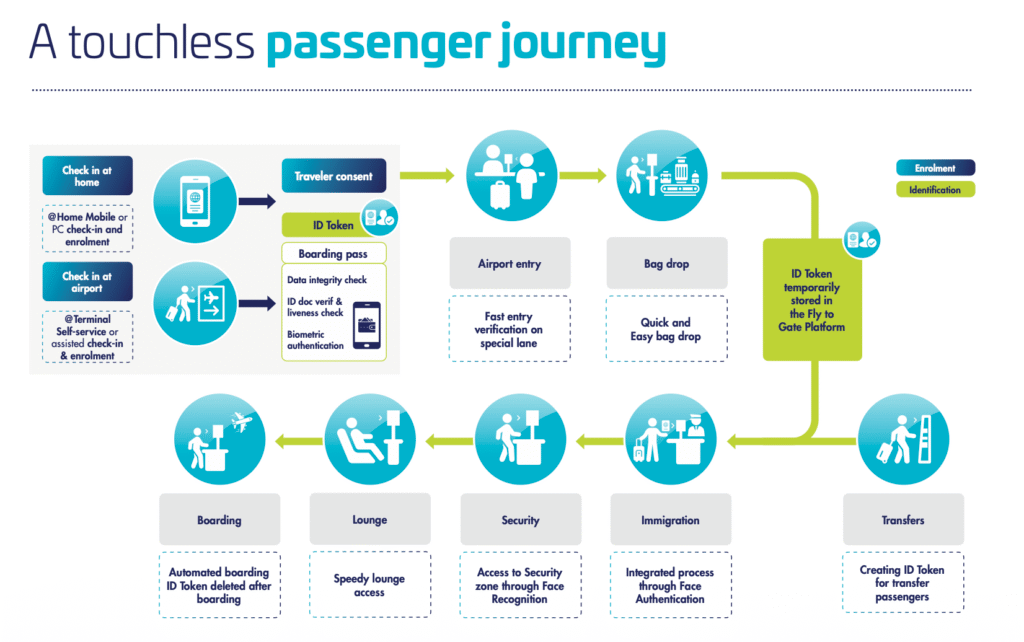
This seamless integration of responsible biometric solutions (Thales TrUE Biometrics) aligns with the Indian government’s vision of a digital India, offering a smooth and trusted way to reduce passenger processing time up to 30% at airports. In addition to this, Thales is also deploying the Airport Operation Control Centre (APOC) to optimise overall airport management and enhance passenger experience securely at these airports.
Together, these cutting-edge solutions help in effective passenger management and streamlining airport operations without compromising on security or data privacy.
IndiGo has extended its partnership with AvioBook across its fleet. How is this digital flight operations solution improving operational efficiency, safety, and sustainability for Indian carriers?
IndiGo extended a 5-year contract with AvioBook, a Thales company, for AvioBook Flight, marking a significant advancement in ensuring safer, more efficient, and sustainable air travel. As the only Electronic Flight Bag solution currently authorised for paperless operations by the Directorate General of Civil Aviation (DGCA), AvioBook has been deployed across IndiGo’s entire fleet for over a year.
The solution has played a key role in significantly reducing annual paper consumption, supporting IndiGo’s sustainability goals and streamlining flight operations on over 2,000 flights every day.

In comparison to traditional flight operations, AvioBook offers integration capabilities and extensive user-driven functionalities such as providing pilots with real-time access to critical flight information, including weather updates, flight plans, and operational notices, among others, enabling better on-time performance and enhanced flight operations.
AvioBook: An introduction. Source: AvioBook
AVANT Up is being deployed across Air India’s widebody fleet. How is this next-generation in-flight entertainment system enhancing the passenger experience for Indian travellers?
The deployment of Thales’ AVANT Up technologies across Air India’s widebody fleet, covering retrofits on 40 existing Boeing 777 and 787 aircraft, along with linefit installations on 11 new 787 and A350 aircraft, marks a significant step in redefining passenger experience.
AVANT Up offers seamless integration of a wide range of services and applications, such as an interactive 3D map and immersive route-based programming. Additionally, Thales’ Select User Interface (UI) further enhances passenger engagement, enabling guests to explore a rich catalogue of entertainment.
Featuring Optiq, 4K QLED HDR displays, the system provides exceptional picture quality. It also includes in-screen USB-A and USB-C high speed charging ports, two Bluetooth connections and built-in Wi-Fi that allows passengers to pair their wireless devices to the display while also charging their phones and laptops.
With Indian travellers expecting seamless, personalised digital experiences in the air, Thales’ advanced IFE system, AVANT Up, empowers airlines to remain at the forefront of aviation technology for providing a superior customer experience.
Also Read: Re-engineering the Edge: How Infrastructure Is Redefining Safety at Mangaluru Airport