












As the travel sector undergoes a seismic transformation, the behaviour of travellers evolves at every stage of their journey, from the initial inspiration to the shopping and booking processes, Maher Koubaa Executive Vice President Travel Unit and Managing Director EMEA, Amadeus, tells us more in this exclusive interaction.
Can you provide an insight into how Amadeus views the transformation of global air travel in the years to come?
The travel industry is transforming rapidly because traveller behaviour is changing at every touchpoint of their journey – from how they are inspired to how they shop and book to how they create stress-free and memorable experiences. Travellers expect more intuitive, more personal, and more inspiring choices than were once thought possible.
Never before have so many enabling technologies been available. Modular solutions built on open technology provide greater flexibility. Breakthroughs in biometrics and artificial intelligence create new dimensions of automation.
Amadeus is supporting its customers to transform their businesses with its innovative technology offering. We support airlines on their journey of modern retailing to create simpler, more personalised trips for travellers. For airports, our technology opens the doors to simplification and optimises valuable space at terminals. For both airlines and airports, it means scaling emerging technologies and exploring efficient processes for the traveller provider as well as the traveller.
What are some of the key airline transformations that are being aided by Amadeus?
During 2024 the airline industry’s modern retailing transformation accelerated, with several airlines announcing their intention to move to new technology that supports standards for Offer, Order, Settlement and Delivery.
This industry-wide transformation means that the pace of change in travel is accelerating, and airlines are faced with a decision as to when and how quickly to adapt.
Amadeus is supporting a number of key transformations for airlines.
First, we’re working to bring to travel the retailing experience travellers have grown to expect from other industries.
This means pricing and packaging air and non-air products and selling them consistently across all channels, ensuring that the right offers are targeted appropriately to travellers at the right time in their purchase process.
We do this through Amadeus Nevio, a portfolio of new solutions for next generation airline retailing capabilities and IT simplification. It is backed by the latest advances in artificial intelligence and a fully flexible, future-proofed, cloud-native technology stack for end-to-end airline transformation.
We already have four airlines signed up to Nevio – Finnair, British Airways, Saudia and Air France-KLM.
Secondly, as airlines transition to a new generation of technology for offer, order and delivery, Delivery Management Systems (DMSs) will gradually replace today’s Departure Control Systems (DCSs).
Delivery Management Systems will underpin a new traveler-centric era for air travel by tracking delivery of the passenger’s order across the entire journey. Travellers and their context will be understood throughout the journey, supporting more personalised service for passengers and exciting new business opportunities for the industry.
Amadeus is collaborating with airlines, ground handlers and airports to design and build the next generation of Delivery Management Systems, which will form a key module in Amadeus Nevio,
What are the air travel trends that Amadeus views across its important markets?
There are three main trends we’d like to highlight in air travel:
1. Asia Uplift
After years of restricted travel, travellers are excited to rediscover Asia’s cultural treasures. China is opening its doors to millions by expanding visa-free travel, while Thailand’s new digital nomad visas and broader visa-free program for 93 countries are set to attract a global audience.
Pop culture is also driving interest, with the popular season 3 of The White Lotus set in Thailand, Squid Game season three expected to boost travel to South Korea, and renewed curiosity about Japan’s history inspired by the TV series Shōgun. Adding to this momentum, Iberia has launched direct flights between Madrid and Tokyo in 2024, making it easier than ever for travellers to explore Japan.
Over the next 15 years, IATA predicts that Asia Pacific will record the fastest rise in passenger numbers and contribute to more than half of the net increase in global passenger numbers by 2043. Amadeus data reflects this momentum as outbound travel from Chengdu, China, surged 66% to 35.2 million passengers from 2016 to 2023, while Guangzhou grew 20%. Delhi also saw a 31% rise with over 30 million outbound passengers in 2023.
2. Agentic AI transforming corporate travel
The next wave of AI will move the technology from passive assistance to proactive functionality, with Agentic AI working behind the scenes allowing travelers, travel managers and travel agents to focus on more valuable tasks. Over the last two years, Generative AI has been all about offering supportive assistance; from 2025 onwards, and the next stage will be defined by ‘proactive functionality’.
Rather than simply responding to requests, Agentic AI will autonomously anticipate traveler needs, helping them to rebook flights in real-time, optimise itineraries based on changing schedules, and even help travel managers negotiate hotel rates, as well as create, audit and approve expense reports. This shift means business travellers will experience a seamless, highly personalised journey with minimal manual input, allowing them to focus on productivity instead of logistics.
3. Connections IRL (in real life)
Facing digital fatigue, travellers are closing their apps and opening their passports, using travel to make new friends and even find romance in real life. According to Amadeus booking data, solo leisure travel soared by 15.6% in 2023 compared to the previous year, with a further 9.2% rise in 2024.
Our 2025 trends report predicts a wave of group and solo adventures designed to spark genuine connections this year. From G Adventures “Solo-ish” trips combating loneliness, to TimeLeft, an app for travelers that lets you meet five strangers for dinner every Wednesday in over 60 countries. Socially driven festival tourism is also on the rise, with members of the LGBTQ+ community set to gather in Washington DC for World Pride 2025.
What are some of the key operational efficiencies that Amadeus is able to provide airline and airport customers with?
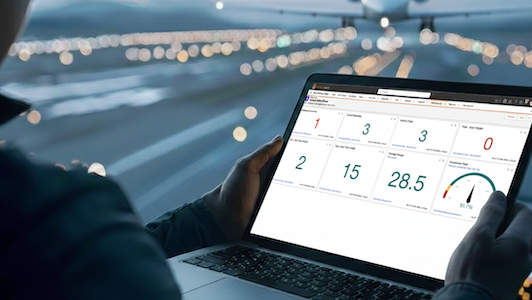
One example is our Virtual Airport Operations Center (APOC), which provides a shared environment for all stakeholders to better manage operations and disruption at the airport, using Microsoft solutions.
Delivering smooth operations at the airport involves hundreds of different contributors working closely together to ensure flights depart on time and travellers enjoy a rewarding experience. This joint effort is even more important during times of disruption, when unexpected events such as bad weather, medical emergencies, threats, etc., can trigger an immediate reaction or need for change, and airports must react quickly to reallocate resources like stands and gates.
The Amadeus APOC helps overcome current information silos preventing the industry from reaching its operational potential. Designed as an app for Microsoft Teams, it is bringing all involved parties such as airlines, airports border control and service providers together to better manage day-to-day operations around a single plan, making it easier for the aviation industry to respond more quickly during disruption.
Another example is around border control and the use of biometric end-to-end solutions. To create both efficiency and an enhanced traveller experience, a primary objective is to reduce the number of checks that need to happen at the terminal. For example, government visa and border checks are being digitalised and ‘brought forward’ so they happen before passengers arrive at the airport, using a combination of biometrics and digital identity. This means travellers can simply ‘walk through’ and a biometric scan occurs to confirm their identity.
This vision has already arrived with the Curacao Express Pass, the world’s first pre-flight biometric digital identity verification for a contactless border crossing which went live last year. This project is leveraging Amadeus’s Seamless Travel portfolio, and have reported a reduced transaction time by more than 50%.
Utilising the Curaçao Express Pass, travelers verify and share their electronic passport and biometric information with the immigration system well before arrival, using their smartphones.
Pre-enrolment occurs in a digital identity app, which provides e-passport verification, biometric facial recognition, and consent-driven, time-bound sharing.
Travellers then access an expedited immigration lane upon arrival, where the Vison-Box eGates perform facial matching from the app enrolment, allowing travellers to simply walk through immigration upon police backends’ clearance.
What are the initiatives underway at Amadeus to further modernise airline distribution and enhance operational efficiencies therein?
The way air travel is sold has remained relatively static over recent years. Reliable standards that helped the industry globalise have ‘worked’ but have resulted in significant complexity as they are retrofitted to a more digital environment. The airline retail transformation seeks to upgrade both standards and technology so the industry can provide an improved traveller experience and generate increased revenue, and Amadeus is transforming current systems, business practices and workflows into systems and processes ready for Modern Travel Retailing.
As we complete our move to the cloud, we are well positioned to deliver a combination of modular technology that allows our customers and partners to assemble the tech elements they need, connect to different content sources and distribute and/or retail any travel-related content within the ecosystem.
Some of the initiatives we are working on are:
- NDC – the NDC technology enables air products to be retailed differently, and is a key enabler for an enhancedretailing experience. We continue to focus on delivering NDC content and capabilities to drive adoption. We exploit all the advances that this new technology brings, but we also make sure that it makes sense for those using it, not compromising operational efficiency.
- PNR evolvement – We also foresee a gradual retirement of the Passenger Name Record (PNR) as we know it today – and with that a need for an evolution of what passenger information is stored and how. ONE Order is a stepping stone to create a single, integrated record to streamline the sales processes for air – but as travel sellers sell more than that, we believe that this is the moment to transition into a traveller-centric trip storage repository that covers any type of booking that a traveller could possibly require.
- We also see current industry-specific, and sometimes quite complex, actions and processes to sell a ticket are also being replaced with simpler retail-oriented flows. We see this as a great opportunity, particularly for travel sellers, to free up time to focus on their value as trusted travel advisors.
Can you provide an insight into the sustainability efforts underway at Amadeus?
As a leading, global tech player at the heart of the travel industry, there is great potential for us to support and connect industry stakeholders and, together, contribute to a more sustainable future.
Here are 3 examples of how we support our customers through our solution offerings:
At the booking stage – Travel Impact Suite. In 2024, we launched the Amadeus Travel Impact Suite. This is a solution that supports travel sellers and providers by providing information on the environmental impact of the entire traveller journey. The Travel Impact Suite also grants travellers the opportunity to compensate negative impacts of travel, facilitating contributions to projects that benefit local communities and the environment.
In 2024, Amadeus processed over 470M travel agency bookings. That represents 470M opportunities for travellers to travel more sustainably.
The solution works by aggregating emissions data from various sources for travel activities covering flights, hotels, rail and cars, enabling travel sellers to convey and manage consistent information about the environmental impact of travel options. And second, the Travel Impact Explorer lets travel sellers check the environmental impact of a specific travel activity or of a whole trip using the Travel Impact Data Hub. The deep integration of the travel impact data within our systems sets Amadeus apart, offering travel information, options and data on the environmental of fights, rail, hotels, and cars within the Amadeus Travel Platform. The Amadeus Travel Impact Suite is complemented by our Travel Impact Booster, which lets travellers and corporations support carbon reduction projects.
Pre-trip airport operations – Amadeus Sequence Manager permits improved planning of aircraft movements at airports’ runways and provides a sophisticated aircraft slot assignment, helping airports and airlines reduce their environmental impact by minimising the amount of time aircraft spend taxiing on the runway and fuel consumed during this time.
On-trip airline operations – Amadeus Altéa Departure Control – Flight Management helps airlines accurately estimate the fuel needed for a specific flight, using sophisticated algorithms and historic data. The precise estimation of the aircraft’s weight before the fuel is loaded (zero-fuel weight) permits significant savings in fuel burn, emissions and economic costs.
India is growing towards its potential towards becoming one of the world’s largest aviation markets, please elaborate on Amadeus growth?
Amadeus sees India as crucial to the future of global travel. The Indian government’s ambitious plan to invest nearly $12 billion in infrastructure underscores the immense potential of the air travel segment. We aim to leverage these market dynamics with our state-of-the-art engineering centres in India to stay ahead of the curve by driving innovation. With air passenger traffic expected to grow, we aim to lead the market with cutting edge technology and exceptional customer service, becoming a one-stop solution for travel providers and sellers.