











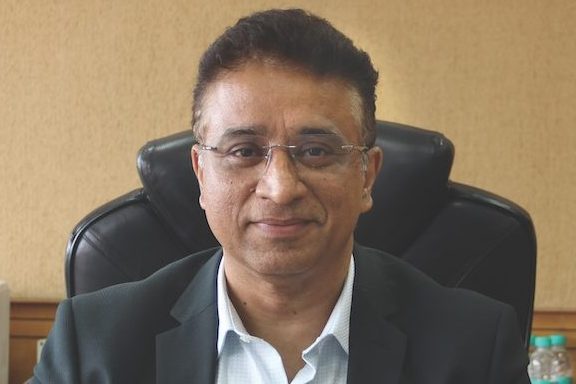
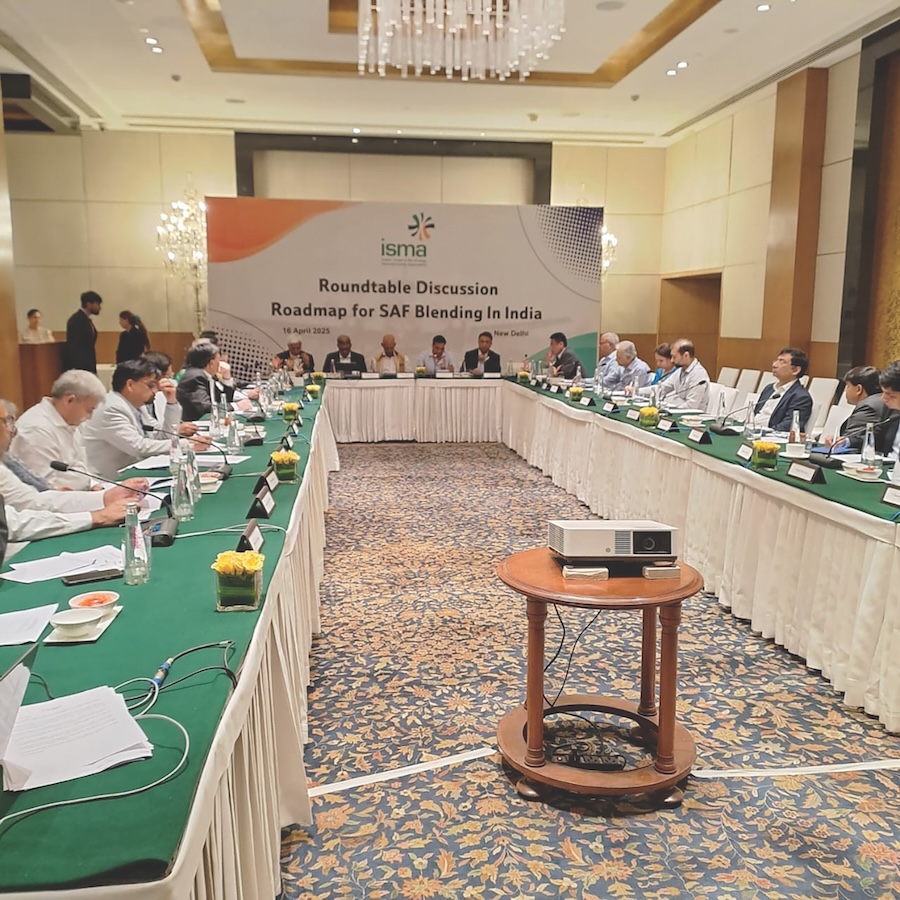
The Indian Sugar and Bio-energy Manufacturers Association (ISMA) recently convened a high-level roundtable on ‘Unlocking the Potential of Sustainable Aviation. In this Q and A, ISMA’s Director General Deepak Ballani discusses the potential and the possibilities of SAF as an alternative fuel.
On ISMA’s recent roundtable on ‘Unlocking the Potential of Sustainable Aviation Fuel (SAF)?
SAF represents a significant opportunity for India to lead global aviation decarbonisation while promoting inclusive rural development. There was a strong consensus that India’s ethanol infrastructure—primarily built by the sugar industry—offers a viable and scalable pathway through Alcohol-to-Jet (ATJ) technology, with the potential to produce some of the lowest carbon intensity SAF globally. Multiple challenges were identified: feedstock allocation, price uncertainty, lack of LCA recognition, and limited demand visibility. The industry and government must work in synergy to develop a clear roadmap that includes defined SAF blending mandates, price support, and access to carbon credit markets, especially in light of CORSIA targets requiring 1 per cent blending by 2027 and 5 per cent by 2030.
On the takeaway from these deliberations?
The most important takeaway is the urgency of coordination across stakeholders to ensure a unified approach. India needs a SAF policy similar to the Ethanol Blending Program, with the government incentivising and driving the agenda forward. Even a modest 1 per cent SAF blending mandate could benefit over 500,000 farmers and generate over 100,000 green jobs, demonstrating the significant impact of the initiative.
On the CORSIA framework and India meeting its SAF blending obligations?
The Indian government has taken encouraging steps by aligning its SAF blending mandate with the CORSIA framework. Oil Marketing Companies (OMCs) have already committed significant investments—approximately ₹4,500 crore—to set up SAF production capacity, which could easily cater to the 2027 CORSIA targets. However, expanding capacity and meeting the 5 per cent target by 2030 will require developed infrastructure and stronger private sector participation, driven by viable policy and commercial frameworks. India has a strong ethanol base—largely developed by the sugar industry—which can pivot toward SAF through Alcohol-to-Jet (ATJ) technology with the right incentives and regulatory support. SAF today is at a similar inflection point as ethanol was a decade ago; the success of the Ethanol Blending Programme shows that, with clear offtake policies, carbon credit monetisation, and standardisation, India can scale SAF production rapidly and sustainably.
On the country’s feedstock potential by 2027?
Government’s estimates suggest an annual production potential of 19–24 million tonnes of SAF across various feedstock and technology pathways. The sugar sector alone can produce up to 8.5 billion litres of 1G ethanol annually. With E20 blending nearing realisation and the rapid buildup of other feedstock-led ethanol production pathways, surplus ethanol from the sugar sector can be diverted toward SAF production through the Alcohol-to-Jet (ATJ) route. This existing ethanol capacity, backed by surplus sugarcane and molasses, positions India to comfortably meet its SAF blending targets under CORSIA, if supported by policy and market structures. The government’s prioritisation of 2G ethanol from bagasse further adds to the feedstock pool, enabling SAF expansion with even lower carbon intensity, provided pricing and offtake commitments are secured. Importantly, feedstock availability is not the bottleneck; rather, timely policy clarity, investment mobilisation, and coordinated execution are needed. It typically takes years to develop a SAF facility, making early action critical.

On the fact that the numbers for blending look unreal?
The figure of 19–24 million tonnes represents India’s maximum SAF potential across all feedstock and technology pathways, not an immediate production target. It is a long-term aspiration, especially if India positions itself as a regional SAF production and refuelling hub for Asia and the Middle East, leveraging its agricultural base and growing aviation market. In the short term, the focus is on meeting CORSIA obligations starting in 2027, with progressive scale-up driven by policy clarity, carbon credit access, and technological readiness.
Your collaboration with TERI and Deloitte?
ISMA envisions India not only achieving self-sufficiency in Sustainable Aviation Fuel (SAF) production, but also emerging as a regional hub for SAF refuelling, especially along high-traffic international corridors like Delhi, Mumbai, and Bangalore. This ambition is grounded in a natural synergy—over 80 per cent of India’s sugarcane production, concentrated in states such as Uttar Pradesh, Maharashtra, and Karnataka.
To realise this potential, ISMA is working closely with TERI and Deloitte to build the policy, technical, and investment frameworks necessary to position India as a leading SAF producer for Asia and beyond. These efforts are part of ISMA’s broader mission to establish a low-carbon, bio-based energy economy, empowering Indian farmers to become global fuel suppliers and helping India deliver on both its climate and development goals. With abundant feedstock, proven supply chains, and growing technological capability, India is well-placed to make SAF commercially viable, just as it has with ethanol.
On the regulatory roadblocks?
A SAF blending roadmap must be developed in consultation with all concerned stakeholders, including SAF producers, OMCs, airlines, technology providers, and relevant government departments, to ensure alignment and clear guidelines for scaling up production. Initial targeted grants should be introduced to incentivise the establishment of industrial production centres for SAF, helping mitigate the high capital costs and associated risks currently hindering market entry.
The forward pricing of SAF needs to be announced by the government to commercialise production and enable SAF producers to access credit, ensuring the long-term viability of the sector.
- Offtake mandates and long-term offtake agreements should be mandated by the government to ensure the optimal utilisation of SAF production capacity, helping to mitigate risks and encourage stable demand for SAF.
- An interest subvention scheme for setting up SAF production facilities is crucial to lower the financial burden on investors and accelerate the establishment of manufacturing units.
- Development of a carbon accounting and crediting system should be provided through both domestic and global carbon markets
- Advocacy and support should be directed towards the concerned departments engaged with the International Civil Aviation Organisation (ICAO) for the acceptance of India’s Carbon Intensity (CI) values, facilitating the recognition of India’s SAF production efforts on the global stage.
- Concerted global advocacy efforts are needed to emphasise the acceptance of 1st generation (1-G) ethanol-based SAF, alongside 2nd generation (2-G) and 3rd generation (3-G) SAF, to meet the growing global demand for sustainable aviation fuels.
On the production potential by 2027?
On a conservative estimate, with government intervention, we can easily meet the CORSIA targets by 2027, provided the industry is aligned and supporting the government’s efforts, assuming the necessary enabling conditions are in place. This could scale up further with the rise of international demand, export opportunities, and the growth of voluntary carbon markets, creating additional avenues for SAF production and export.
On the reactions of the airline and OMCs?
Airlines are supportive of SAF, particularly if the policy certainty makes SAF adoption more financially feasible. Oil Marketing Companies (OMCs) are exploring integration into SAF production but require clarity on blending mandates and how the cost pass-through mechanism will work to ensure commercial viability.