













In this interview, Marie-Christine Cloutier, CAE’s Vice-President of Performance, Strategy, and Marketing, discusses CAE’s air traffic control training program. Highlighting strategic partnerships, advanced technologies, and global initiatives, the interview reveals how CAE addresses the growing demand for skilled air traffic controllers and flight service specialists. From their dedicated Montreal facility to expanding efforts across the globe, CAE is committed to providing tailored, state-of-the-art training solutions for the aviation industry’s future.
What are the primary components of CAE’s air traffic controller training program? What does it entail?
Our air traffic controller training program at CAE was developed in response to the growing demand for aviation professionals. Our 2023 aviation talent forecast indicated that by 2032, the aviation industry will need approximately 1.3 million new pilots, maintenance technicians and cabin crew due to retirements and sector growth. This forecast led us to look at the demand for Air Traffic Services personnel and we found that there was also a significant need for air traffic service personnel that we could help address.
Last April, CAE was selected to partner with NAV CANADA to assist with their training requirements. NAV CANADA had to lay off air traffic controllers during the pandemic due to reduced flights. However, the recovery was swift, and they needed additional support to meet the increased demand for air traffic controllers and flight service specialists.
Our partnership involves taking on the overflow training from NAV CANADA. We are committed to training around 550 students between now and 2028. Our program includes comprehensive classroom training and advanced simulator training for future air traffic controllers and flight service specialists. NAV CANADA continues to handle the on-the-job training component.
Our training solutions are highly adaptable to meet the specific needs of different air navigation service providers. These solutions can include courseware modernisation, recruitment of training instructors, and the application of high-tech tools to enhance the effectiveness of training programs. Our goal is to support these providers in meeting the growing demand for skilled air traffic personnel by offering flexible and effective training solutions tailored to their unique requirements.

How does the new Montreal training centre enhance CAE’s training capabilities?
The new Montreal training centre significantly enhances CAE’s training capabilities by providing a dedicated, purpose-built facility for NAV CANADA air traffic controller training. This centre is an extension of our existing business aviation training centre, with specific floors allocated for air traffic control training.
The Montreal facility offers comprehensive training solutions, including classroom instruction and simulator training. One unique feature of this centre is a dedicated rooftop space designed for visual assessments, allowing air traffic controllers to practice weather and sky observation, which is crucial for their training.
Looking forward, we plan to leverage our global footprint to establish similar dedicated training spaces in other locations for other ANSPs.
The new Montreal training centre represents a significant step in our commitment to providing high-quality, specialised training for air traffic controllers, and it sets a precedent for future facilities worldwide.
What advanced simulation technologies are incorporated in CAE’s ATC training?
In our training program with NAV CANADA, we have integrated their existing courseware and simulator technology to maintain consistency. We use the same simulation suppliers and courseware that NAV CANADA employs.
Depending on the requirements of an ANSP, CAE can bring additional advanced technologies and expertise to enhance the overall training experience. One of our key technologies is CAE Rise, a data-driven grading and analytics tool. CAE Rise provides valuable insights into student performance, allowing us to continually refine and improve the training curriculum. This tool helps us identify areas where students may need additional support and adjust training programs accordingly.
This tool also utilises data-driven insights to enhance training processes and outcomes, ensuring programs are tailored and effective. We are leaders in courseware development and modernisation, planning to offer up-to-date and highly effective training materials to future partners. Additionally, by leveraging our operational expertise, we create more efficient training schedules, reducing the training time required without compromising quality. These technologies and our commitment to continuous improvement position CAE as a leader in air traffic controller training, providing state-of-the-art solutions to meet the aviation industry’s evolving needs and ensuring well-prepared, highly skilled air traffic controllers.
How does CAE’s program address the global shortage of air traffic controllers?
CAE is proactively addressing the global shortage of air traffic controllers through our strategic partnership with NAV CANADA and active engagement with the global air navigation community. As a member of CANSO (The Civil Air Navigation Services Organisation), we are engaging with air traffic service providers.
Our business development team is proactively engaging with air navigation service providers (ANSPs) worldwide to explore partnership opportunities. This involves extensive research and analysis to understand the specific needs and challenges of different regions. For instance, in Europe, where the situation is complex due to country-specific regulations, we are working diligently to find suitable partners and tailor our solutions accordingly.
We are also keen to expand our reach to other regions, including India. Our objective is to develop customised training programs in collaboration with ANSPs, ensuring that these programs are effective and meet the unique requirements of each region.
Although we cannot disclose specifics about ongoing discussions, we are committed to forming partnerships that will help mitigate the global shortage of air traffic controllers. By providing comprehensive and adaptable training solutions, CAE aims to help ensure a continuous supply of skilled air traffic professionals to meet the increasing global demand.
What measures is CAE taking to ensure continuous and comprehensive air traffic controller training across different regions?
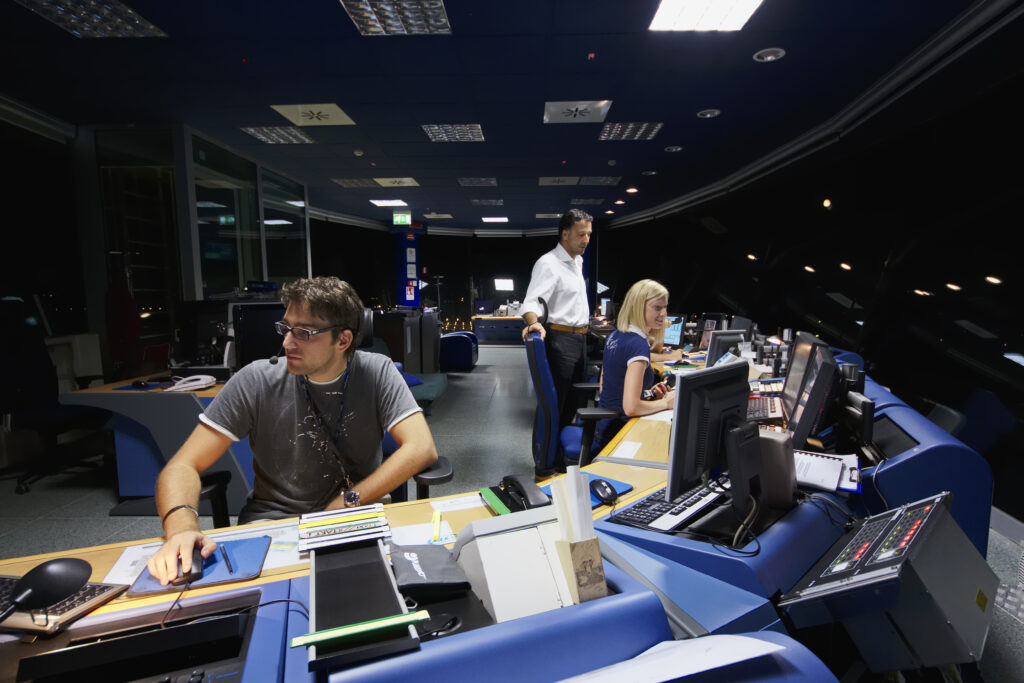
To ensure continuous and comprehensive air traffic controller training across different regions, CAE can implement several key measures – whether we implement them in a certain country will depend on that country’s ANSP’s’ needs and what our partnership looks like. CAE has experience in aviation recruitment and we know that recruiting and attracting young talent is crucial. We would aim to make the profession appealing and the training engaging, targeting individuals as young as 17-18 years old.
Although we are in the early stages, these discussions with other ANSP partners are promising. We are committed to making training as efficient and interesting as possible. CAE’s adaptable business model allows us to tailor our approach to the specific needs of different ANSPs.
Our goal is to provide not just additional training capacity but also innovative solutions. Many of the training technologies and processes we use for pilot training can be adapted for air traffic services, allowing us to bring new concepts and efficiencies to ANSPs worldwide.
How long does it take CAE to set up a training facility once a partnership is established and resources are available?
Setting up a training facility can be fairly quick, typically taking a few months. The setup time largely depends on regulatory approvals, such as obtaining an Approved Training Organisation (ATO) status from the relevant authority. In Montreal, we work with Transport Canada, which involves submitting a file, undergoing audits, and receiving approval.
If we can leverage the footprint of an existing CAE training facility, the process to set up a local training centre is even faster. The main time driver is regulatory compliance rather than the physical setup or equipment, which is usually straightforward. Once we complete the setup for NAV CANADA, we anticipate having the expertise to replicate the process efficiently in other countries.
How is CAE addressing the air traffic control training needs in India?
There’s no question that for anyone in aviation, India is a key focus, and our team is very committed to this growing market. We have a partnership with Boeing in India to deploy competency-based training, addressing the specific needs of the Indian market. Our approach involves collaborating with the right partners, ensuring our presence on-site, and tailoring our solutions to meet the unique requirements of India’s aviation industry. By focusing on India, we aim to support its rapidly expanding aviation sector effectively.