
















Intelsat is driving a new era of inflight connectivity with its multi-orbit satellite networks, delivering high-speed, reliable Wi-Fi across North America, Asia, and India. Airlines are adopting hybrid GEO/LEO solutions and advanced antennas to meet rising passenger expectations, boost operational efficiency, and future-proof their fleets. With strong airline partnerships, flexible installation options, and a focus on digital transformation, Intelsat is setting new standards for seamless, scalable inflight connectivity worldwide, shares John Happ, VP Business Development, Commercial Aviation, Intelsat.
Please provide the latest updates related to Intelsat’s multi-orbit inflight connectivity service?
The new Intelsat multi-orbit satellite inflight connectivity service is now operational on two major North American airlines. As the first provider to deliver reliable, multi-orbit service, we’ve completed installations on 125 aircraft, with additional aircraft coming online every week. Across all measures, the service is performing well and exceeding passenger expectations. The system has been selected by nearly 15 airlines around the world, including several in Asia (Japan Airlines and Skymark). Intelsat now has a backlog of nearly 1000 aircraft of all sizes.
Please provide an update on some of the important Intelsat commercial aviation projects across APAC?
Intelsat is proud to be a long-time partner with several APAC-based airlines, several of which have been with us for more than 10 years. Over that time, we’ve worked with them to introduce new capabilities to address changing passenger expectations. For example, today, we’re working with Japan Airlines and Cathay Pacific to enable free inflight Wi-Fi for their passengers. Additionally, we have signed agreements with several unnamed airlines in the region to deliver our new multi-orbit solution in the coming months.
How are Intelsat’s inflight connectivity services in India and Asia progressing?
The region’s largest airlines have many aircraft on order from the manufacturers. These carriers are expanding their networks, domestically and internationally, and are looking to inflight connectivity solutions to give them a competitive advantage in the market, build brand loyalty and drive ancillary revenues. We are in discussions with both carriers and believe we are well-placed to serve the needs of Indian carriers. We have a strong presence in Asia and expect that to grow.
What are the differences in inflight connectivity service requirements across Full Service and Low-Cost Carriers in the Indian context?
The demand for inflight connectivity (IFC) is evolving from a perk to a strategic advantage for any type of airline. Passengers now expect their airline of choice, irrespective of its business model or size, to have inflight connectivity and also offer additional services such as high-speed internet for video streaming and internet browsing, access to entertainment options and social media channels, and, in some cases, even video conferencing.
Airlines that invest in off-the-shelf or one-size-fits-all connectivity solutions will miss opportunities to enhance customer engagement, deliver personalised offers, increase revenue generation and so on. They will also fall behind when it comes to cost effective IFC technology, increasing their operating costs.
Full service and low-cost carriers are investing in advanced inflight connectivity technology, including electronically steered array antennas that connect to multi-orbit networks. These hybrid solutions provide the capacity and resilience of high throughput geostationary (GEO) satellites with the low latency and polar coverage of low-earth orbit (LEO) satellites to provide the best possible experience for passengers. Airlines can tailor their IFC offering to meet their goals and enhance their brand. For example, some airlines are offering free Wi-Fi to their loyalty program members, strengthening customer retention. Other airlines are partnering with mobile phone companies to provide free service for subscribers. We live in an increasingly connected world, so it is only natural that passengers would expect to remain connected while in the air.
How are multi-orbit inflight connectivity services shaping emerging requirements from airline customers?
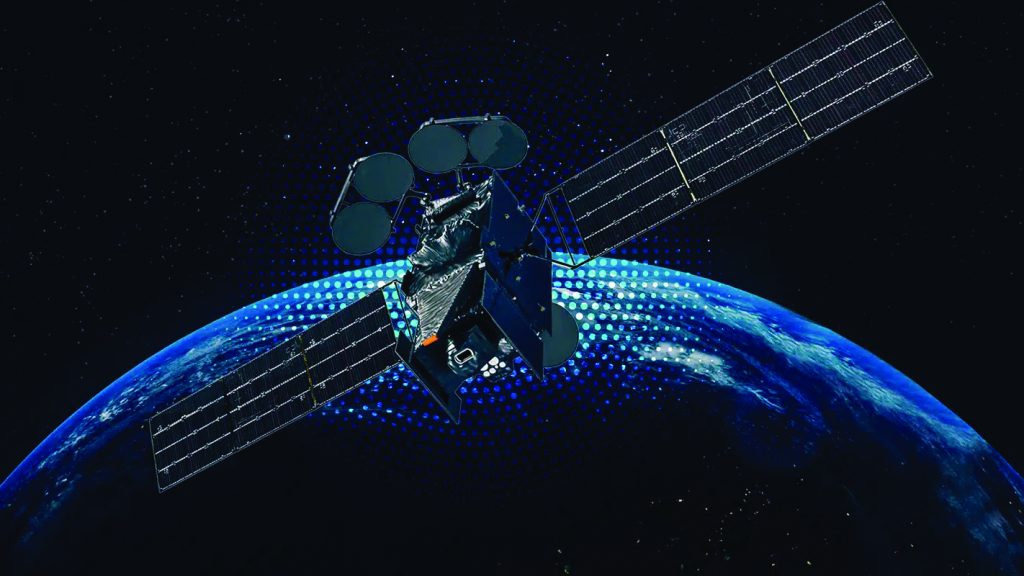
Airlines that offer inflight Wi-Fi to their passengers need to be confident that the service they are providing meets passenger expectations in terms of speed and reliability. This is why airlines turn to satellite service providers such as Intelsat that have a multi-orbit satellite network that uses both geostationary and low-earth orbit satellites.
LEO satellites have lower latency, but geostationary satellites provide more earth coverage. Multi-orbit systems, due to their wide area coverage and low latency, allows for ubiquitous coverage anytime, anywhere. Multi-orbit provides consistent connectivity even over busy hubs, through congested routes, across oceans, and over polar routes. The unparalleled flexibility and seamless coverage, that comes from combining a constellation of GEO and LEO satellites enhances the airline passenger inflight experience.
Many airlines recognise this, so this is shaping their requirements when selecting a service provider. This is crucially important because airline customers’ expectations, with regards to inflight connectivity have increased. In the past, passengers were content to just have access to Wi-Fi to check email and send messages. But now, they expect their on-the-ground and inflight connectivity experience to be seamless.

In addition to passenger Wi-Fi, what other benefits does cabin connectivity bring to travelling passengers and airlines?
Cabin connectivity has evolved into a critical enabler of airline digitalisation, extending far beyond passenger internet access. For travellers, high-speed, uninterrupted connectivity means more than just streaming movies or browsing social media—it enhances every stage of the journey. Passengers can access real-time flight updates, baggage tracking, and digital concierge services, improving travel efficiency and reducing frustration during disruptions. Airlines are also integrating connectivity into their loyalty programs, offering personalised in-flight services, such as targeted meal upgrades, exclusive Wi-Fi tiers, and AI-driven entertainment recommendations based on passenger profiles.
For airlines, the biggest transformation comes in operational efficiency and cost reduction. Real-time aircraft telemetry enables predictive maintenance, allowing maintenance teams to identify potential issues before they lead to costly delays or cancellations. Cabin connectivity also enhances crew efficiency, giving flight attendants instant access to passenger preferences, medical needs, and special assistance requests, ensuring a more tailored in-flight experience. Airlines can further optimise fuel usage by leveraging live weather updates and real-time flight path adjustments, reducing unnecessary fuel burn and improving sustainability metrics.
As expectations for seamless connectivity continue to rise, hybrid GEO/LEO networks are becoming the new industry standard, ensuring uninterrupted, high-speed service on all routes—including over remote regions and transoceanic flights. Traditional satellite antennas, while effective, add weight and drag to aircraft, increasing fuel costs. This has led to the adoption of electronically steered antennas (ESAs), which eliminate moving parts, reduce maintenance requirements, and improve overall fuel efficiency. As airlines look for ways to maximise connectivity while minimising costs, adopting a next-generation, hybrid IFC solution will be crucial in achieving both passenger satisfaction and operational gains.
How can Indian airlines ensure their ROI when it comes to investing in-flight connectivity? What advice would you give to airlines still hesitant about investing in inflight connectivity, especially considering the growing demand from passengers?
In-flight connectivity (IFC) has evolved from being a luxury to an expectation, making it a necessary investment for airlines rather than an optional feature. However, ensuring a strong return on investment (ROI) requires a strategic approach that goes beyond simply offering passenger Wi-Fi. Airlines today are adopting flexible revenue models, such as tiered access (free messaging with paid premium options), sponsored connectivity through partnerships with brands and payment providers, and bundled Wi-Fi access for premium cabin passengers or frequent flyers. These approaches allow airlines to offset costs while increasing passenger engagement.
Beyond direct revenue, IFC plays a crucial role in operational efficiencies. Airlines are leveraging real-time connectivity to optimise fuel consumption through live weather updates, reduce delays with predictive maintenance, and improve cabin service with crew applications that provide instant access to passenger preferences and operational data. Additionally, IFC opens up new revenue streams through e-commerce and targeted advertising, allowing airlines to monetise passenger attention even if they choose not to charge for Wi-Fi access.
To make these strategies viable, connectivity solutions must be both cost-effective and future-proof. Traditional IFC systems have been expensive and rigid, but advances in satellite technology—particularly hybrid GEO/LEO networks—are reshaping the economics of IFC. By combining the global reach of GEO satellites with the low latency and high throughput of LEO constellations, airlines can ensure seamless connectivity across all flight routes while optimising bandwidth costs.
Additionally, electronically steered antennas (ESAs) eliminate the drag caused by traditional mechanical antennas, reducing fuel consumption and contributing to overall cost savings. As airlines face growing pressure to balance profitability, sustainability, and passenger experience, adopting scalable, hybrid IFC solutions will be key to maximising their long-term ROI.
How do you see airlines’ expectations for IFC evolving worldwide in the next five years? How does Intelsat’s technology ensure a seamless, high-speed Wi-Fi experience onboard, and what differentiates it from other providers?
Passenger expectations for in-flight connectivity In India are shifting rapidly, with airlines under increasing pressure to offer speeds and reliability comparable to on-ground broadband. Travellers now expect seamless, high-speed internet that supports video calls, cloud applications, and even gaming, rather than the limited browsing and messaging options of the past. To meet this demand, airlines are looking for higher bandwidth, lower latency, and a globally consistent service, which is pushing the industry towards hybrid GEO/LEO networks that deliver the best balance of coverage, speed, and efficiency.
Beyond passenger experience, IFC is becoming a core part of airline digital transformation strategies. Many airlines through the Asia-Pacific region are now integrating connectivity into their crew operations, aircraft monitoring, and sustainability initiatives. Real-time data streaming from aircraft systems is allowing airlines to reduce turnaround times, improve fuel efficiency, and enhance safety monitoring. Additionally, as regulatory pressure increases around aviation sustainability, airlines are expected to invest in low-drag, energy-efficient connectivity solutions to meet decarbonisation targets.
The future of IFC will not be one-size-fits-all—airlines will require customised, scalable solutions that integrate seamlessly with their specific routes and business models. As connectivity moves from being a passenger perk to a fundamental airline service, hybrid GEO/LEO architectures combined with next-gen ESAs will play a central role in shaping the future of aviation connectivity and digital transformation.
Please elaborate on Intelsat’s partnerships for line-fit and retro-fit of its inflight connectivity services and how capacity constraints/challenges are being overcome?
Intelsat inflight connectivity solutions are increasingly becoming a line-fit option for airlines, especially those that order new Airbus, Boeing and Embraer aircraft.
For example, Intelsat is now a line-fit option for Embraer E2 aircraft. Last year, Intelsat secured an order from German carrier Condor to provide 43 Airbus A320neo-family aircraft with satcom. These aircraft were all line-fitted with the Intelsat’s 2Ku system at Airbus’ factory. Also, last year Intelsat won a contract from Japan Airlines to provide its multi-orbit service and new electronically steered array (ESA) antenna for 20 Boeing 737 Max aircraft. Boeing will install the satcom system while the aircraft are on the production line.
While offering line-fit options are important, retrofitting aircraft with our satellite communications systems, including the antennae, is also a very quick and practical solution. The retrofit can be scheduled to occur when the aircraft is due for an airframe heavy maintenance check, resulting in no additional downtime on the aircraft.
The quick aircraft turnaround can also be achieved even if an old satcom system needs to be removed before the new system goes in. Intelsat offers comprehensive engineering support for retrofit installations, in addition to the in-service maintenance support.