









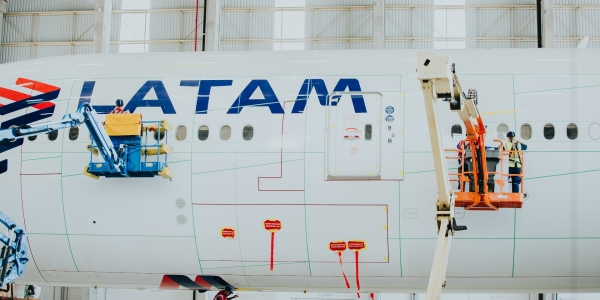
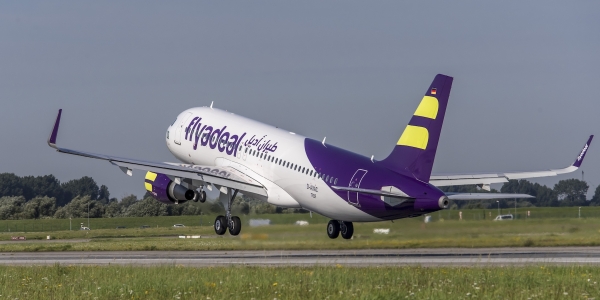



Israel Aerospace Industries (IAI) is redefining aircraft conversions with a strategic approach to passenger-to-freighter (P2F) transformations. By selecting aircraft based on market demand and operational efficiency, IAI ensures its freighter solutions align with industry needs. Collaborations with global partners further strengthen its capabilities, driving innovation in air cargo transportation, highlights Boaz Levy, President and CEO of Israel Aerospace Industries.
What criteria does IAI use to select new aircraft models for P2F conversions?
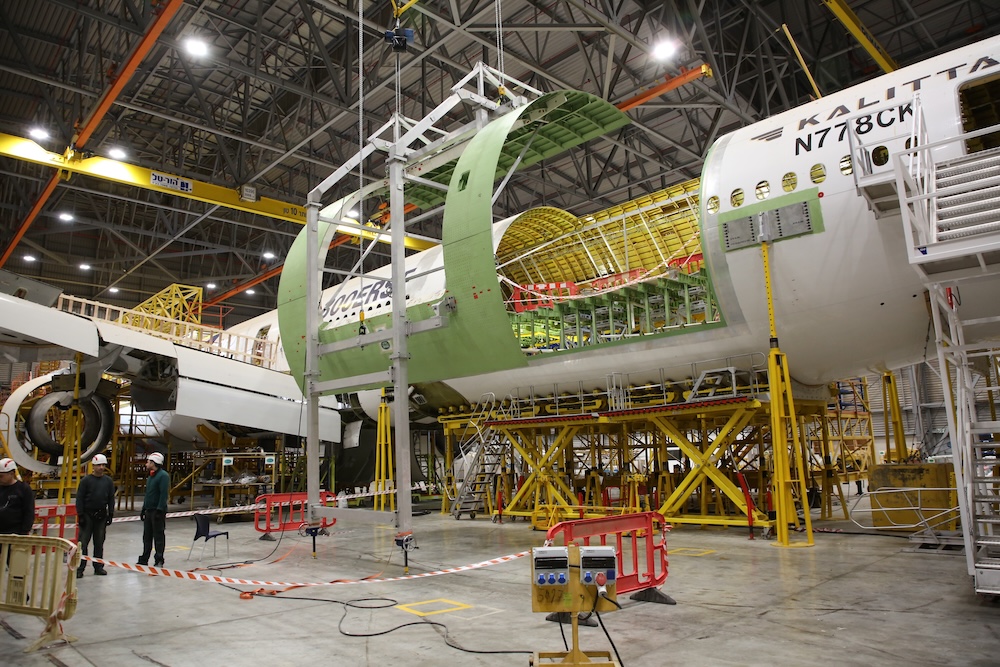
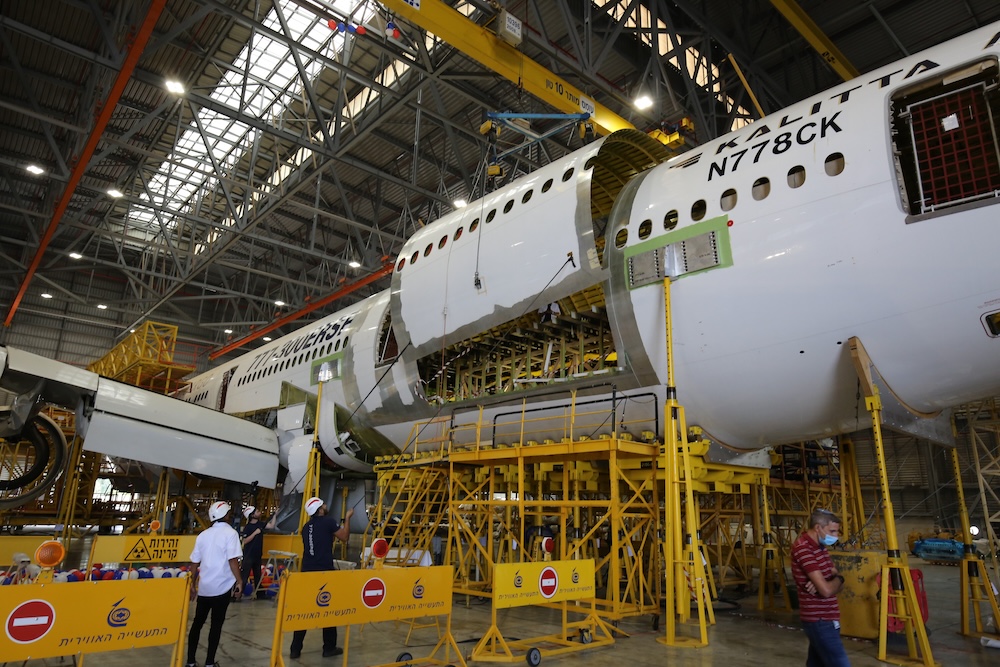
IAI’s approach to selecting aircraft for passenger-to-freighter (P2F) conversions is rooted in a deep understanding of the market’s needs. With over 40 years of experience in aircraft conversions, we offer solutions tailored to every market segment, including narrow-body, medium-size, and wide-body aircraft. This comprehensive portfolio ensures we can meet diverse operator requirements. For example, the narrow-body segment benefits from our expertise with the B737 series. In the medium-size market, our current conversion programs focus on the B767-300ER and B767-200, both highly reliable and cost-effective options, while the upcoming A330-300 program will provide operators with a modern and efficient alternative. For the wide-body segment, the B777-300ERSF delivers unparalleled capacity and efficiency, making it a preferred choice for operators globally. This strategic approach allows us to meet evolving market demands with precision and reliability.
How do partnerships with companies like AerCap and DHL enhance IAI’s P2F capabilities?
Our partnerships are the foundation of our success in the P2F conversion space. AerCap, as our initial customer for the B777-300ERSF program, has placed 20 firm orders with an additional 10 options, showcasing their confidence in our product. As the world’s leading aircraft lessor, AerCap provides airlines with financing solutions that make our conversions highly accessible. Similarly, our collaboration with Avolon for the A330-300 program highlights our ability to align with lessors who understand the evolving needs of their airline clients. These partnerships ensure a steady supply of feedstock, streamline operations, and reinforce our leadership in the global air cargo market.
Operators like DHL, on the other hand, bring valuable insights from the logistics industry, helping us refine our conversions to meet real-world cargo demands.
How do EASA and FAA certifications for your conversions impact IAI’s market reach?
EASA and FAA validations of our Supplemental Type Certificates (STCs) are vital to our global operations. These validations demonstrate compliance with stringent airworthiness standards, ensuring our converted aircraft’s safety, reliability and performance. Additionally, many other aviation authorities align their approval processes with EASA and FAA decisions, significantly accelerating validation in various regions. The EASA and the FAA certifications are considered by many authorities as benchmarks. This broadens our market reach and provides operators with confidence and ease in deploying our freighters across diverse jurisdictions.
Can you share insights on IAI’s current conversion capacity and plans for expansion?
IAI’s global facilities, located in strategic regions such as the United Arab Emirates, South Korea, the United States of America, and Tel Aviv, enable us to handle a significant number of conversions annually. Our B777-300ERSF program stands out, offering 25 percent more cargo volume compared to the B777-200F and at a significantly lower operational cost than the B747-400. These advantages make it a highly competitive choice for operators looking to modernise their fleets. We are actively expanding our capacity by introducing additional production lines and exploring new locations to meet the growing demand. These efforts position us to remain a leader in the P2F conversion market.
What trends are you seeing in the air cargo market, and how is IAI meeting these needs?
India is confident it will become one of the fastest-growing air cargo markets globally. With an anticipated compound annual growth rate (CAGR) exceeding 8 percent, driven by the exponential rise in e-commerce and the expansion of logistics networks, the Indian market is rapidly evolving. This growth is further supported by increasing air freight demands from India’s manufacturing and industrial sectors as the country cements its role as a global hub for production.
IAI is well-positioned to meet these demands with a comprehensive portfolio of conversions. For the narrow-body segment, our 737NG freighters – already used by Indian operators – deliver efficient and reliable solutions tailored to the region. In the medium-size market, the upcoming A330-300 program will provide a modern, high-capacity freighter option, addressing the needs of operators as they expand cargo routes across domestic and international markets. The B777-300ERSF offers unmatched capacity and operational efficiency for wide-body operations, enabling operators to capitalise on the growing air cargo market in India and beyond.
What modifications are made to the aircraft’s structure and systems during a P2F conversion to ensure safety and efficiency?
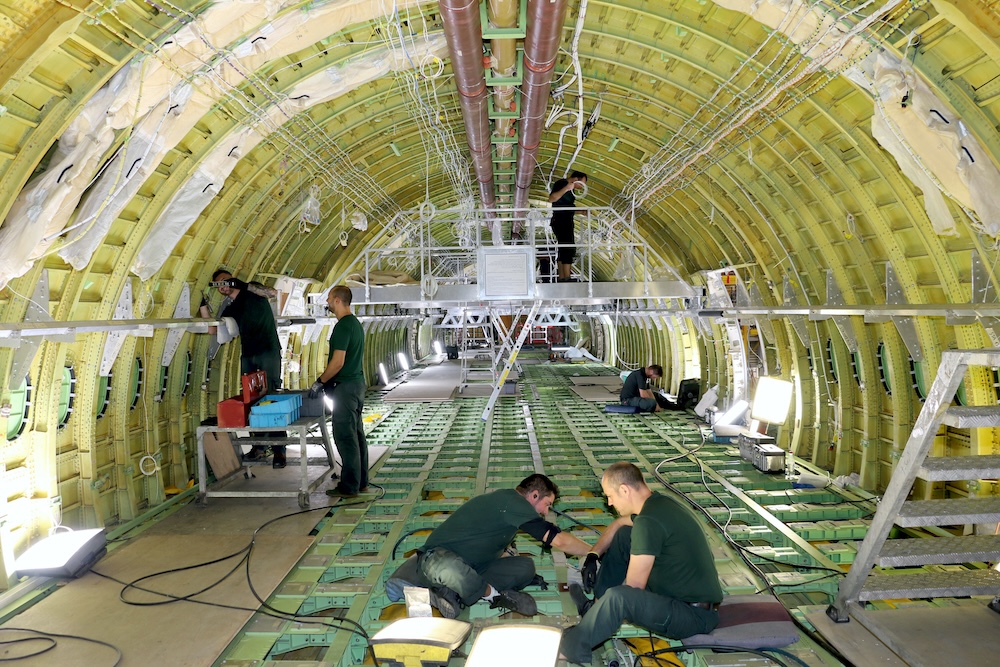
The P2F conversion process involves significant modifications to transform a passenger aircraft into a reliable freighter. The fuselage is reinforced to handle heavier loads, while a large cargo door is installed to enable efficient loading and unloading. Additional systems, including advanced smoke detectors and upgraded air conditioning, are integrated to ensure safety and operational efficiency. These modifications are designed to comply with the strict standards of Aviation Authorities, guaranteeing the aircraft meets the demands of modern cargo operations.
What are the key technical challenges in converting passenger aircraft to freighters, and how does IAI address them?
Converting passenger aircraft into freighters presents unique technical challenges, mainly because these aircraft were originally designed for passenger transport. The transformation requires extensive structural reinforcements, the installation of a large cargo door, and upgrades to systems such as smoke detection and air conditioning to handle freight. With over 40 years of experience in conversions, IAI has developed the expertise and technologies necessary to address these challenges effectively. Our conversions adhere to the highest compliance standards set by aviation authorities, ensuring safety and operational reliability.
What is IAI’s strategy for expanding its P2F conversion business in the Indian market?
India’s aviation sector is rapidly expanding, fueled by its emergence as a global manufacturing and industrial production hub. With the country’s focus on self-reliance, both passenger and cargo markets are experiencing remarkable growth. India’s fleet size is projected to more than double by 2040, with airlines expected to acquire over 1,000 new aircrafts in the coming decades.
IAI is committed to supporting this growth by offering cost-effective conversion solutions that cater to the needs of Indian operators. Our partnerships with local MRO providers aim to establish regional capabilities, enabling quicker turnarounds and localised support. These efforts position IAI as a key player in India’s burgeoning aviation sector, delivering reliable and innovative solutions to meet the demands of a growing economy.
Are there any ongoing or upcoming projects with Indian airlines or cargo operators for P2F conversions?
Yes, IAI’s presence in India is already making an impact. Our B737NG freighters are currently in use by Indian operators, showcasing their effectiveness and reliability. Beyond P2F conversions, we are also exploring opportunities to expand our MRO services for India’s airline operators. These services include comprehensive engine maintenance capabilities, covering models such as the CFM56-3, CFM56-5, CFM56-7, PW4000, V2500, and LEAP-1A & 1B, along with full support for Airbus and Boeing aircraft. By combining conversions with advanced MRO services, IAI aims to provide a holistic solution to support India’s growing air cargo and aviation sectors.