








- India’s business jet market is witnessing growth, fuelled by rising UHNWIs and increasing private jet demand.
- Yet, challenges like high operational costs, inadequate infrastructure, and unclear fractional ownership policies hinder its full potential.
India is on the cusp of unprecedented growth in the commercial aviation sector – passenger and cargo movements are soaring, and major airports are chock-a-block. With rising demand, increased economic activity, higher disposable incomes, massive surge in tourism and better infrastructure, the aviation market in India is in its most exciting phase. Adding to that excitement is the general aviation/business aviation segment, with the ultra-high-net-worth individuals (UHNWIs) wanting to fly in comfort and in style. This is resurgent India.
According to Knight Frank’s ‘The Wealth Report 2024’, the number of UHNWIs is expected to increase to 19,908 by 2028 from 13,263 in 2023, leading to an unprecedented 50.1% growth, the highest for any country, in the next five years. They are one of the major drivers of business jet growth in India.
With such demand, the business jet market in India had a 7% year-on-year growth in 2023. India accounted for 151 of the 1,154 business jets in operation in the Asia-Pacific region. Mainland China has 272, and Australia has 213 business aircraft, though the former has been registering a net decline since 2020.
Net Addition of 7 Aircraft
According to the Asian Sky Group, India saw a net addition of seven aircraft, with one new delivery, 12 pre-owned additions, and six deductions. Three net Long-Range Jet additions, two Globals and two Gulfstreams, joined the fleet. Medium and large jets each accounted for one quarter of the Indian fleet.
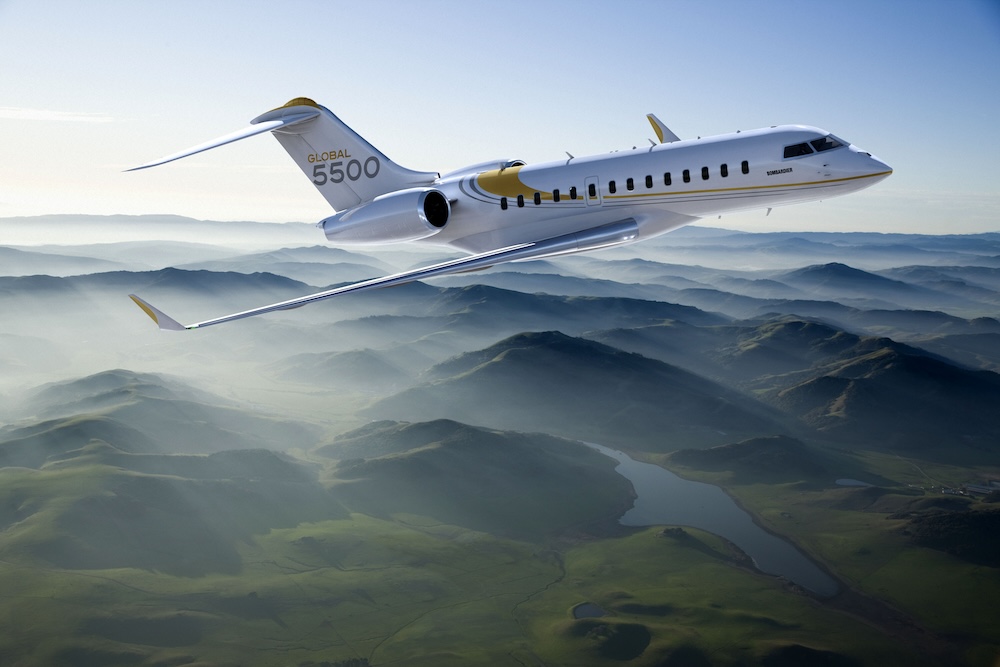
Textron was one of the most popular original equipment manufacturers (OEMs) in India with its Medium Jets (Citation Excel, Hawker 800XP/900XP). Bombardier is sitting tight with a market share of 25.2% flying its Long Range Global 6000. Embraer and Dassault, with their most popular Large Jets (Legacy 650, Legacy 600 and Falcon 2000), accounted for 28.5% of the national fleet. Overall, the Indian fleet had an average age of 13.8 years, slightly higher than the Asia-Pacific average age of 13.0 years, with the country having the largest fleet of aircraft aged between 16 and 20 years
403 GA/BA Aircraft
As per the Directorate General of Civil Aviation (DGCA), the number of non-scheduled operators in India is 115, and 403 aircraft are owned, both fixed-wing and rotary. The biggest player in the fixed wing is New Delhi-based VSR Ventures, with 17 aircraft that include 8 Learjets, 4 Embraer, 3 Beechcraft, and one each Pilatus and SKA B200. The biggest player in the rotary wing is a government-owned entity – Pawan Hans with 45 helicopters used for various purposes.
Mukesh Ambani’s Reliance Commercial Dealers have 12 aircraft, including 3 rotary-wing and 2 big jets, one from Airbus (A319-115 CJ) and another from Boeing (B737-9), both 19-seaters. The other business jets are 5 Global Express and one each of Embraer 135ER and Falcon 900EX.
New Delhi-based India Pacific Aviation and Pinnacle Air Pvt Ltd have 10 aircraft each. India Pacific Aviation aircraft include 8 fixed and 2 choppers with an inventory of 5 Hawkers and one each Embraer Legacy 600, Cessna Citation and Gulfstream G200. Pinnacle’s aircraft have 7 fixed wings and 3 rotaries, and they include 2 Cessna, 2 King Air, one P68 Observer, one Beechcraft Premier, and one G200.
Karnavati Aviation has 9 aircraft, including 3 PC24, 3 Embraer 135BJ, and one each of Hawker, Bombardier BD700, and CL600. AR Airways (ClubOne Air) has 7– 5 Falcon 2000 and 2 Cessna Citation. Companies such as JetSetGo, the first transparent marketplace for private aviation—both executive jets and helicopters—are thriving, propelled by the quest for private and quick travel.
| Bombardier | 38 |
| Textron | 55 |
| Gulfstream | 12 |
| Dassault | 17 |
| Embraer | 26 |
| Airbus | 1 |
| Boeing | 1 |
| Others | 1 |
Even as major airports are choking and there are significant flight delays by scheduled carriers, there is increased demand for business jets, which is witnessing stiff competition to secure market share by the 100-odd non-scheduled operators. As per the Directorate General of Civil Aviation, the number of non-scheduled operators in India is on the rise, addressing various needs—private travel, tourism, pilgrimage, airport drops, air ambulance, whirlwind tours of politicians during elections, etc.
Need for tax rationalisation
As the needs are diverse, the challenges are so. The business aviation segment is plagued with high operational costs, complex tax structures and inadequate infrastructure facilities for general aviation/business aviation. The Business Aircraft Operators Association (BAOA) President Harsh Vardhan Sharma said one of the major issues that needs to be sorted out is the rationalisation of the tax structure. The BAOA has been suggesting that the government impose a flat 5% GST for the business/general aviation sector and has, in fact, written to the Prime Minister, Narendra Modi and the Finance Minister, Nirmala Sitharaman, but to no avail.
Infrastructure for smaller aircraft and helicopters
Another important issue the government needs to address is that of infrastructure for smaller aircraft and helicopters. Sharma mentions that India’s diverse geography requires robust infrastructure and that the BAOA is collaborating with the government to facilitate the development of smaller airstrips and heliports. In the 2016 National Civil Aviation Policy (NCAP), helicopters got some attention wherein it was mentioned that the government would develop at least four heli-hubs initially across the country to promote regional connectivity. The government has been proactive, taking steps to boost the sector.
In fact, India got its first exclusive private jet terminal at New Delhi Indira Gandhi International Airport only in late 2020, which had capacity to allow movement of 150 jets on a daily basis. Then came the refurbished general aviation terminal in the Adani group-run Mumbai International Airport.
And as recent as September this year, the Rajiv Gandhi International Airport at Hyderabad unveiled a state-of-the-art General Aviation Terminal tailored exclusively for private jet owners and users. The new terminal aims to facilitate the diverse needs of passengers flying through chartered flights meant for business or personal travel from Hyderabad Airport.
Mr. Pradeep Panicker CEO of GMR Hyderabad International Airport said, “Hyderabad is one of the thriving economic powerhouses with the second highest concentration of ultra-high net worth individuals and thriving pharmaceutical and IT industries. The development of Global Capability Centers in the region by MNCs have boosted private jet movements. Redefining the flying experience, this new facility will set a new standard for an extraordinary travel experience. The terminal will serve as an extension of luxury for many of our frequent HNI travellers, offering unparalleled comfort, convenience, and bespoke services. With our commitment to providing a world-class experience for our travellers, we are committed to enhancing the excellence in the years to come.”
Fractional ownership: is it on the horizon?
As the challenges are aplenty, the Managing Director of the BAOA, Group Capt. Rajesh Bali, in a recent BizAvIndia conference, called for collaborative efforts to interact with regulators who held the keys to the growth of the sector. Regulatory issues continue to be a challenge, for instance there is no clarity on fractional ownership of aircraft, thus the potential remains largely untapped as single ownership doesn’t make sense, unless one is extremely rich or travels very frequently. As the acquisition costs (import duties, GST, etc) and annual maintenance costs are high, fractional ownership seems to be the answer.
In February this year, there were some murmurs that the Government of India was fine tuning the civil aviation policy to encourage fractional ownership of aircraft. Shankesh Mehta, Director in the Ministry of Civil Aviation had said “We believe there are passive investors who would want to acquire an aircraft but are waiting for clarity. The idea is to have as enabling a legislation as possible in place so that we have a NetJets coming out of India.” NetJets is owned by Warren Buffet and has over 750 business jets under the fractional ownership model in the United States.
In anticipation of a favourable policy, John Kuruvilla has founded IndiaJets, based in Bengaluru. In an interview with Business Chief, he said, “While fractional ownership globally is a well-established sector, in India, the same is yet to be approved by the government. We know that the government is working on it, and legislation could be passed shortly.
“The IndiaJets model is a first of its kind Fractional Membership model, tailor-made for our market. We believe that Fractional Ownership, when approved, and Fractional Membership will co-exist in India to straddle the needs of both the large companies as well as the MSME sector.” All that the government needs to do is create a conducive environment for the business/general aviation sector, considering it as an economic enabler, though certainly not on the scale of scheduled operators.
The government is grappling with the legality of fractional ownership, particularly the issue of claiming depreciation benefit on the value of the share size in an aircraft and the issue of exit of a fractional owner and its implications. During and post-Covid, the interest in business aviation/general aviation soared as travellers were keen to avoid crowded spaces and flying scheduled airlines which mandated travellers wear masks and PPE kits.
And the bug of travelling in style, in comfort and point to point has caught on. Despite the hurdles, business aviation is going through an exciting phase. Soon the skies will see different needs addressed by scheduled carriers, non-scheduled operators and the what the world is awaiting – Advanced Air Mobility which will be the next frontier of air travel.