










- Upgrading private airfields with dedicated facilities can boost general aviation by enhancing connectivity and efficiency.
- FBOs and fractional ownership address infrastructure and cost barriers, enabling growth in private aviation.
- Rising demand from non-metro areas, pilgrimages, and business travel underscores the sector’s untapped potential.

Beyond the flashy green-field commercial airports riding the big aviation boom across the country, a good number of private airfields could spur general aviation growth with the right policy boost. Currently limited to aircraft ferrying corporate executives and serving multiple industrial facilities, can these airfields be transformed to rejig a sector that holds promise?
At least 16 private airports are licensed to operate by the Directorate General of Civil Aviation (DGCA). Among these are the Taneja Aerospace & Aviation Limited (TAAL) in Tamilnadu, airfields in Vidyanagar and Koppal in Karnataka, Bokaro in Jharkhand, Rourkela and Angul in Odisha, Raigarh (JSPL) and Baikunth in Chhattisgarh, Birlagram in Nagda, Madhya Pradesh and Mithapur in Gujarat.
While these are under the DGCA radar, there are many that are outside public documentation. The country’s aviation infrastructure harbours an estimated 500 airfields of varying lengths and associated infrastructure. Aviation experts say many of the underutilised airfields could be leveraged for general aviation use with right intervention by the regulators and administrative setups.
Dedicated infrastructure
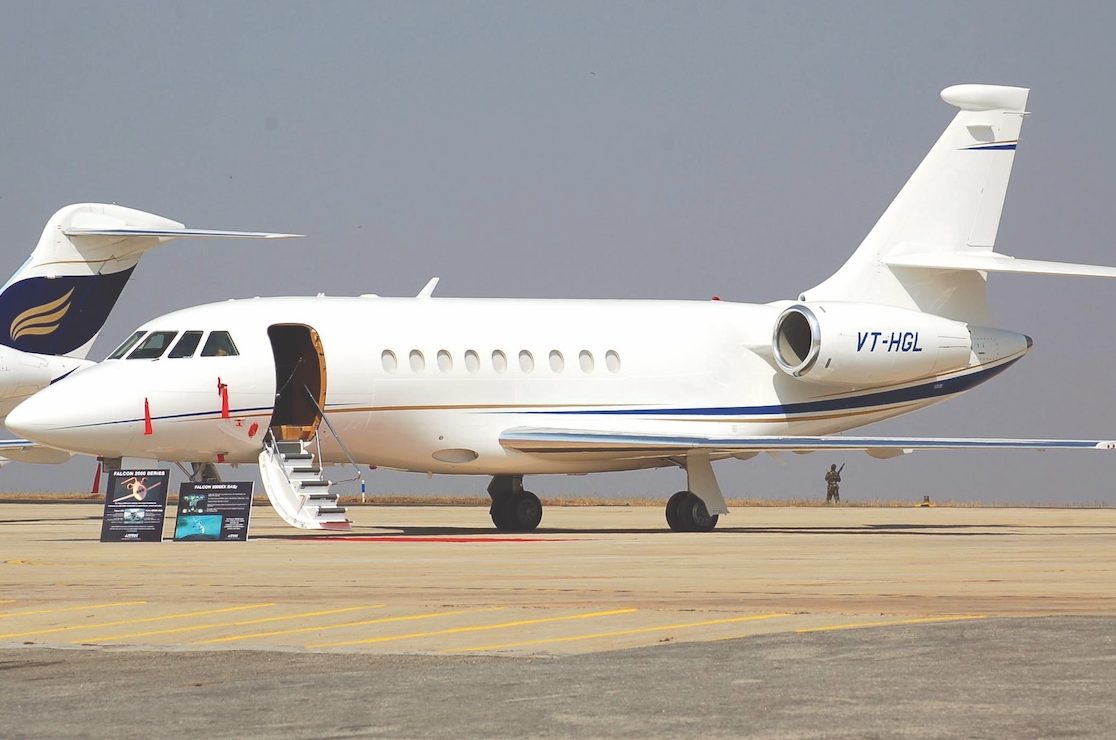
The need is for dedicated infrastructure, implying parking stands and hangars for business jets and other private aircraft, besides dedicated terminals. Experts are convinced that such an infrastructural push could help general aviation players bypass the congestion and delays at the commercial airports. Operations could thus be made more efficient and turnaround times made faster, amplifying the appeal of private aviation.

Infrastructural handicaps and affordability have restricted the number of privately owned fixed wing aircraft to about 260 in India. Can a push from the government through private-public partnerships create an ecosystem to help the general aviation base grow beyond these minuscule numbers? It is tricky, but existing under-utilised private airfields could be low-hanging fruits, provided they are upgraded with ground handling, passenger services, catering and maintenance support, meeting rooms and crew rest areas.
Vast swathes of the country are without commercial air connectivity, with potential flyers often forced to take long-winding road routes. Industrial clusters and business centres, particularly those in remote locations, could benefit if private airfields here are activated. Besides business trips, the operationalised airfields could aid medical evacuations, tourism and other activities. Improved connectivity could then give a bigger push to industrial expansion and diversification.
Fixed Base Operators
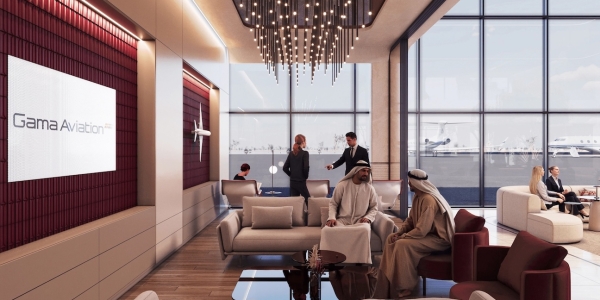
But this infrastructural transformation could take time and money. However, the emergence of Fixed Base Operators (FBOs) catering to private jet users has shown the way forward, at least in imagining the capacity building required to boost general aviation in the hinterlands. Embedded within commercial airports, these FBOs are private terminals customised to cater to the needs of private jet travel. Among the key facilities provided are ground handling, flight planning, passenger amenities and maintenance support.
A major player in the FBO space is Bird ExecuJet, which operates such facilities at Delhi, Mumbai and other airports. Among the FBOs offered are luxury lounges, conference facilities, flight planning services and gourmet catering. At the Indira Gandhi International Airport in New Delhi, the group opened the country’s first general aviation terminal spread across an area of 80 lakh sqft with dedicated aircraft parking bays.
The facility, unveiled during the pandemic, also offers exclusive city side car parking with access from and to the city. The terminal is equipped to cater to 150 private jet movements daily, including 50-seater Code C type aircraft. It also has 24×7 personal concierge services, a common processing area with Customs and Immigration, and quick access to private jet aircraft stands. Wi-Fi enabled services, an IT system integrated with the overall Delhi Airport platform and perimeter security control system are also part of the FBOs.
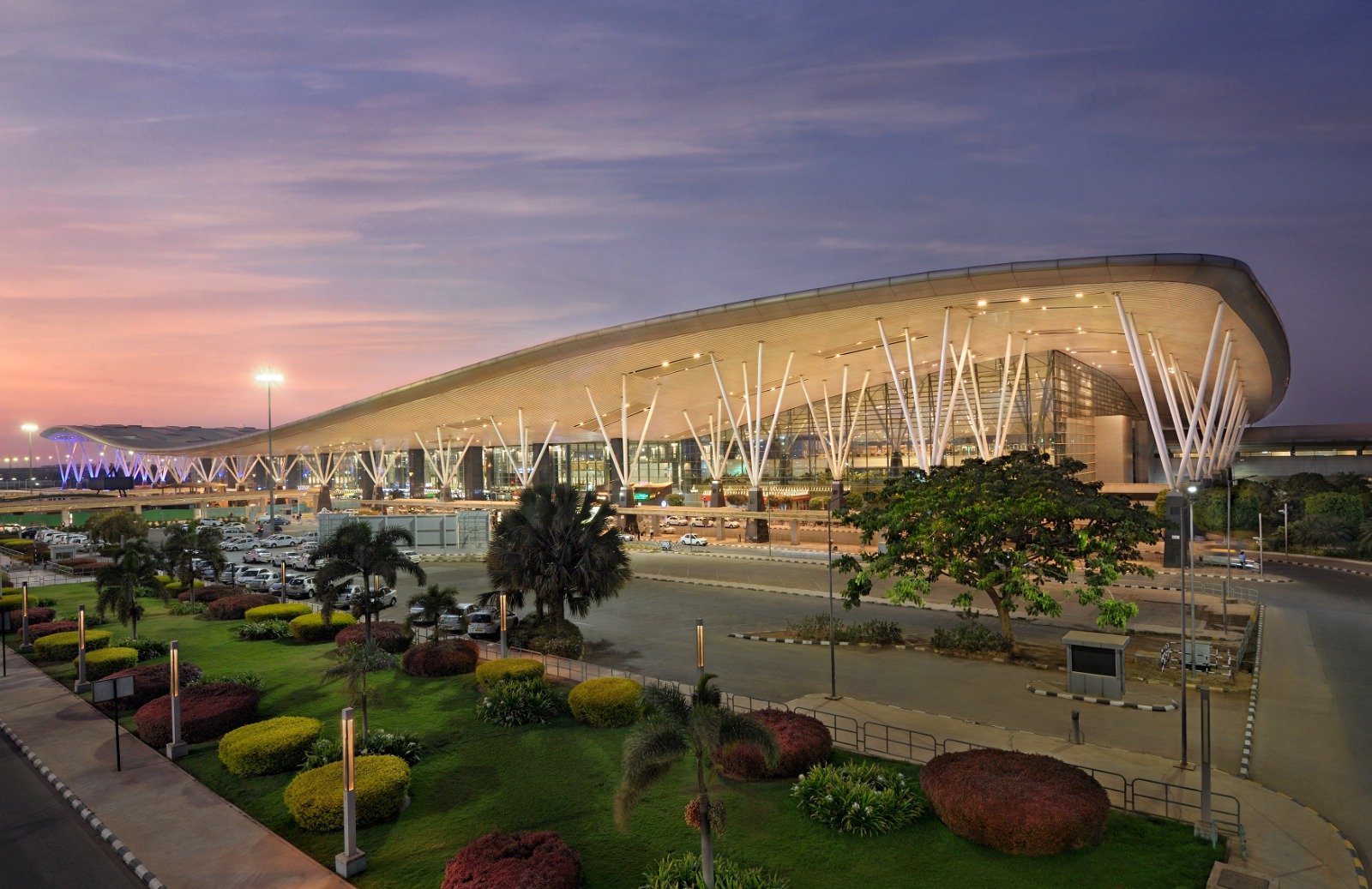
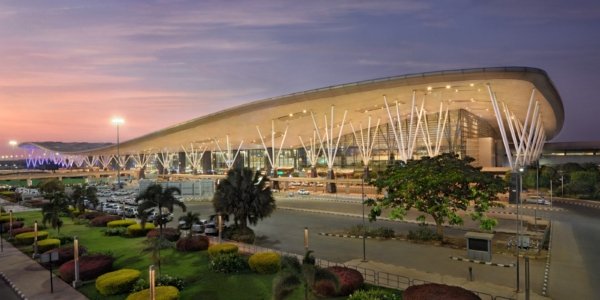
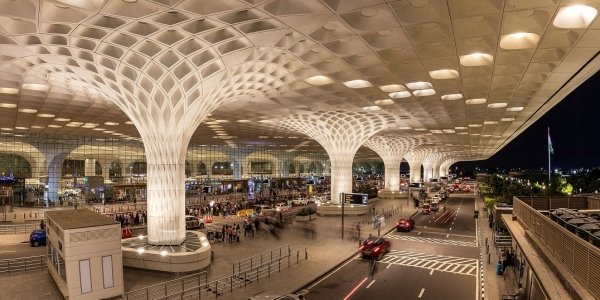
Shaurya Aeronautics is another player in the FBO space, operating a fleet of limousines and mini vans to serve VIP customers at the Delhi airport. Its FBO lounge is equipped with a conference room for private meetings and pantry services. The Mumbai Chhatrapati Shivaji International Airport too has a dedicated GA terminal, complete with meeting rooms, conference rooms, and crew rest areas. However, the Kempegowda International Airport in Bengaluru (BLR) does not have a dedicated General Aviation or Corporate Aviation terminal.
Gaps in OMDA
Is it mandatory for private airport operators to incorporate dedicated infrastructure for general aviation in their plans? Critics say the concerns of the general aviation sector were not addressed in the Operation, Management & Development Agreement (OMDA) signed between the Airports Authority of India (AAI) and the private operators. The Union Cabinet had recently approved the agreement.
The government has a constitutional obligation to provide infrastructure for all stakeholders, both commercial and general aviation. But the private airport operators are not mandated to fulfill any such obligations, and the OMDA makes no such condition either. Aviation analysts say the private operators are driven by commercial interests, and since small aircraft make up the bulk of general aviation, they generate only a fraction of the revenue earned from scheduled airlines through parking and landing charges.
However, the impending privatisation of at least 11 airports nationwide offers an opportunity to tap the huge unexplored potential in the general aviation sector. Reports indicate that the Centre has proposed privatisation under the PPP model by the end of the 2025-26 financial year. Several loss-making airports could be part of this move, intended to bundle unprofitable aerodromes with commercially successful ones to boost their appeal to investors.
Bundling of airports
The Varanasi airport could be bundled with Kushinagar and the underperforming Gaya airport, while Bhubaneswar and Amritsar could be packaged with Huballi and Kangra airports. The bundling of Raipur and Tiruchirapalli with Aurangabad and Tirupati is another reported proposal. The objective is to let private operators balance revenue streams, while struggling airports get an infrastructure boost. Incorporating facilities for general aviation could potentially be a game-changer.
A key contender in the bidding process is likely to be Adani Airport Holdings Ltd, which already operates several airports in the country. Another strong contender would be GMR Airports Ltd, which manages the Delhi International Airport. Once the process gathers pace and starts making improvements in airport infrastructure, travelers and the local economies could expect enhanced connectivity, improved service quality and better facilities.
Beyond privatisation involving big players, general aviation could get a boost with the concept of fractional ownership. This is a model where multiple individuals or corporates bypass the financial burden of full ownership by sharing the use of an aircraft, a private jet in most cases. However, as veteran aviation analyst Devesh Agarwal puts it, fractional ownership is still an alien concept in India.
Fractional ownership
Under the concept, fractional owners purchase a share, which grants them access to a specified number of flight hours per year. This is calculated as per the proportion to their ownership. The fractional ownership scheme is mostly managed by a third-party company. This includes maintenance, scheduling, and other operational tasks. Besides the purchase cost, the fractional owners also share the cost required for operating and maintaining the aircraft.
Typically, the fractional share could be as low as 1/16th of the aircraft cost or as high as even half the cost. The flight hours are allocated based on this share. Since the costs involved are high, the fractional owners usually ink multi-year management agreements with the third-party scheme managers. Since private aircraft are prohibitively expensive, this model is considered ideal for India.
“Even today, general aviation in the country is reserved for the uber uber uber HNI, the top 0.1 per cent,” reminds Devesh. “In the United States, a lot of people have their own aircraft for hobby flying and other travel. These are low-cost aircraft that are a hundred, 200, or 300,000 US Dollars. It is the cost of a Range Rover. Till such time low-cost private aviation doesn’t come into play and making affordability and the barriers to entry into general aviation lower, you are not going to reach a critical mass in India,” he elaborates.
General aviation is well entrenched in the US and Europe, and it could take decades for India to reach anywhere close to that. In the words of Devesh, “You cannot compare with the US and Europe, because there is a lot of private ownership. A lot of people have made housing communities around airfields. That concept is very alien to India right now. It is a kind of a chicken and egg story. What comes first, the airfields and the related infrastructure or the aircraft?”
DGCA-NBC gaps
Infrastructure mandates allotment of vast amounts of money and resources. The best bet for general aviation in this scenario could be helicopters and helipads. But here, the huge gap between policy and ground reality becomes evident. “None of the helipads on high-rise buildings in cities are certified, although they are mandated. The National Building Code (NBC) specifies a helipad for single engine helicopters. DGCA does not certify the helipad unless it can handle twin engine helicopters due to safety issues. So, why have the two not reconciled although the gap has been identified for years? There is no synchronisation between NBC and DGCA.”
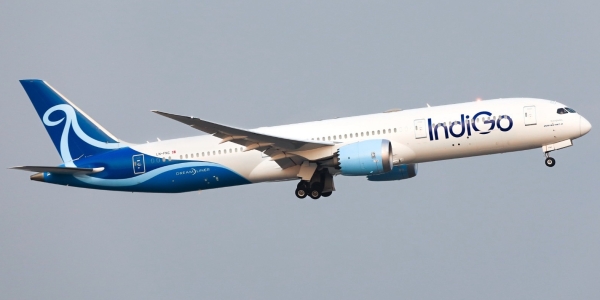
A potential growth in general aviation also mandates a regular supply of trained pilots. However, pilot shortage has been an issue in the country for years. Union Civil Aviation Minister K Rammohan Naidu had flagged this concern again recently when he talked about India’s need for 20,000 pilots in the coming years to cater to the growing air-travel demand. The demand from commercial aviation is pronounced since Air India awaits the delivery of 570 aircraft, and IndiGo has ordered more than 1,000 aircraft. The limited supply could get saturated quickly, and this could impact general aviation.
It is in this context that DGCA has proposed to allow Class 12 pass-outs from Arts and Science streams to become commercial pilots. If this big reform is approved, the current eligibility requirement that allows only students of Physics and Maths for the CPL license will be removed. CPL training will then be open to all students who clear the medical fitness test.
While this move could expand the starting base, the country’s flying training organisations could get a boost if the National Aerospace Laboratories (NAL)’s indigenously designed and developed twin-seater pilot training plane Hansa-3 NG gets into manufacturing mode. NAL had recently signed a technology transfer agreement with a private company to manufacture the trainer aircraft. A similar imported aircraft costs around Rs 6 crore, more than double the cost of the desi version.
Expanding demand pool
Private airfields and allied infrastructure, private jets and other aircraft and a regular supply of well-trained pilots. These are all inevitably critical to boost the growth of general aviation in India. On the demand side too, the pool is expanding, as many aviation experts point out. Beyond the CXOs and celebrities, the new-age private jet flyers include startup founders, tech professionals, second generation business leaders, and families who are taking chartered flights for weddings, pilgrimages, and getaways to celebrate.
The trend is particularly evident in the country’s non-metro cities, as an industry analysis by JetSetGo, the country’s leading operator of private jets and helicopters, notes. During the period from April to December 2024, the operator says the overall charter inquiries saw a 28% year-on-year spike and a 33% increase in charters to non-metro airports. Besides, nearly 30% of the operator’s new customers are first-time private jet users.
Charted flight industry
In the growing chartered-flight industry, a key sector of general aviation, wedding-related flights are picking up in the tier-2 and tier-3 cities due to the ease of connectivity. The rising trend of destination weddings is a big contributing factor. Another interesting trend is the choice of chartered flights to ferry pets of high net-worth individuals.
Flights linked to pilgrimage always have the potential for robust growth. If there was any proof needed, the flight numbers during the Maha Kumbh are testimony enough. According to one estimate, over 2,000 flights took off and landed at the domestic airport in Prayagraj between January 13 and February 26. The airport handled over 100 flights daily, accounting for a seven-fold jump from its pre-Kumbh daily average.
In the ultimate analysis, it is clear that a pronounced uptick in general aviation mandates multiple factors to be aligned. Filling the big gaps in policy and regulatory mechanisms, synchronisation of NBC and DGCA rules, fractional ownership of private aircraft by multiple stakeholders are all critical. If the pace of infrastructure also keeps up, the growing number of individuals and corporates who can afford to fly general aviation can together build a robust ecosystem.