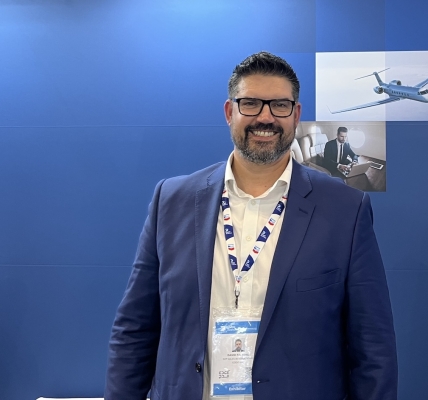










In a candid conversation with Cruising Heights, Khushbeg Jattana, General Manager India of Simaero, discusses the strategic timing of Simaero’s entry into the Indian aviation market. He addresses the challenges posed by existing pilot training programmes from major airlines like Air India and IndiGo, and elaborates on Simaero’s plans to complement these efforts with state-of-the-art training solutions. Jattana also sheds light on the potential growth in the South Asian region and the company’s vision for the future.
Don’t you think you’ve come a little late in the day to India considering that Air India/Indigo — the two major operators –- already have their own pilot training programmes?
The decision of Air India and Indigo to recently launch their own pilot training programmes itself indicates exponential growth in the Indian aviation industry. With the industry further projected to be expanding rapidly, the existing infrastructure is insufficient to meet the industry’s current and future needs. We believe that Simaero India’s entry into the market is timely, as we aim to complement these existing programmes and bridge the gap by providing additional training solutions to other Indian airlines and those in neighbouring countries, which are crucial for industry growth. Our training programs will also support pilot training overflow that Air India and Indigo may encounter, beyond their internal capacities
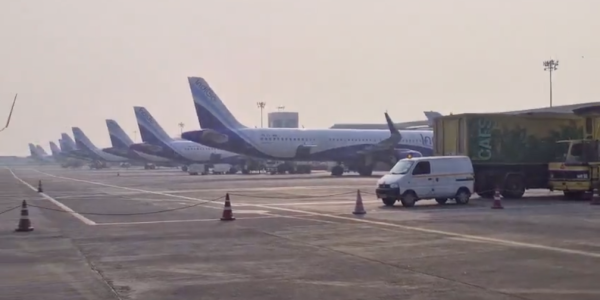
By the same yardstick, Air India has just announced the setting up of over two dozen simulators for their cockpit crew. Indigo has tied up with multiple operators and has its Airbus-partnered simulator in Greater Noida. Do you still see a big market for it?
There is a severe deficit in training infrastructure in India vis-à-vis flight simulators for specific type ratings, which Simaero India aims to bridge. Our comprehensive training solutions and state-of-the-art facilities will cater to the broader market, including other airlines and regions that are currently underserved.
When you talk of South Asia, where else is the market? None of the countries neighbouring India have big fleets that will validate such a huge investment. Could you elaborate on your plans?
While it is true that neighbouring countries may not have large fleets comparable to India, the regional demand for pilot training is significant. South Asia, including countries like Bangladesh, Sri Lanka, and Nepal, is witnessing growth in their respective aviation sectors. The other member countries of the South Asian region are also expected to benefit from the spin-off of the tremendous projected growth in the Indian aviation sector.
Simaero aims to serve not only India but also these emerging markets by providing accessible and high-quality training solutions, thereby supporting the overall development of the aviation industry in the region.
India will also be receiving close to 100 widebody aircraft in the next decade. Why have you not considered putting up a widebody simulator?
Where flight simulation training is concerned more than 60 percent of type rate training is done outside of India due to the lack of adequate training infrastructure. There is a high deficit in the market for simulator training for all types of aircraft. To address the needs of regional and national airlines, Simaero India will initially focus on meeting the training requirements for the A320, B737 NG and B737Max which are widely used in India. We are always open to installing wide-body simulators, as we already have A330/A340 and upcoming A350 in our training centres in Paris. As an independent company, not tied to any single airline or manufacturer, our plans are adaptable to our customers’ requirements. We are flexible in purchasing and implementing the necessary simulators to meet their needs.
What is the sort of training courses that you are likely to provide at your campus apart from simulator training?
India faces a significant challenge in reducing the percentage of recurrent pilot training on full-flight simulators conducted abroad and providing local airlines with cost-efficient solutions that meet the demanding Directorate General of Civil Aviation (DGCA) requirements. Simaero India aims to address these needs in the initial years of operation. In addition to these training solutions, we will establish a local simulation engineering division, similar to those we have in France and China. This division will not only help us maintain a top-notch simulator fleet but also ensure the efficient working of the entire simulator fleet in the country. We are also considering adding Ab Initio training to our offerings, providing consistent, high-quality training to aspiring pilots from day one through their enrolment in renowned airlines.
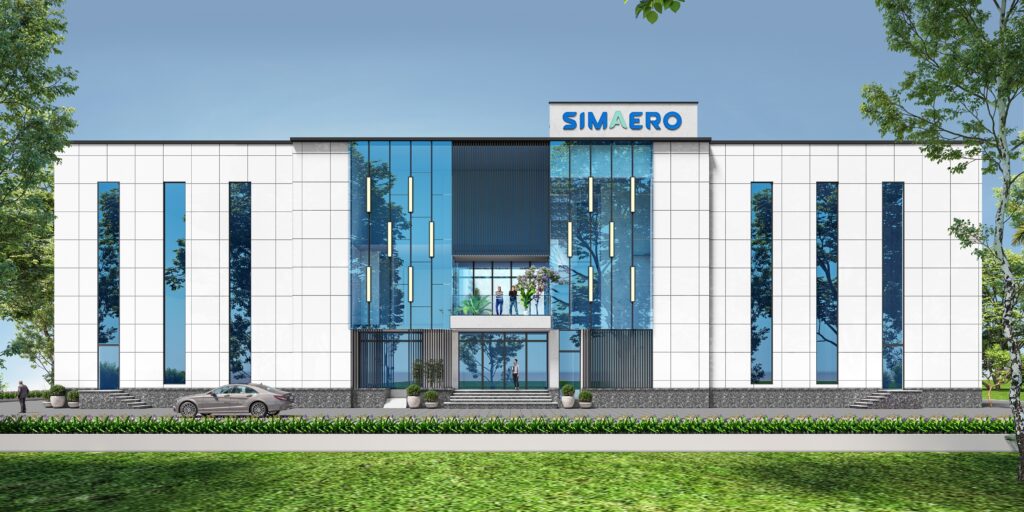
The development of our training facility in Delhi NCR is well underway, with construction expected to be completed by the fourth quarter of 2024. This centre, which is spread over 4,500 square metres, will feature eight full-flight simulators, starting with A320 NEO and B737NG aircraft types. The facility will offer comprehensive training solutions, with the training programme and devices being DGCA and EASA certified and an ATO covering all main pilot recurrent training programmes, including initial type rating and recurrent training, with various aircraft-type simulators for airlines. We are confident that Simaero India’s pilot training apparatus will make India the aviation training hub of Asia.
Which are the airlines that you have tied up with?
We are in advanced discussions with several major airlines in India and across Asia. We are close to signing agreements with two airlines in India. Our objective is to form strategic partnerships that will benefit the airlines from our extensive expertise and state-of-the-art training facilities and provide them with a broader pool of pilots in India trained in contemporary aviation practices.
Would you also be looking at an intake of cadets from flying training schools for their type rating?
Yes, we are looking at collaborating with flying training schools to provide type rating programmes for their cadets. This will ensure a seamless transition for new pilots from basic training to advanced type-specific training, enhancing their readiness for commercial civilian operations.
What is your five-year roadmap for India and South Asia?
Over the next five years, Simaero India aims to establish itself as the leading pilot training provider in the region. Our roadmap includes expanding our training facilities, increasing the number of simulators, and introducing new training programs. Apart from our main training centre in Delhi NCR, we plan to set up satellite centres in key cities like Mumbai, Bengaluru and Kolkata. Additionally, we will focus on building a robust local workforce and forging strong partnerships with airlines to support the growing aviation sector in India and South Asia.