









Beyond NOCs: Why Airline Sustainability Remains India’s Real Aviation Challenge

- India’s airline churn is not a failure of ambition, but a reflection of how difficult it is to survive once operations begin.
- While NOCs signal entry, the real challenge lies in sustaining operations amid high costs, regulatory complexity, limited financing access, and fragile operational margins.
- Long-term aviation growth will depend less on approving new airlines and more on building an ecosystem that supports durability, resilience, and commercial realism.


Every few years, India celebrates the arrival of new airlines. Press releases follow, social media lights up, and the word competition returns to the national conversation. The latest round of No Objection Certificates has once again triggered optimism about capacity, connectivity, and consumer choice.
But history urges caution. India does not suffer from a lack of airline ambition. It suffers from a lack of airline longevity.
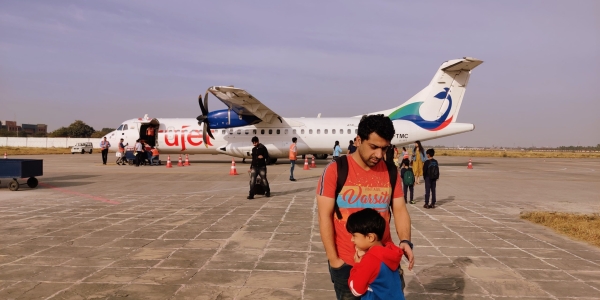
Over the past decade, carriers such as Paramount Airways, Air Pegasus, Zoom Air, TruJet, Air Odisha and Fly Big all entered the market with plans, aircraft and regulatory approvals. None survived. Their exits were not driven by a single policy failure or one-off crisis, but by a deeper structural mismatch between ambition and sustainability.
That context matters today.

An NOC is not a licence to fly. It is an entry point into a demanding, capital-intensive and unforgiving process.
Yet public discourse often treats it as a finish line rather than the beginning of a long operational test.
The real challenge starts after the paperwork — when aircraft must be inducted, crews trained, compliance systems embedded, and cash burn managed in an industry where margins are thin and tolerance for error is minimal.
India’s aviation ecosystem remains structurally unforgiving to fragility. Small fleets have little buffer against technical disruptions. A single grounded aircraft can collapse schedules.
Lease rentals are dollar-linked, maintenance costs are rising, and access to spare engines or replacement aircraft is increasingly constrained. When pressure builds, confidence evaporates quickly — from lessors, financiers, airports, and even passengers.
As aviation lawyer Nitin Sarin, Managing Partner, Sarin & Co., explains, “These challenges extend well beyond airline management. India’s regulatory architecture spans multiple arms of government, from finance and banking to taxation and corporate affairs, and alignment across them remains a work in progress. While the Ministry of Civil Aviation is acutely aware of these issues, structural constraints beyond its direct control continue to shape outcomes on the ground.”
This is why the repeated cycle of airline entry and exit deserves closer examination.

Photo: Venkat Mangudi/Wikimedia Commons
Why airlines fail
Past failures reveal patterns that go beyond poor timing or bad luck.
- Undercapitalisation remains the single biggest risk – Many airlines launch with sufficient funding to start operations, but not enough to survive prolonged cash burn. Early-stage losses are structural in aviation are structural, not exceptional. Expecting quick breakeven has repeatedly proven unrealistic.
- Operational realities – Leasing aircraft is easier than building the systems needed to support them — training pipelines, maintenance oversight, crew rostering, safety management and operational control. Several past operators expanded networks before stabilising operations.
- Scale without resilience is a vulnerability – Smaller airlines lack shock absorbers. Weather disruptions, technical issues or payment delays can cascade rapidly into systemic breakdowns. Once reliability slips, recovery becomes exponentially harder.
These are not abstract risks. They are patterns already embedded in India’s aviation history. This fragility is compounded by structural constraints around aircraft access.
Nitin points out that, “Foreign lessors remain cautious about Indian exposure, largely because repossession timelines and enforcement outcomes remain uncertain. Indian banks, in turn, are reluctant to lend for aviation assets. The result is a self-reinforcing cycle: without financing, airlines cannot scale; without scale, confidence never builds.”
Regulatory intent versus market reality
For policymakers, the challenge is no longer about opening the door. It is about ensuring that those who walk through it can remain standing.
Granting NOCs signals intent, but intent alone does not create sustainable capacity. A system that repeatedly produces short-lived airlines ultimately weakens investor confidence, strains airports and lessors, and disrupts passengers.

The regulatory focus, therefore, must evolve from enabling entry to strengthening endurance. The issue is not regulatory intent or enforcement, but the commercial resilience required to survive in a demanding aviation market.
That does not mean lowering standards — quite the opposite. It means clearer expectation-setting at the NOC stage, realistic timelines, and sharper scrutiny of long-term financial resilience rather than launch readiness alone.
It also means recognising that not every airline proposal needs to be converted into an operating certificate.
As Nitin emphasises, “The difficulty lies not in excessive regulation, but in the broader ecosystem. Aircraft leasing, access to capital and enforcement predictability matter as much as certification. Without systemic confidence, even well-intentioned reforms struggle to deliver durable results.”
Encouraging quality over quantity is not anti-competition. It is pro-stability.
What this moment demands
India’s aviation market will continue to grow. Passenger demand is rising, infrastructure is expanding, and regional connectivity remains a strategic priority. But growth without durability is noise, not progress.

If the next generation of airlines is to succeed where others failed, the ecosystem must shift its focus — from announcements to execution, from approvals to endurance, and from ambition to resilience.
Because the real measure of success is not how many airlines enter the market, but how many are still flying — safely, sustainably and profitably — five years later.
Also Read: UDAN at Nine: India’s Regional Connectivity Milestones and Misses