







As global air traffic accelerates and infrastructure struggles to keep pace, technology is increasingly becoming the backbone of aviation growth. From biometric travel and digital identity to predictive operations and sustainability-driven systems, airports and airlines are being forced to rethink how passengers move through the ecosystem. In this conversation, Selim Bouri, President – Middle East, Africa & Türkiye at SITA, outlines how digital transformation is reshaping passenger processing, airport operations, and border management, and why technology, rather than physical expansion, will define the next phase of aviation growth.
SITA has been pushing “digital travel by default”. Which technologies do you see as most disruptive for passenger processing over the next three to five years, and why now?
The biggest shift is around digital travel credentials and digital identity, and the fact that the technology is already available.
A practical example is biometric travel, what we call Smart Path. In Abu Dhabi, if you are a UAE resident, have a visa, or have entered the UAE before, you can move through the journey without repeatedly presenting a passport: check in with your face, pass border control with your face, and board with your face.
There’s sometimes a perception that travellers are hesitant about biometrics, but our Passenger Insights survey suggests the opposite: more than 79% of passengers ask for it, and 68% say they would be willing to pay for it, which signals readiness to use digital travel credentials.
This is also being driven by changing traveller expectations. In many regions, including the Middle East, Africa, and Southeast Asia, Gen Z and millennials are becoming the majority of travellers, and they expect travel to be as seamless as digital experiences in daily life.

SITA is well-positioned to accelerate that shift because it works across all three parts of the traveller journey: airlines, airports, and governments (border agencies).
It is also active with ICAO (International Civil Aviation Organization) and IATA (International Air Transport Association) on the definition and standardisation of digital travel credentials, and is involved in India through DigiYatra.
The urgency comes from capacity pressure as traffic is set to boom.
Forecasts often underestimate growth; in some regions, it ends up doubling or even tripling. In the Middle East and Southeast Asia, travel demand is expected to double in the next five years, while infrastructure will not double at the same pace.
Airports take seven to ten years to build. But growth is happening now. In this region alone, up to 2,500 aircraft deliveries are expected. More aircraft and passengers, but the same space, so the only way to manage the next phase is technology across the operation, especially passenger processing.
We won’t be able to afford 15, 20, or 30 minutes at each passenger touchpoint, otherwise today’s congestion becomes significantly worse. The most effective approach is reducing friction: less paper, biometrics, and digital travel, especially at key bottlenecks like check-in, borders, and boarding, where staffing is limited.
What is SITA doing to improve accuracy, speed, and interoperability, across airport touchpoints and between airports, airlines and border agencies?
The flagship solution is SITA Smart Path, designed to make passenger processing “smart” end-to-end, from the moment a passenger enters the airport to the point they exit. That includes check-in, borders, baggage, and boarding, and then controls and baggage on the arrival side as well.
A major part of improving speed is pushing more readiness upstream, what is described as “off-airport operations”. SITA works heavily with API (Advance Passenger Information) and PNR (Passenger Name Record) systems, allowing border agencies to receive substantial information before a passenger boards, so the border process can be faster and more predictable.
The goal is that passengers know before boarding that they won’t face issues on arrival, and that governments can enable a faster track when check-in and credentials have been completed in advance, and biometric identity is available.

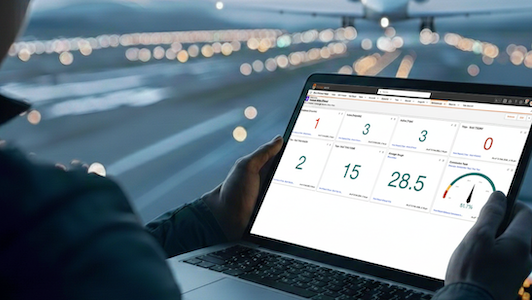
Beyond the passenger-facing layer, SITA also runs “behind-the-scenes” systems — total airport management and airport management solutions, that improve airport operations: aircraft slot and stand planning, agent assignment, and broader operational optimisation.
Nothing frustrates passengers more than arriving at a processing point and seeing too few staff.
With better connected data, airports and airlines can anticipate demand, needing five agents at one moment and one at another, and optimise manpower accordingly.
SITA’s role is to connect the dots: serving airlines, airports, and governments, and enabling data sharing so airports can forecast aircraft, passenger volumes and passenger categories, as well as expected baggage volumes. That same visibility helps border agencies staff appropriately, one officer, three, five, or full biometric processing, depending on the traveller profile.
There is also a commercial optimisation dimension: knowing passenger profiles can support better aircraft stand allocation and passenger flow, such as positioning certain flights closer to retail areas where relevant, helping airports generate revenue that can be reinvested into service improvements.
SITA works with more than 170 airport customers globally for airport management systems. How does Smart Path fit into this wider ecosystem?
Smart Path is being deployed extensively, although no precise count is provided. In many airports, Smart Path operates behind the scenes.
Abu Dhabi is a strong reference deployment because the ecosystem is fully integrated: Etihad (airline), Abu Dhabi Airport (airport), and the government (border agencies).
A key enabler is enrolment. If travellers are enrolled (as residents or visa holders) and fly with Etihad through Abu Dhabi, they can move through the process without presenting a passport at any stage. It is operational and fully working, with further implementations underway depending on local conditions.

Post-implementation, what impact has Smart Path had on processing time and passenger flow?
Smart Path delivers an average processing time reduction in the range of 30% to 80%, depending on where and how it is implemented. That translates into a much faster flow.
This also supports higher capacity: airports can manage more passengers within the same physical space, with the objective of “managing more with the same space,” particularly as physical expansion takes time.
Baggage remains a global pain point. What is SITA doing to reduce mishandling, and what is changing operationally?
SITA plays a major role through WorldTracer, which tracks baggage globally. Mishandled bags remain one of the most frustrating experiences for passengers.
From 2007 to 2025, mishandling reduced by 67%, even as passenger volumes doubled. In 2024, the global mishandling rate stood at 6.3 per thousand, or 0.6%, with a 9% improvement year-on-year.

Advanced tagging and new-generation capabilities now enable automatic rerouting and intelligent handling.
Previously, mishandled bags required manual intervention, locating the bag, removing the tag, and re-tagging.
With the upgraded system, the same bag tag can remain valid, and the system automatically updates and reroutes the bag. This reduces human intervention and supports recovery within 48 hours.
Integration with Apple AirTag allows location data to be shared with airlines, not just passengers, enabling faster recovery actions. Even at 0.6%, the scale remains significant when applied to five billion passengers. The target is a further 15–20% improvement each year.
As aviation becomes more software-driven and automated, cybersecurity risk increases. How does SITA approach cybersecurity and data protection?
Data protection and cybersecurity are core to SITA’s role. The company was created 79 years ago by 11 airlines to build the first global data network, even before the internet existed.
The network is designed for resilience and independence, supported by 24/7 Security Operations Centres (SOCs). It is positioned as one of the most secure networks in the world, with a continued focus on strengthening protection.
Beyond today’s deployments, what technology gaps remain, and where is SITA focusing next?
Several significant trends are emerging, starting with deeper use of artificial intelligence and data to anticipate delays before journeys begin. Based on historical data, it may be possible to tell travellers up to two days in advance whether they are likely to be delayed and, if so, by how much, and to integrate those insights into operational decision-making.

Sustainability is another key focus. Newer generations of travellers want transparency and are willing to change travel behaviour to reduce environmental impact.
Around 90% are willing to adjust plans, pay more, or travel longer to reduce their footprint.
This is being addressed through tools that share sustainability impact at the time of booking and update passengers in real time as conditions change.
There is also work underway on a new generation of counters that require no external energy and can self-cool and self-clean, particularly relevant for emerging markets where energy availability is constrained.
The overarching view is that, over the next five years, technology will be the critical enabler allowing aviation to grow sustainably. Other solutions take time, and digital transformation is the only way to manage growth while improving efficiency and sustainability.
Also Read: India’s Aviation Growth Is Accelerating the Shift to Digital Infrastructure