










- Airplane autopilot uses sensors, flight control computers, and actuators to manage roll, pitch, and yaw, helping maintain heading, altitude, and speed.
- Pilots select modes via the Mode Control Panel, such as altitude hold, navigation, or approach, and autopilot follows these instructions precisely.
- Autopilot assists pilots but does not replace them; pilots remain responsible for takeoff, monitoring, decision-making, and handling emergencies.
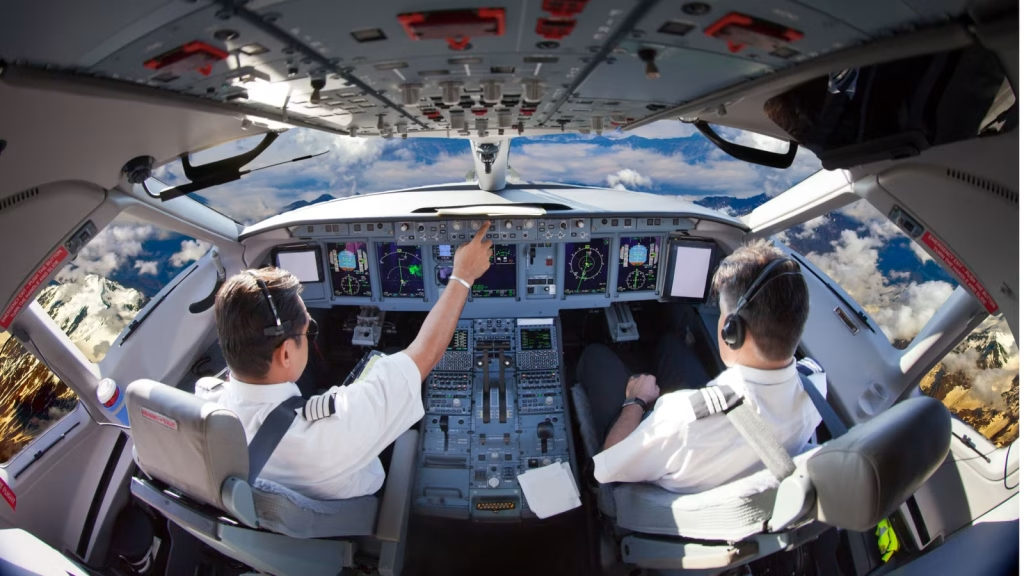
Many people believe that when autopilot is on, airplanes fly completely on their own. In reality, autopilot is a highly advanced assistance system, not a replacement for pilots. It helps pilots control the aircraft more accurately, reduces workload, and improves safety—especially during long flights.
In this article, we will explain how airplane autopilot works, its components, types, modes, limitations, and why pilots are still essential.
What Is Airplane Autopilot?
Airplane autopilot is a computer-based system that automatically controls certain aspects of an aircraft’s flight. It can manage:
- Direction (heading)
- Altitude
- Speed
- Climb and descent
- Sometimes even landing
Autopilot does not think like a human. It follows instructions entered by pilots and data received from aircraft sensors.
Why Is Autopilot Used in Airplanes?
Autopilot is used to:
- Reduce pilot fatigue on long flights
- Maintain precise altitude and heading
- Improve fuel efficiency
- Enhance flight safety
- Handle complex flight phases smoothly
On long-haul flights, pilots may fly for several hours, so autopilot helps them stay alert and focused.
Main Components of an Autopilot System
An autopilot system works by combining several aircraft systems.
1. Sensors and Instruments
Autopilot depends on data from multiple sensors, including:
- Gyroscopes (attitude and direction)
- Airspeed sensors
- Altimeters
- GPS systems
- Inertial reference systems
These sensors tell the autopilot where the aircraft is and how it is moving.
2. Flight Control Computer (FCC)
The flight control computer is the brain of the autopilot system.
It:
- Processes sensor data
- Compares actual flight path with selected targets
- Sends commands to control surfaces
Modern aircraft often have multiple computers for redundancy.
3. Actuators and Control Surfaces
Autopilot does not directly move the aircraft. Instead, it sends signals to:
- Servos
- Actuators
These move:
- Ailerons (roll control)
- Elevator (pitch control)
- Rudder (yaw control)
This is how the aircraft physically changes direction or altitude.
4. Mode Control Panel (MCP)
This is the interface pilots use to interact with autopilot.
From the MCP, pilots select:
- Desired altitude
- Heading
- Speed
- Vertical speed
Autopilot follows these instructions precisely.
How Autopilot Controls an Airplane
Autopilot works by controlling three axes of flight.
1. Roll Control (Left and Right)
Using the ailerons, autopilot:
- Keeps wings level
- Turns the aircraft to a selected heading
Example: If pilots select a heading of 090°, autopilot turns the aircraft east.
2. Pitch Control (Up and Down)
Using the elevator, autopilot:
- Climbs or descends
- Maintains altitude
It constantly adjusts pitch to keep altitude stable even in turbulence.
3. Yaw Control (Side Movement)
Using the rudder, autopilot:
- Maintains coordinated turns
- Keeps the aircraft aligned with airflow
Yaw control improves comfort and stability.
Types of Autopilot Systems
1. Single-Axis Autopilot
- Controls only roll (heading)
- Used in small aircraft
- Basic functionality
2. Two-Axis Autopilot
- Controls roll and pitch
- Maintains altitude and heading
- Common in light and business aircraft
3. Three-Axis Autopilot
- Controls roll, pitch, and yaw
- Used in commercial jets
- Highly precise and reliable
Autopilot Modes Explained
Autopilot works in different modes, selected by pilots.
Heading Mode
- Aircraft follows selected compass heading
Altitude Hold Mode
- Maintains chosen altitude
Vertical Speed Mode
- Controls rate of climb or descent
Speed Mode
- Maintains selected airspeed
Navigation Mode
- Follows GPS or flight management system route
Approach and Landing Mode
- Used during instrument landing
- Can guide aircraft to runway centerline
Can Autopilot Take Off an Airplane?
In most commercial aircraft:
- Pilots manually control takeoff
- Autopilot is engaged after climbing to safe altitude
Some military and experimental systems can assist takeoff, but human control is standard.
Can Autopilot Land an Airplane?
Yes, under specific conditions.
Modern aircraft can perform:
- Autoland using Instrument Landing System (ILS)
- Fully automatic landings in low visibility
However:
- Airports must support autoland
- Pilots constantly monitor the system
Autoland is mainly used in fog or poor weather.
Role of Pilots When Autopilot Is On
Even when autopilot is active, pilots:
- Monitor aircraft systems
- Communicate with air traffic control
- Manage navigation and fuel
- Handle emergencies
- Make decisions
Autopilot assists, but pilots remain in command at all times.
Limitations of Autopilot
Autopilot cannot:
- Think independently
- Handle unexpected emergencies alone
- Replace pilot judgment
In severe weather or system failures, pilots disconnect autopilot and fly manually.
Is Autopilot Safe?
Yes. Autopilot systems are:
- Extensively tested
- Highly redundant
- Certified under strict aviation regulations
They have significantly improved flight safety over decades.
Future of Autopilot Systems
Future developments include:
- More automation
- AI-assisted decision support
- Better fuel optimization
- Enhanced safety monitoring
However, human pilots will remain essential for the foreseeable future.
Conclusion
So, how does airplane autopilot work?
Autopilot uses sensors, computers, and actuators to control an aircraft’s direction, altitude, and speed. It reduces pilot workload, improves accuracy, and enhances safety but it never replaces the pilot.
Autopilot is best understood as a highly intelligent assistant, not a fully autonomous system.